
Navigating Turbulent Waters: Geopolitical Headwinds Reshaping Global Cargo Movement
Geopolitical events are fundamentally altering global cargo movement, forcing unprecedented rerouting, escalating costs, and challenging the very foundation of supply chain resilience. This brief explores the profound consequences for maritime routes, airspace, and overall trade, highlighting the critical need for advanced shipment visibility.
Introduction
In an increasingly interconnected yet volatile global landscape, the smooth flow of goods across continents is under constant threat from geopolitical shifts. These events, ranging from regional conflicts to trade disputes and sanctions, are not merely political footnotes; they are seismic forces reshaping the very arteries of global commerce. For supply chain professionals, the consequences manifest as disrupted routes, extended transit times, inflated costs, and an urgent demand for greater adaptability. This brief examines the tangible impacts of these geopolitical events on cargo movement, focusing on the operational challenges and the strategic imperative for enhanced visibility in an unpredictable world.
Impact on Maritime Routes
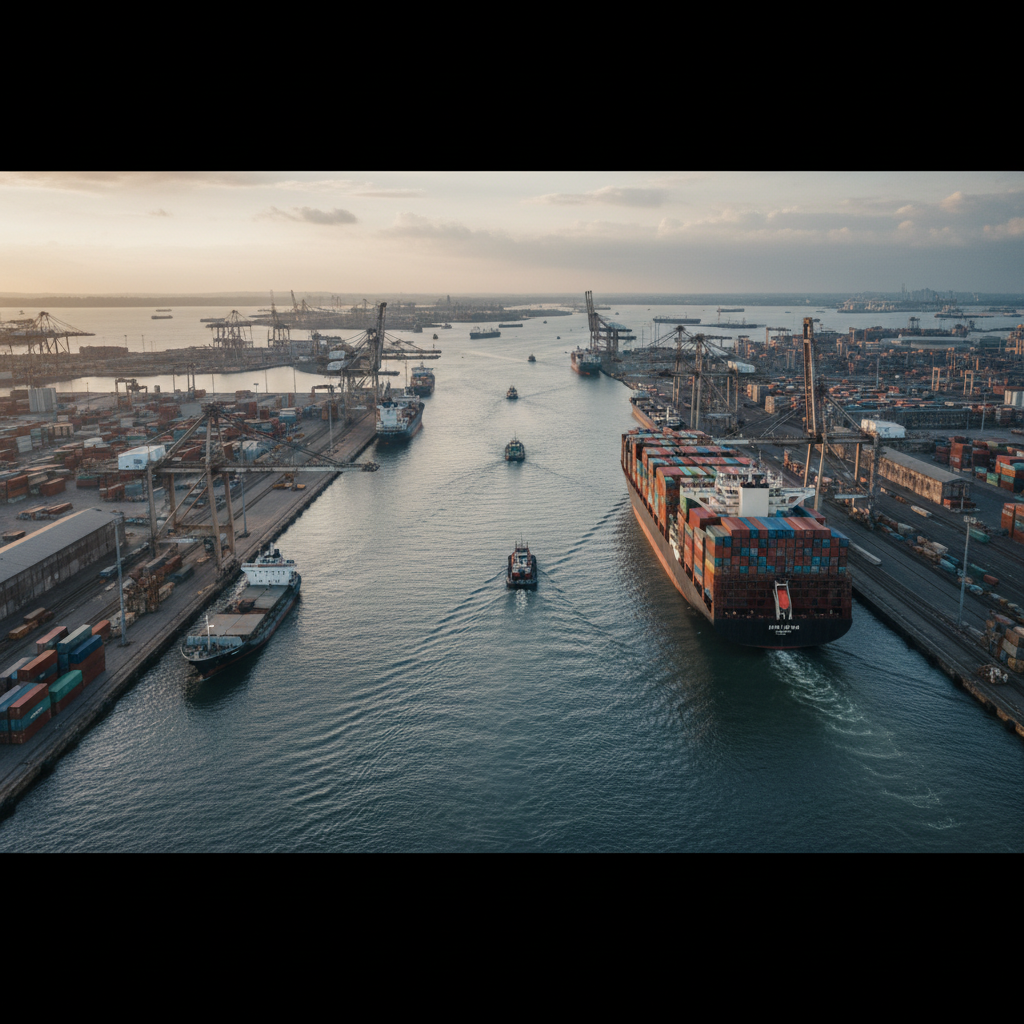
Maritime routes, the backbone of global trade, are particularly susceptible to geopolitical tensions. Key chokepoints, vital for the passage of vessels carrying the vast majority of international cargo, frequently become flashpoints. Recent events in critical waterways, such as the Red Sea, have demonstrated how quickly established shipping lanes can be rendered hazardous, forcing vessels to embark on significantly longer voyages around entire continents. Such rerouting not only adds weeks to transit times but also substantially increases fuel consumption, operational costs, and insurance premiums. The ripple effect extends to port congestion at alternative hubs and a general slowdown in the velocity of global trade.
The strategic importance of major interoceanic canals, such as the Panama Canal, is underscored in this environment. While the Panama Canal's current operational challenges are primarily climate-related, its existence as a critical artery highlights the broader vulnerability of global waterways to diverse pressures, including potential geopolitical ones that could impact its operations or access. The ongoing strategic planning for its future capacity, as evidenced by intentions to name bidders for new terminal projects, reflects a long-term recognition of the need for robust infrastructure to support global trade, especially when other routes face disruption. Any impediment to such vital passages, whether from direct conflict, piracy, or even politically motivated blockades, sends immediate shockwaves through global supply chains, affecting everything from raw material delivery to consumer goods availability.
Impact on Airspace and Air Cargo
Geopolitical events also severely constrain and reroute air cargo operations, leading to significant disruptions. The imposition of no-fly zones or reciprocal airspace bans between nations in conflict or dispute directly impacts the most efficient air corridors. For instance, the ongoing conflict in Eastern Europe has led to extensive airspace closures, compelling cargo airlines to adopt circuitous routes that bypass large swathes of territory. These longer flight paths necessitate additional fuel stops, increase flight times by several hours, and dramatically escalate fuel costs. Furthermore, the limited availability of alternative routes can lead to congestion in remaining open airspaces and airports, further exacerbating delays.
Beyond direct conflict zones, geopolitical tensions can also lead to more subtle restrictions, such as limitations on overflight rights or increased scrutiny at transit points. Such measures, while not outright bans, introduce unpredictability and can lead to last-minute changes that disrupt carefully planned air cargo schedules. The net effect is a less reliable, more expensive, and slower air freight network, impacting time-sensitive shipments and industries reliant on rapid delivery of high-value goods.
Consequences for Supply Chain Resilience
The cumulative effect of these disruptions is a profound challenge to established supply chain models. The era of lean, just-in-time (JIT) inventory management, optimized for cost efficiency and minimal buffer stock, is increasingly giving way to a 'just-in-case' philosophy. Businesses are now compelled to build greater resilience into their operations, often at a higher cost. This includes diversifying sourcing locations, exploring nearshoring or friendshoring strategies to mitigate geopolitical risks, and maintaining larger safety stocks to absorb unexpected delays.
However, these resilience-building measures are not without their own complexities. Diversification can introduce new logistical challenges and regulatory hurdles. Nearshoring may not always be feasible due to labor costs or lack of specialized manufacturing capabilities. The increased cost of freight, insurance, and inventory holding directly impacts profitability and can contribute to inflationary pressures. Moreover, the dynamic nature of geopolitical events means that what constitutes a 'safe' route or sourcing location today may become vulnerable tomorrow, requiring continuous re-evaluation and adaptation.
The Role of Shipment Visibility
In this environment of heightened uncertainty, real-time shipment visibility is no longer a luxury but an absolute necessity for survival and competitive advantage. A robust shipment-visibility control tower (MGS) provides the critical intelligence needed to navigate these turbulent waters. By offering end-to-end tracking of cargo across all modes of transport – maritime, air, road, and rail – MGS platforms empower businesses with actionable insights into the location, status, and estimated arrival times of their goods.
When geopolitical events cause sudden route closures or delays, an MGS platform can immediately flag affected shipments. This allows supply chain managers to proactively identify alternative routes, assess the impact on downstream operations, and communicate effectively with customers and partners. For instance, if a vessel is rerouted around Africa due to Red Sea tensions, the MGS can update its ETA, calculate new costs, and even suggest options for expediting critical components via air freight from an intermediate port. This predictive capability enables informed decision-making, minimizes disruptions, and helps mitigate financial losses by avoiding penalties, managing inventory, and optimizing resource allocation. In essence, MGS transforms raw data into strategic foresight, enabling agility in the face of geopolitical volatility.
Conclusion
The landscape of global cargo movement has been irrevocably altered by the increasing frequency and intensity of geopolitical events. From rerouted ships navigating longer, costlier maritime passages to aircraft avoiding vast swaths of airspace, the consequences for trade and transport are profound. Businesses must move beyond reactive measures and embrace proactive strategies centered on resilience, diversification, and, crucially, unparalleled shipment visibility. The ability to monitor, analyze, and adapt to disruptions in real-time, facilitated by advanced platforms like MGS, will be the defining characteristic of successful supply chains in this new era of geopolitical uncertainty.
Source: Maritime Professional — https://www.maritimeprofessional.com/news/panama-canal-name-terminal-bidders-424111