
Geopolitical Tensions Ignite Supply Chain Disruptions in the Saudi Gulf
A recent Houthi strike causing a fire at a Saudi Gulf export hub highlights the escalating geopolitical risks impacting global supply chains. This incident underscores the vulnerability of critical maritime infrastructure and necessitates robust strategies for shippers to navigate increased instability and ensure cargo continuity.
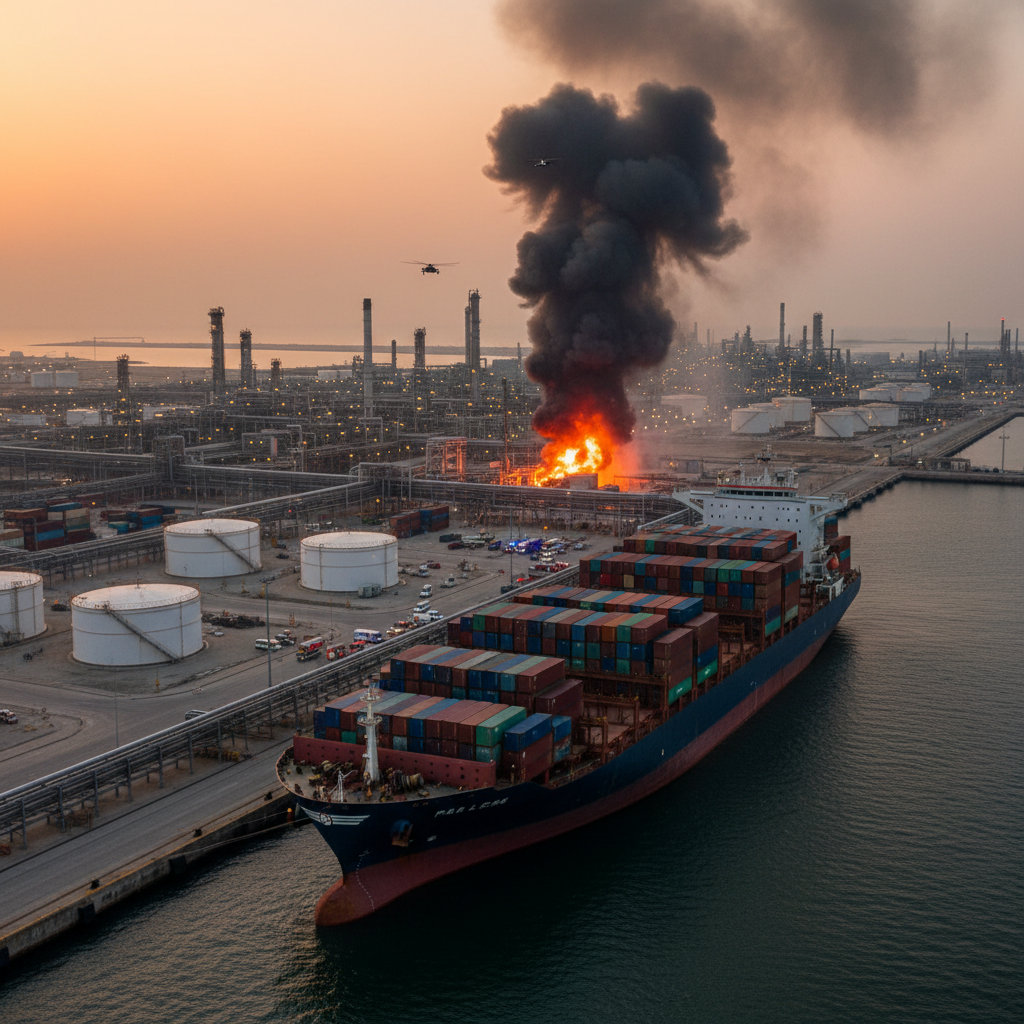
Geopolitical Flashpoint: Saudi Gulf Export Hub Under Attack
The recent incident involving a Houthi strike that resulted in a fire at a Saudi Gulf export hub serves as a stark reminder of the persistent and escalating geopolitical risks threatening global supply chains. Occurring amidst a backdrop of continued Houthi attacks, this event on October 27, 2026, is not an isolated occurrence but rather a symptom of broader regional instability. The Saudi Gulf region is a critical artery for international trade, particularly for energy exports and various other commodities vital to global markets. An attack on an export hub, by its very nature, signifies a direct assault on the infrastructure facilitating this trade. Such an event immediately disrupts operations, potentially causing physical damage to facilities, equipment, and cargo, leading to operational halts and significant delays. Beyond the immediate physical impact, these strikes inject a profound sense of uncertainty and heightened risk into an already complex global logistics landscape, compelling supply chain professionals to re-evaluate their risk assessments and contingency plans for operations within and through this strategically crucial area.
Impact on Key Shipping Lanes and Facilities
The fire at the Saudi Gulf export hub directly impacts the operational integrity and perceived safety of one of the world's most vital maritime regions. While the specific hub's identity isn't detailed, any major export facility in the Saudi Gulf is intrinsically linked to key global shipping lanes, including those transiting the Red Sea and onward through the Suez Canal, or eastwards towards Asia. The immediate consequence is likely to be a re-evaluation of route safety by shipping lines, potentially leading to diversions, increased transit times, and higher operational costs. Vessels may opt for longer routes to avoid perceived high-risk areas, thereby increasing fuel consumption and delaying delivery schedules. Furthermore, the incident could lead to increased port congestion at alternative, safer ports as cargo is rerouted, straining existing infrastructure and leading to further delays. Insurers are also likely to react, potentially declaring the affected region a 'war risk zone' or increasing war risk premiums, adding another layer of cost and complexity for shippers. The disruption to a single export hub can also cascade, affecting feeder services that rely on it for transshipment, creating a ripple effect across regional logistics networks.
Multimodal Supply Chain Vulnerabilities
While the Houthi strike directly targeted a maritime export hub, the implications extend beyond sea freight, exposing multimodal supply chain vulnerabilities. An export hub is typically a nexus where various modes of transport converge: sea vessels load and unload cargo that arrives via road, rail, or even pipeline. A disruption at such a critical node can therefore paralyse the entire inbound and outbound flow. Road and rail networks feeding into or out of the affected hub would experience immediate operational bottlenecks, with cargo unable to be loaded or discharged. This can lead to a backlog of goods, increased storage costs, and potential spoilage for time-sensitive commodities. For urgent shipments, there might be a surge in demand for air cargo, leading to increased air freight rates and limited capacity, especially if the disruption is prolonged. The interconnectedness of these modes means that a single point of failure, particularly one caused by geopolitical conflict, can rapidly propagate through the entire supply chain, highlighting the need for a holistic view of logistics resilience that considers all transport modalities.
Commodity Flow Disruptions
The Saudi Gulf is globally renowned for its significant role in the export of energy resources, including crude oil, refined petroleum products, and petrochemicals. A fire at an 'export hub' in this region, especially one caused by a Houthi strike, immediately raises concerns about the stability of these critical commodity flows. Even if the specific facility was not directly an oil terminal, the broader perception of risk in the region can impact global energy markets, potentially leading to price volatility and supply uncertainty. Beyond energy, the Gulf region also handles a diverse range of other goods, from manufactured products to agricultural commodities. Disruptions at a major export hub can delay the shipment of these materials, impacting manufacturing schedules downstream and consumer markets globally. Shippers dealing in goods originating from or transiting through this area must prepare for potential delays, increased shipping costs, and the need to source alternative supplies or markets. The long-term impact could include a re-evaluation by international buyers of the reliability of supply from this region, prompting a shift towards more diversified sourcing strategies.
Mitigating Risk: Shipper Strategies
In the face of escalating geopolitical risks in critical trade regions, shippers must adopt proactive and adaptive strategies to mitigate potential disruptions. First, diversification is paramount: relying on a single shipping lane, port, or carrier significantly amplifies risk. Exploring alternative routes, even if they incur higher costs or longer transit times, can provide crucial flexibility. Second, inventory management strategies should be re-evaluated; while just-in-time (JIT) models optimize efficiency, they offer little buffer against sudden disruptions. Strategic pre-positioning of critical inventory or maintaining safety stock can prevent complete operational halts. Third, enhanced communication and collaboration with logistics partners, freight forwarders, and carriers is essential. Regular updates on regional security assessments and port statuses enable quicker decision-making. Furthermore, shippers should thoroughly review their insurance policies, specifically understanding war risk clauses and their coverage limits, to ensure adequate protection against unforeseen events. Finally, scenario planning and stress-testing supply chains against various geopolitical disruption scenarios can help identify vulnerabilities and develop rapid response protocols, fostering greater resilience in an unpredictable global trade environment.
The MGS Advantage: Real-time Visibility in Crisis
In times of heightened geopolitical instability and sudden disruptions like the Houthi strike in the Saudi Gulf, a shipment-visibility control tower platform like MGS becomes an indispensable asset for shippers. MGS provides real-time, end-to-end visibility across the entire supply chain, allowing shippers to track the precise location and status of their cargo, irrespective of mode or carrier. When an incident occurs, such as a fire at a key export hub or a rerouting due to security concerns, MGS can immediately flag affected shipments. Its predictive analytics capabilities can assess the potential impact of such disruptions on estimated arrival times and identify alternative routes or modes before delays become critical. This enables rapid, data-driven decision-making, empowering shippers to proactively reroute cargo, communicate effectively with consignees, or activate contingency plans with minimal delay. By consolidating data from multiple sources and providing a single, unified view, MGS transforms raw information into actionable insights, helping shippers navigate complex crises, mitigate financial losses, and maintain supply chain continuity in volatile geopolitical landscapes.