
Geopolitical Tensions Reshape Maritime Logistics: A Focus on Strategic Fleet Development and Visibility
Heightened security risks in critical waterways are forcing a fundamental shift in global maritime logistics. This brief analyzes how geopolitical events, exemplified by Gulf oil producers' strategic investment in a massive tanker fleet, are disrupting cargo movement, escalating costs, and underscoring the indispensable role of real-time shipment visibility platforms in navigating an increasingly volatile trade landscape.
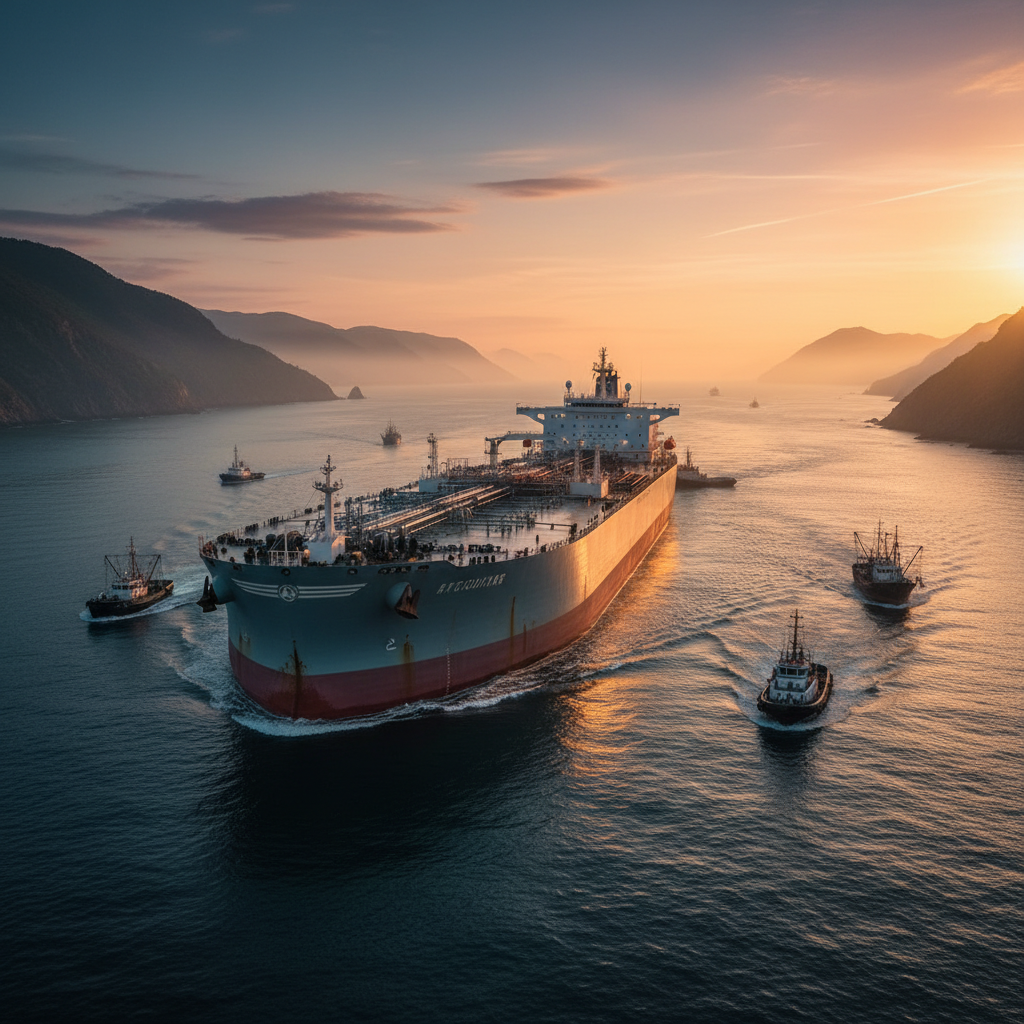
As a supply-chain analyst for MGS, our focus remains squarely on the operational realities and economic consequences of global events. The current geopolitical climate presents an intricate web of challenges for cargo movement, compelling businesses to re-evaluate established routes, fortify supply chain resilience, and leverage advanced visibility tools. While political motivations are beyond our scope, their downstream effects on trade and transport demand our close attention.
Disruption of Key Waterways and Maritime Routes
Geopolitical tensions invariably manifest as direct threats to the safety and predictability of global shipping lanes. Critical maritime chokepoints, such as the Strait of Hormuz, become flashpoints where the risk of disruption escalates significantly. These waterways are not merely transit points; they are arteries for global commerce, and any impediment there sends ripples throughout the international supply chain. When security concerns rise, shipping companies face difficult choices: either navigate through potentially dangerous zones, incurring higher risks and costs, or reroute vessels via longer, more expensive alternatives. Such decisions are not trivial; they add days, sometimes weeks, to transit times, consume significantly more fuel, and strain vessel capacity. The direct consequence is a delay in delivery, impacting inventory levels, production schedules, and ultimately, consumer availability and pricing. The very predictability that underpins modern logistics is eroded, forcing a paradigm shift towards agile response and robust contingency planning.
Impact on Shipping Costs and Insurance Premiums
One of the most immediate and tangible consequences of heightened geopolitical risk in maritime zones is the sharp increase in operational costs. Insurance premiums, particularly for war risk and kidnap and ransom (K&R) coverage, surge dramatically when vessels operate in or near conflict-prone areas. This additional financial burden is directly passed down through the supply chain, translating into higher freight rates for shippers. Beyond insurance, the necessity for enhanced security measures on board, such as armed guards or convoy escorts, further inflates expenses. Should vessels opt for rerouting to avoid high-risk areas, the extended journey translates to greater fuel consumption, increased crew wages for longer voyages, and additional port charges. These cumulative costs erode profit margins for carriers and ultimately inflate the price of goods for end-consumers, contributing to inflationary pressures across various sectors. The economic viability of certain trade routes can be fundamentally altered, compelling businesses to absorb these costs or seek alternative sourcing strategies.
Strategic Fleet Management and Supply Chain Resilience
In response to persistent security challenges and the unreliability of third-party shipping in volatile regions, some major players are adopting proactive, strategic measures to safeguard their supply chains. A notable example is the reported initiative by Gulf oil producers to assemble a substantial fleet of nearly 230 tankers. This move signifies a significant investment in self-sufficiency and resilience, aiming to ensure the uninterrupted flow of critical commodities despite escalating security risks in vital waterways. By owning and operating their transport assets, these entities gain greater control over their logistics, reducing dependence on external carriers who might be reluctant to operate in high-risk zones or impose prohibitive surcharges. This strategic fleet expansion is a direct operational response to geopolitical uncertainty, designed to mitigate potential disruptions, maintain export volumes, and stabilize supply. It reflects a broader trend where companies are internalizing logistics functions or forging closer, more integrated partnerships to build robust, crisis-resistant supply chains.
Broader Implications for Global Trade Flows
The ripple effects of disruptions in critical waterways extend far beyond the immediate cargo or region. Given the interconnectedness of global trade, impediments to the movement of key commodities, such as crude oil through the Strait of Hormuz, can trigger widespread economic instability. Fluctuations in energy prices, driven by supply uncertainty, impact manufacturing costs, transportation expenses for all goods, and consumer purchasing power globally. Furthermore, the perceived risk of operating in certain regions can deter investment, shift manufacturing bases, and alter established trade partnerships. This leads to a fragmentation of global supply chains, with companies prioritizing regional sourcing or nearshoring to reduce exposure to distant geopolitical flashpoints. The cumulative effect is a less efficient, more complex global trade system, characterized by higher costs, longer lead times, and increased administrative burdens as businesses navigate a labyrinth of evolving regulations, sanctions, and security protocols. The long-term consequence is a remapping of global trade routes and a re-evaluation of the benefits of globalization versus the imperative of supply chain security.
The Role of Shipment Visibility in Mitigating Risk
In an environment defined by geopolitical volatility, real-time shipment visibility is no longer a luxury but an essential operational imperative. A robust shipment-visibility control tower platform, like MGS, provides unparalleled transparency into the global movement of cargo, enabling proactive risk management. By integrating data from various sources – AIS for maritime, air traffic control, and ground logistics – the platform offers a comprehensive, real-time view of every shipment's location and status. This capability is critical when geopolitical events unfold: it allows logistics teams to instantly identify vessels or cargo approaching or within high-risk zones. With this intelligence, MGS users can rapidly assess potential impacts, initiate rerouting procedures, communicate delays to stakeholders, and activate contingency plans. For instance, if a specific maritime route becomes unsafe, the platform can highlight alternative paths, calculate revised ETAs, and track the new trajectory. This proactive approach minimizes delays, reduces financial losses, and ensures business continuity, transforming uncertainty into actionable intelligence. In essence, real-time visibility empowers organizations to navigate geopolitical complexities with agility and confidence, safeguarding their supply chains against unforeseen disruptions.
Source: Maritime Professional — https://www.maritimeprofessional.com/news/gulf-producers-build-tanker-fleet-423964