
Geopolitical Crosscurrents: Navigating Disrupted Global Cargo Flows
Geopolitical events are increasingly reshaping global supply chains, forcing businesses to adapt to altered shipping routes, restricted waterways, and shifting trade dynamics. This brief examines the tangible consequences for cargo movement, using recent Black Sea disruptions as a prime example, and highlights the critical role of real-time visibility.
Introduction
In an increasingly interconnected yet volatile global landscape, geopolitical events have become a primary catalyst for disruption across supply chains. Far from isolated incidents, these frictions immediately translate into tangible challenges for cargo movement, impacting everything from transit times to commodity availability. The recent developments in the Black Sea, for instance, serve as a stark reminder of how regional conflicts can swiftly alter established trade patterns and create significant ripple effects across international commerce. For businesses reliant on the seamless flow of goods, understanding and adapting to these shifts is paramount, demanding a proactive approach to logistics and an acute awareness of global dynamics.
Impact on Shipping Routes and Transit Times
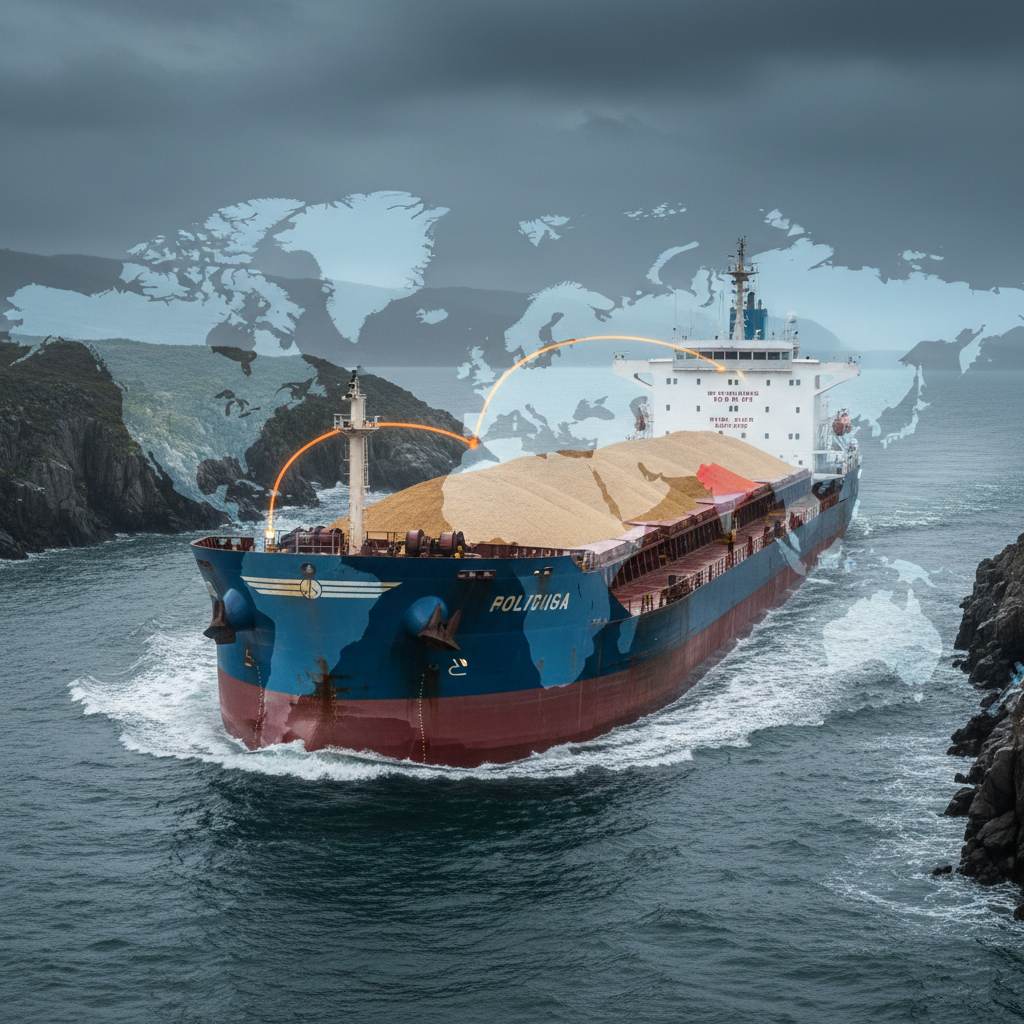
Geopolitical tensions frequently manifest as direct threats to established shipping lanes, compelling carriers to seek alternative, often longer, routes. The Black Sea, a vital conduit for agricultural exports, has seen its traditional pathways severely constrained since July. This forces vessels to reroute through less efficient or more hazardous waters, leading to substantial increases in transit times. Longer journeys consume more fuel, incur higher operational costs, and necessitate extended crew deployment, all of which contribute to elevated freight rates. Furthermore, these diversions can strain port infrastructure at alternative hubs, creating congestion and further delays. For businesses, this means extended lead times, increased inventory holding costs, and a greater risk of spoilage for perishable goods, underscoring the need for dynamic route planning and real-time tracking capabilities.
Airspace Restrictions and Their Ripple Effects
While the immediate focus of recent Black Sea disruptions has been on maritime routes, geopolitical events frequently lead to significant airspace restrictions. When nations close their airspace due to conflict or political tensions, air cargo carriers are forced to reroute flights, often adding thousands of miles and several hours to journeys. These longer routes necessitate additional fuel stops, increase fuel consumption, and reduce the effective payload capacity of aircraft. The ripple effects are profound: higher air freight costs, delays for time-sensitive shipments (e.g., pharmaceuticals, high-value electronics), and increased pressure on already stretched air cargo networks. Businesses must contend with unpredictable delivery schedules and elevated transportation expenses, making robust contingency planning and real-time visibility into air freight movements crucial for maintaining supply chain integrity.
Waterway Access and Chokepoint Vulnerability
Critical waterways and maritime chokepoints are the arteries of global trade, and their disruption has immediate and far-reaching consequences. The Black Sea's role as a major export route, particularly for bulk commodities like wheat, highlights this vulnerability. When access to such a vital waterway is compromised, the flow of goods is immediately choked, impacting global supply. The inability to use direct, efficient routes through these chokepoints forces reliance on less optimal alternatives, which might be more expensive, less secure, or simply incapable of handling the diverted volume. This creates bottlenecks, drives up shipping costs, and can lead to significant price volatility for affected commodities on the global market. The ripple effect extends to other regions as buyers seek alternative sources, further stressing global logistics networks.
Tariffs, Sanctions, and Trade Flows
Tariffs and sanctions are powerful geopolitical instruments that directly alter global trade flows and supply chain structures. These measures can restrict market access for certain goods or producers, compelling buyers to seek alternatives and sellers to find new markets. The situation where fewer countries are purchasing Russian wheat after the Black Sea trade stalled is a direct illustration of this. Whether due to formal sanctions, increased risk perception, or logistical challenges, the imposition of such measures redirects demand and supply. This can lead to market imbalances, price fluctuations, and the emergence of new, often less efficient, trade corridors. Businesses must constantly monitor the evolving landscape of trade restrictions, as non-compliance carries severe penalties and shifting trade relationships can render established supply chain partnerships obsolete.
Commodity-Specific Vulnerabilities (e.g., Grain, Oil)
Essential commodities, such as grain and oil, are particularly susceptible to geopolitical disruptions due to their critical role in global economies and human welfare. The Black Sea region is a major global supplier of wheat, and the disruption of its export capabilities has immediate implications for global food security and commodity markets. When a key supply region is destabilized, the global market reacts with price surges and increased volatility. Buyers, unable to secure supplies from traditional sources, scramble to find alternatives, often from distant regions, further straining logistics and increasing costs. This vulnerability underscores the need for diversification of sourcing and robust risk management strategies for businesses dealing in staple goods, as the impact of disruption can be felt from local bakeries to international aid organizations.
The Role of Shipment Visibility in Mitigating Disruption
In an era defined by geopolitical uncertainty, real-time shipment visibility is no longer a luxury but a fundamental necessity for supply chain resilience. An MGS shipment-visibility control tower provides the granular, end-to-end data required to navigate these complex disruptions. By offering real-time tracking of cargo across all modes, businesses can immediately identify when shipments are impacted by rerouting, delays, or port congestion. This visibility enables proactive decision-making: rerouting goods before they reach a compromised zone, communicating accurate updated ETAs to customers, or activating contingency plans for alternative sourcing. Predictive analytics within such a platform can even help anticipate potential chokepoints or delays based on evolving geopolitical intelligence, allowing for strategic adjustments that minimize financial and operational fallout. Without this level of insight, businesses are left reacting blindly to events, incurring greater costs and reputational damage.
Conclusion
The ongoing geopolitical landscape presents a persistent challenge to the stability and efficiency of global supply chains. From altered shipping routes and restricted airspace to disrupted waterways and the imposition of tariffs and sanctions, the consequences for trade and transport are profound and far-reaching. The Black Sea situation serves as a powerful case study, demonstrating how regional conflicts can quickly escalate into global logistical headaches, particularly for essential commodities like wheat. In this environment of heightened uncertainty, businesses must prioritize agility, diversification, and, critically, comprehensive real-time shipment visibility. Leveraging advanced platforms like an MGS control tower empowers organizations to not only react to disruptions but to anticipate and proactively mitigate their impact, ensuring greater resilience and continuity in an unpredictable world.
Source: Maritime Professional — https://www.maritimeprofessional.com/news/countries-purchase-russian-wheat-after-423170