
Drone Attacks Near Sulina Canal Elevate Black Sea Shipping Risks
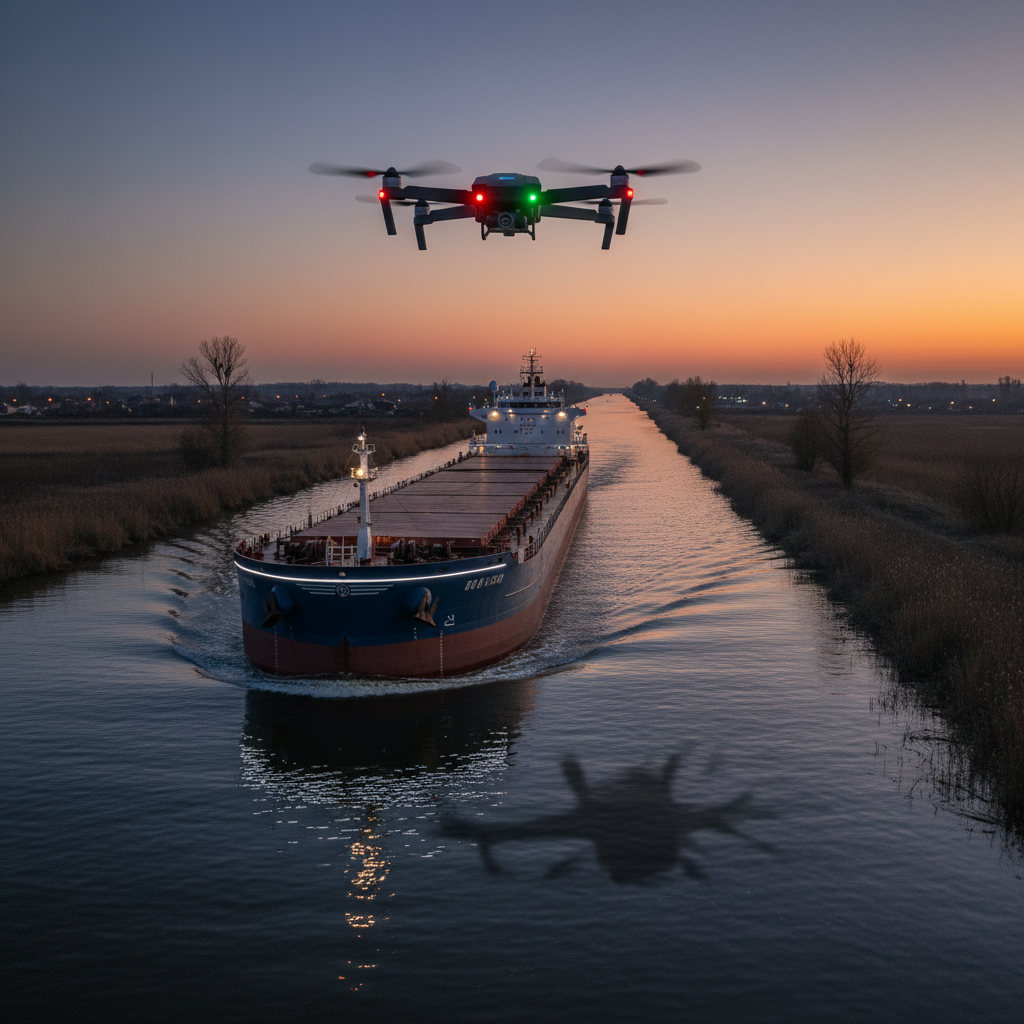
Heightened Risk Profile for Black Sea Commercial Vessels
The recent increase in drone activity near Romania's Sulina Canal has fundamentally altered the risk assessment for commercial shipping navigating the Black Sea. This waterway serves as a primary conduit for trade connecting the Danube River to international waters, making its security an essential consideration for regional commerce. Shipowners and operators now face an elevated threat landscape, extending beyond the immediate transit through the canal itself. Vessels awaiting entry or departure, often anchored offshore, are exposed to potential incidents, creating a prolonged period of vulnerability. This direct threat to maritime assets compels a re-evaluation of standard operating procedures and security protocols for any vessel operating in the vicinity. The nature of these incidents, involving unmanned aerial vehicles, introduces a new layer of complexity to traditional maritime security measures, requiring specialized intelligence and protective strategies. The potential for damage to vessels, cargo, or injury to crew members is a tangible concern that directly impacts the willingness of commercial entities to engage in this trade lane. This situation also raises questions about the availability and cost of security escorts or enhanced surveillance, adding further operational burdens. The perceived safety of a route directly influences its viability for global trade, and the current environment around Sulina Canal presents a clear challenge to this perception. The implications extend to crew welfare, with seafarers and their unions increasingly scrutinizing the safety of voyages through conflict-affected areas, potentially leading to crew shortages or demands for hazard pay. This dynamic further complicates crewing logistics and operational costs for shipping lines, forcing a recalculation of voyage profitability and risk exposure.
Operational Bottlenecks and Congestion at Danube Gateway
Beyond the direct security concerns, the increased risk near the Sulina Canal is generating significant operational bottlenecks and congestion. The presence of drone activity can lead to temporary closures or restrictions on vessel movements, causing unpredictable delays. When vessels are unable to proceed through the canal as scheduled, they accumulate in offshore waiting areas. This accumulation creates a backlog, exacerbating congestion and extending turnaround times for ships. Such delays ripple through the entire supply chain, affecting schedules for subsequent port calls, cargo delivery timelines, and overall fleet utilization. For charterers, this translates into increased demurrage charges and a reduction in the effective capacity of their chartered vessels. The inability to maintain predictable schedules limits operational flexibility, making it difficult for logistics managers to plan and execute shipments efficiently. Furthermore, prolonged waiting periods offshore consume additional fuel, adding to operational expenses and contributing to environmental impact through increased emissions. The uncertainty surrounding transit times also complicates inventory management for shippers, potentially leading to stockouts or excess inventory as they attempt to buffer against unpredictable delays. This disruption to the flow of goods through a key European waterway forces businesses to reconsider their reliance on this route, seeking alternatives that may be more costly or less efficient but offer greater predictability and security. The cumulative effect of these delays and uncertainties can erode the competitive advantage of using the Danube as a trade artery, impacting regional economies dependent on its throughput.
Escalating Insurance Premiums and Charterer Hesitation
The heightened risk environment around the Sulina Canal has a direct and immediate impact on the financial aspects of maritime trade, particularly through insurance markets. Underwriters are responding to the increased threat of drone attacks by adjusting their risk assessments for vessels operating in the Black Sea region. This invariably leads to a sharp increase in war risk insurance premiums, a direct cost passed on to shipowners and, subsequently, to charterers and shippers. The additional financial burden can render certain trade routes economically unviable, especially for lower-value bulk commodities where margins are already thin. Beyond the cost, there may be changes in coverage terms, with insurers potentially introducing new exclusions or limitations for incidents occurring in designated high-risk zones. This shift places greater financial exposure on commercial entities, requiring careful review of policy details. Charterers, faced with higher operational costs and reduced predictability, may become hesitant to commit vessels to routes involving the Sulina Canal. This reluctance can lead to a decrease in available tonnage for Black Sea trade, further driving up freight rates for those willing to undertake the risk. The commercial viability of long-term contracts for cargo movement through this region is also under scrutiny, as the fluctuating risk profile makes it difficult to forecast costs accurately. The overall effect is a contraction of trade volume through the affected area, as market participants seek to mitigate financial exposure and operational uncertainty, ultimately reshaping trade flows.
Supply Chain Diversification and Alternative Route Pressures
The persistent disruptions and elevated risks near the Sulina Canal are compelling shippers and logistics providers to actively pursue supply chain diversification and explore alternative transport routes. Businesses reliant on the Danube waterway for agricultural products, raw materials, or manufactured goods are now evaluating land-based corridors, rail networks, or even more circuitous sea routes. While these alternatives may offer greater security and predictability, they often come with their own set of challenges, including increased transit times, higher transportation costs, and potential capacity limitations. For example, shifting cargo from barges on the Danube to rail or truck transport involves additional transshipment points, increasing handling costs and the risk of damage. Furthermore, the existing infrastructure for these alternative modes may not be immediately equipped to handle a sudden surge in volume, leading to new bottlenecks elsewhere in the network. The strategic imperative to maintain continuity of supply is driving these decisions, even if it means sacrificing efficiency or incurring higher expenses. This re-routing effort is not a short-term fix but a fundamental re-assessment of trade geography, potentially leading to lasting changes in established supply chain configurations. The long-term consequence could be a diminished role for the Sulina Canal and the Danube as a primary trade artery, as businesses embed new, more resilient pathways into their operational models. This adaptation requires significant investment in new logistics infrastructure and partnerships, reflecting a broader trend of de-risking supply chains in an unpredictable geopolitical environment and ensuring future trade stability.
Black Sea Trade Faces Enduring Uncertainty
The persistent threat to vessels near the Sulina Canal necessitates immediate re-evaluation of Black Sea trade strategies and operational resilience.
- Review existing contracts for force majeure clauses and risk allocation related to conflict zones and potential transit disruptions.
- Explore alternative transport modalities or routes for cargo destined for or originating from the Danube region, assessing their cost and efficiency.
- Engage with insurance providers to understand evolving coverage limitations and premium adjustments for Black Sea voyages, budgeting for increased costs.
- Implement enhanced vessel tracking and communication protocols for all shipments operating in or near affected areas to improve situational awareness.
Source: Dryad Global — https://channel16.dryadglobal.com/sulina-drone-attacks-black-sea-shipping-risk