
Charleston's North Terminal Deepening: A Strategic Move for Global Supply Chain Efficiency
South Carolina Ports' plan to deepen the North Charleston Terminal marks a significant step towards enhancing East Coast capacity and efficiency, accommodating larger vessels and impacting global trade flows.
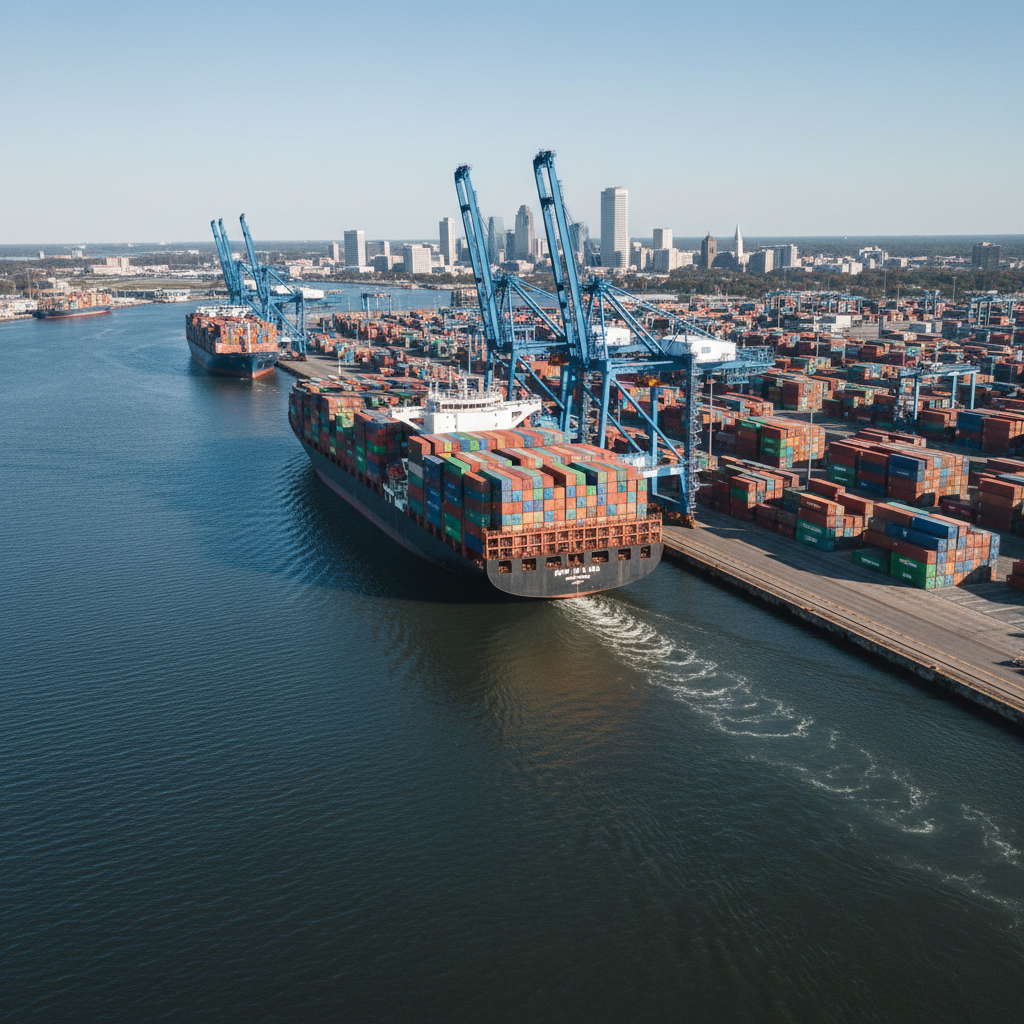
How this impacts the global supply chain
The deepening of the North Charleston Terminal, moving beyond its current 48 feet, represents a strategic enhancement for global maritime logistics, especially for U.S. East Coast trade. This initiative by South Carolina Ports aims to accommodate the larger containerships now prevalent in transoceanic routes. By removing critical draft constraints, vessels with deeper drafts can call at North Charleston without tidal restrictions or partial loading.
This development will significantly alter supply chain dynamics. It enhances the overall capacity and efficiency of the Port of Charleston. The previous deepening of Charleston Harbor to 52 feet in 2022 already enabled two-way traffic and unrestricted vessel movement at other terminals. Extending this capability to North Charleston means the entire port complex can operate with greater fluidity. For carriers, this translates into optimized vessel scheduling, reduced waiting times, and fewer diversions, leading to more predictable transit times crucial for shippers managing tight inventory.
The ability to handle larger vessels directly impacts global shipping routes. Instead of transshipment or bypassing Charleston, these larger ships can now make direct calls, streamlining journeys for goods in the U.S. Southeast. This positions Charleston as a more attractive gateway, potentially shifting cargo volumes from other East Coast ports and optimizing distribution networks. Increased capacity per vessel call also means fewer ships are needed for the same volume, leading to a more consolidated and potentially greener shipping network.
Finally, the improved access supports enhanced operational resilience. By removing draft limitations and tidal dependencies, the port becomes less susceptible to minor disruptions. This greater flexibility allows for better recovery from unforeseen events, ensuring a more robust flow of goods through the terminal. For global supply chains, this means a more reliable conduit for international trade, bolstering the competitiveness of the region's importers and exporters.
Global financial impact
Deepening the North Charleston Terminal carries substantial financial implications for shippers, carriers, and the broader trade economy. For shippers, the primary benefit is reduced per-unit shipping costs, leveraging the economies of scale from larger vessels. Direct calls by these ships offer more cost-effective ocean freight. Improved schedule reliability and reduced transit times, stemming from unrestricted tidal access, also lower inventory holding costs, allowing businesses to optimize safety stock and reduce warehousing expenses. New direct services could also introduce more competitive pricing.
Carriers will gain significantly from enhanced operational efficiency and asset utilization. Their investment in larger, fuel-efficient vessels can be fully leveraged. Reduced waiting times for high tide save substantial fuel and crew expenses. The ability to load and unload full capacity at a single terminal maximizes revenue potential. Attracting increased cargo volumes will boost revenue and strengthen their competitive position on East Coast routes. While dredging involves considerable initial investment, the long-term return comes from increased throughput, operational savings, and market share growth.
For trade at large, this infrastructure upgrade fosters regional economic growth and enhances the U.S. Southeast's global competitiveness. A more efficient port attracts manufacturing, distribution, and logistics businesses, creating jobs and stimulating investment in ancillary services like warehousing and rail. It facilitates smoother import/export operations, making goods more competitive internationally. This strategic investment ensures the Port of Charleston remains a vital artery for global commerce.
How MGS can help navigate today's global trade environment
In an evolving port infrastructure landscape, a shipment-visibility control tower like MGS is indispensable for capitalizing on improvements such as the North Charleston Terminal deepening. MGS provides the real-time, end-to-end visibility needed to translate enhanced port capabilities into tangible supply chain advantages.
With the ability to accommodate larger vessels and increased two-way traffic, port operations become more dynamic. MGS offers precise, real-time vessel tracking and ETAs, enabling carriers, terminal operators, and shippers to anticipate port calls accurately. This optimizes berth scheduling, equipment allocation, and landside logistics coordination, ensuring the increased capacity from deeper channels is fully utilized.
Larger ships mean a surge in container volumes per call. MGS tracks individual containers from discharge to final destination. This granular visibility is crucial for managing increased flow, identifying potential bottlenecks in drayage, rail, or warehousing before they escalate. A consolidated view of all cargo helps operators manage expanded throughput effectively, preventing congestion and ensuring timely onward movement.
Even with improved infrastructure, unforeseen events can occur. MGS's exception management capabilities are vital. If a vessel faces an unexpected delay, MGS immediately alerts stakeholders, allowing rapid adjustments to downstream logistics like re-routing trucks or rescheduling staff. This proactive response minimizes disruption, preserving the benefits of enhanced port efficiency.
Ultimately, MGS empowers data-driven decision-making. By aggregating and analyzing data on vessel movements, port performance, and cargo status, it provides actionable insights. Shippers can leverage this intelligence to select optimal routes and carriers, confident in real-time port conditions, ensuring the port deepening investment maximizes operational efficiency and resilience.
Demand–supply analysis & improvement
The South Carolina Ports' initiative to deepen the North Charleston Terminal directly responds to evolving demand-side pressures in global shipping, addressing a critical supply-side limitation. The underlying demand is driven by the global trend towards larger containerships, which offer significant economies of scale for ocean carriers. Ports unable to accommodate these vessels risk marginalization. The project explicitly aims "to accommodate larger containerships," confirming this demand.
On the supply side, the existing infrastructure at North Charleston Terminal, maintained at 48 feet, presented a constraint. While Charleston Harbor was deepened to 52 feet in 2022 for other terminals, this specific stretch remained a bottleneck, limiting efficient access for larger vessels.
The deepening project serves as a direct improvement lever to align supply with demand. By increasing depth, the port enhances its "supply" of accessible deepwater berths for larger, more efficient vessels. This improvement meets existing demand, anticipates future needs, and ensures the port remains competitive. It optimizes asset utilization and maximizes port operations efficiency, improving overall throughput capacity and operational flexibility for the Port of Charleston.
ROI-focused resilience
While specific financial figures for the dredging investment are not provided, the project inherently frames resilience actions in terms of return on investment by mitigating quantifiable risks. The prior deepening of Charleston Harbor in 2022, enabling "two-way traffic and vessels sailing at any tide" at other terminals, set a precedent for operational resilience. Extending this capability to North Charleston Terminal offers a similar, if not greater, ROI in resilience.
The investment in dredging protects against several critical risks. It mitigates vessel diversions, which incur additional costs for transshipment and longer transit times. It reduces tidal delays, avoiding unpredictability, demurrage charges, and increased inventory holding costs. Furthermore, it protects against reduced competitiveness in a market where ports vie for carrier services, preventing a decline in cargo volumes.
The ROI from this resilience investment is realized through avoided costs and sustained competitive advantage. By enabling unrestricted access for larger vessels, the port avoids financial penalties from diversions and delays. It secures its position as a preferred gateway, ensuring continued cargo flow and economic contribution. The long-term benefits in operational continuity, enhanced capacity, and ability to attract major shipping lines represent a robust return on an investment aimed at future-proofing the port's operations against global maritime trade volatilities.
Source: DC Velocity — https://www.dcvelocity.com/transportation/maritime-ocean/ports/south-carolina-ports-seeks-to-deepen-harbor-at-north-charleston-terminal