
UPS's Strategic Pivot: Reshaping Global Logistics Towards Integrated Solutions
UPS is reconfiguring its network, shifting away from high-volume, low-profit e-commerce parcels to focus on integrated logistics solutions. This strategic move by a major global carrier has significant implications for supply chain flows, capacity, financial dynamics for shippers and carriers, and the broader trade environment. Understanding this evolution is critical for navigating future logistics complexities.
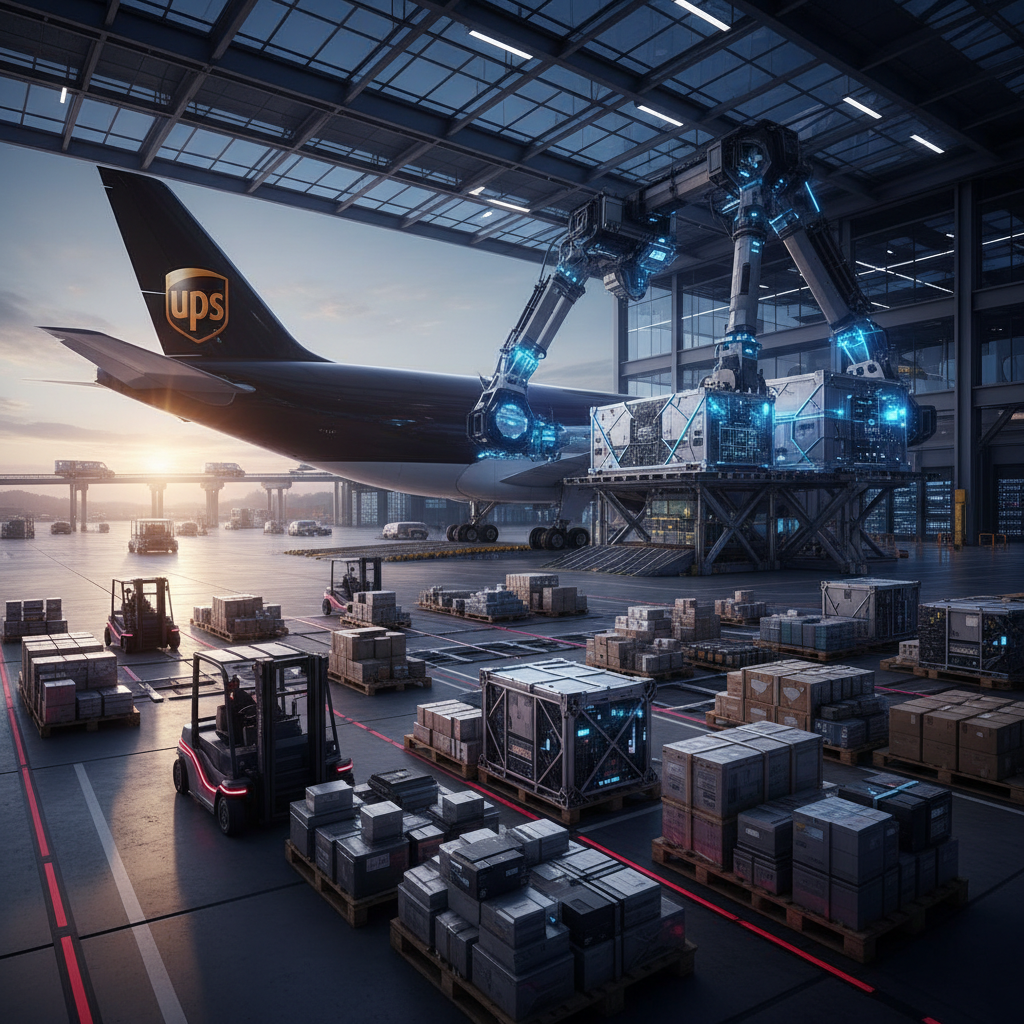
How this impacts the global supply chain
UPS's strategic shift from a high-volume, low-profit parcel carrier to an integrated logistics solutions provider profoundly reshapes global supply chains. This move, driven by a conscious decision to exit "high-volume, low-profit margin revenue" from e-commerce, will diversify logistics flows and reallocate capacity across the industry.
Supply chain flows for general e-commerce parcels will likely become more fragmented, as other carriers step in to fill the void left by UPS. This necessitates multi-carrier strategies for shippers. Conversely, flows for complex, higher-value goods will likely become more streamlined and efficient under UPS's renewed focus, potentially optimizing routes for specialized industries such as healthcare or high-tech that demand precise, integrated logistics.
In terms of capacity, UPS is reallocating its network away from general e-commerce. This frees up capacity in the general parcel delivery segment, creating opportunities for other carriers. However, large e-commerce players may face tighter capacity or increased costs if they do not adapt their carrier strategies. For the integrated logistics sector, this shift promises increased specialized capacity, potentially improving service levels for areas like cold chain, heavy freight, or complex international shipments.
Operations will evolve towards more sophisticated, value-added services, encompassing advanced supply chain management, inventory optimization, and end-to-end visibility solutions. This requires different infrastructure, technology investments, and a workforce skilled in complex logistics orchestration. For the broader global supply chain, it signals a trend towards greater integration and technological adoption, managing increasingly intricate global trade requirements.
Global financial impact
UPS's strategic pivot carries significant financial implications for shippers, carriers, and the overall landscape of global trade. The decision to move away from "low-profit margin revenue" is a clear financial play, aimed at improving profitability beyond its reported second-quarter 2026 consolidated operating profit of $930 million on $22.8 billion in revenue.
For shippers, the impact is two-fold. Large e-commerce companies, previously generating low-profit volume for UPS, may face increased shipping costs or the necessity to diversify their carrier base, possibly driving investments in their own logistics capabilities. Conversely, shippers needing sophisticated, integrated logistics solutions could benefit from UPS's enhanced capabilities and focus. This could lead to more efficient, reliable, and potentially cost-effective solutions for complex supply chains, reducing overall operational expenses related to inventory management, lead times, and risk mitigation. While the per-shipment cost for integrated solutions might be higher than basic parcel delivery, the overall value proposition and total cost of ownership for these shippers could improve significantly.
For carriers, other parcel carriers, especially those specializing in high-volume, lower-margin e-commerce deliveries, have a clear opportunity to capture market share that UPS is ceding. This could intensify competition in that segment. For UPS itself, the financial objective is to increase profitability by focusing on higher-margin services, optimizing its financial performance as noted by CEO Carol Tomé as part of a broader evolution over the past 18 months.
At the level of trade at large, this evolution signals a maturation of the logistics industry, moving beyond mere transportation to comprehensive supply chain orchestration. It could encourage greater investment in technology and infrastructure for integrated solutions across the industry, fostering innovation and contributing to a more resilient global trade environment by diversifying carrier reliance.
How MGS can help navigate today's global trade environment
In this evolving logistics landscape, where major carriers like UPS are redefining their service offerings and network configurations, a shipment-visibility control tower platform like MGS becomes an indispensable tool for operators. The shift towards diversified carrier networks and more complex integrated solutions inherently introduces new layers of complexity and potential blind spots that MGS is uniquely designed to address.
Firstly, as shippers are compelled to diversify their carrier portfolios to manage both low-margin e-commerce parcels and higher-value integrated logistics, MGS provides a unified, real-time view across all these disparate partners. Instead of juggling multiple carrier portals, operators can track every shipment, regardless of the carrier or mode, from a single dashboard. This consolidated visibility is crucial for maintaining control and ensuring service levels in a multi-carrier environment.
Secondly, for businesses leveraging UPS's enhanced integrated logistics solutions, which often involve multi-modal transportation, complex routing, and specialized handling, MGS offers granular, end-to-end visibility. Operators can monitor the progress of high-value shipments, identify potential bottlenecks at transfer points, and ensure compliance with specific handling requirements. This detailed insight is vital for managing critical supply chains, such as those for pharmaceuticals or high-tech components, where delays or deviations can have significant financial consequences.
Moreover, during periods of network reconfiguration by major carriers, there is an inherent risk of service disruptions or unexpected delays. MGS's proactive alert system can notify operators immediately of any deviations from planned routes, missed milestones, or potential issues. This allows supply chain managers to intervene swiftly, re-route shipments, communicate effectively with stakeholders, and mitigate the impact of unforeseen challenges, thereby safeguarding inventory flow and customer satisfaction.
Finally, in an environment where carriers are strategically adjusting their profitability models, MGS empowers shippers with the data needed for performance benchmarking and strategic decision-making. By aggregating real-time and historical shipment data, MGS enables operators to analyze carrier performance against service level agreements, identify cost efficiencies, and make informed choices about which partners are best suited for different types of freight. This data-driven approach is essential for optimizing logistics spend and ensuring that the chosen integrated solutions deliver the expected value in this dynamic trade environment.
Demand–supply analysis & improvement
UPS's strategic shift highlights a critical demand-supply dynamic: a robust demand for e-commerce parcel delivery exists, but a significant portion is deemed "low-profit margin revenue" by major carriers. Simultaneously, there's an implied, growing demand for higher-margin, integrated logistics solutions, which UPS is now prioritizing. This indicates a market where basic parcel delivery is commoditized and highly competitive, while specialized, value-added logistics services command higher margins.
From a supply perspective, UPS is actively reconfiguring its network and operational focus. It is reducing its "supply" of capacity and resources dedicated to low-margin e-commerce, and instead increasing its "supply" of integrated logistics capabilities. This creates a potential void in the low-margin e-commerce parcel market, which other carriers will likely attempt to fill, thereby adjusting the overall supply-demand balance in that specific segment. For integrated solutions, UPS is aiming to be a stronger supplier, potentially leading to more robust and innovative offerings in that space.
Key improvement levers for various stakeholders emerge from this analysis: For UPS, the improvement lever is clear: optimize profitability by aligning supply with higher-margin demand. This involves strategic investments in technology and infrastructure for integrated solutions, and refining service offerings to attract higher-value clients. For other parcel carriers, the improvement opportunity lies in efficiently capturing the e-commerce volume UPS is shedding. This requires scaling operations, optimizing last-mile delivery networks, and leveraging technology to maintain profitability in a high-volume, low-margin environment. For shippers, particularly large e-commerce entities, improvement comes from diversifying their logistics partners to mitigate reliance on any single carrier. This might involve building out their own delivery capabilities, partnering with multiple regional carriers, or leveraging advanced logistics platforms to manage a more complex, multi-carrier network. For shippers of high-value goods, the improvement lever is to fully engage with carriers like UPS who are investing in integrated solutions, seeking to optimize their entire supply chain, not just transportation.
ROI-focused resilience
UPS's move away from "low-profit margin revenue" underscores an ROI-driven approach to resilience. Continuing unprofitable services was not sustainable, prompting a strategic change. For other businesses navigating this evolving trade environment, adopting an ROI lens for resilience is paramount.
Diversifying the carrier portfolio is a key resilience action. Relying heavily on a single carrier for all shipping needs, especially one undergoing a significant strategic pivot, exposes a business to considerable risk. The investment in establishing relationships with multiple carriers – perhaps one for high-volume, low-margin parcels and another for specialized, integrated logistics – protects against potential price increases, capacity constraints, or service disruptions from any single provider. The ROI here is the avoidance of substantial costs associated with service interruptions, such as lost sales due to delayed deliveries, increased inventory holding costs, or expedited shipping fees incurred to compensate for primary carrier issues. This mitigates quantified risks such as potential revenue loss or increased logistics costs if a primary carrier's service deteriorates by X% or costs increase by Y%.
Investing in advanced supply chain visibility platforms like MGS is another critical resilience measure. In an environment where carrier networks are reconfiguring and service offerings are specializing, real-time, end-to-end visibility becomes crucial. This investment allows businesses to proactively identify and mitigate risks stemming from changes in carrier operations, unforeseen delays, or disruptions in integrated logistics flows. The ROI is realized through reduced operational expenditures (e.g., lower demurrage and detention fees, optimized inventory levels), improved customer satisfaction (fewer missed deliveries), and enhanced decision-making capabilities. This protects against quantified risks like the financial impact of production line stoppages due to late parts, penalties for missed delivery windows, or the cost of carrying excess safety stock due to lack of reliable transit data.
Finally, optimizing inventory placement and distribution networks offers resilience with clear ROI. By strategically locating inventory closer to end customers or key manufacturing hubs, businesses can reduce their reliance on long-haul parcel networks and mitigate the impact of carrier network reconfigurations. This investment, whether in new warehousing facilities or partnerships with 3PLs, yields ROI through lower transportation costs, faster delivery times, and a reduced vulnerability to changes in a single carrier's operational focus. The quantified risk addressed is the potential for increased transportation costs (e.g., 10-15% higher per package) and extended transit times if a primary carrier significantly alters its service for specific lanes or package types, forcing a shift to less efficient alternatives. These ROI-driven investments transform resilience from a cost center into a value driver, safeguarding profitability in a dynamic global trade environment.
Source: DC Velocity — https://www.dcvelocity.com/transportation/trucking/last-mile/ups-shifts-stance-from-a-small-package-carrier-to-a-provider-of-integrated-logistics-solutions