
Black Sea Bloodshed: Unpacking the Supply Chain and Financial Fallout
Recent attacks in the Black Sea have made it the world's most dangerous shipping zone, with severe implications for global supply chains, trade finance, and operational resilience. This brief analyzes the cascading effects and how real-time visibility platforms are crucial for navigation.
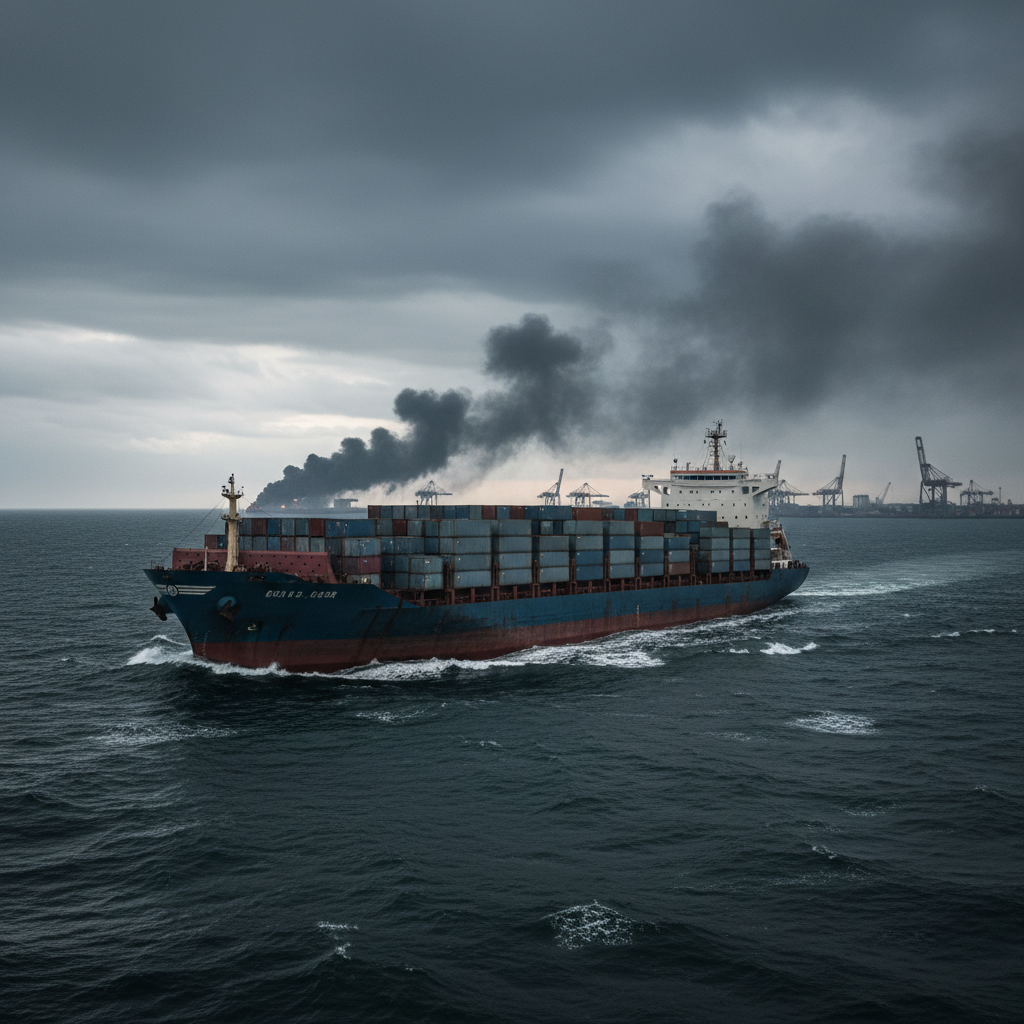
How this impacts the global supply chain
The recent surge in maritime incidents across the Black Sea, marked by relentless attacks over four days and over 570 vessels targeted in 2026, has fundamentally reshaped its role in global trade. This escalation transforms what was already a volatile region into the world’s deadliest shipping route, profoundly impacting supply chain flows, available capacity, and operational strategies.
Global supply chain flows face immediate and significant disruption. Key trade arteries for agricultural commodities, energy products, and raw materials from Eastern Europe are severely compromised. Shippers are compelled to seek alternative, longer routes, potentially overwhelming adjacent infrastructure or relying on less efficient intermodal solutions. This slows the movement of critical goods, impacting manufacturing and consumer availability.
Effective shipping capacity is drastically reduced. Heightened risk deters many shipowners from entering the Black Sea, and longer voyages remove vessels from usual rotations. This tightens available tonnage for Black Sea-connected routes, exacerbating existing global capacity constraints. Vessels operating there face increased operational complexities, including delays from enhanced security or avoidance maneuvers.
Operationally, companies grapple with unprecedented uncertainty. Just-in-time (JIT) strategies are undermined, necessitating substantial buffers for delays, rerouting, or cargo loss. This shifts towards more resilient, yet costly, operational models. Port infrastructure faces direct threats, leading to potential closures, reduced efficiency, and increased dwell times. The cumulative effect is a less efficient, more expensive, and significantly riskier global maritime trade environment.
Global financial impact
The escalating dangers in the Black Sea translate directly into substantial financial burdens across the entire trade ecosystem. This region’s shift to the forefront of maritime risk, surpassing even the Strait of Hormuz in seafarer fatalities, signals heightened financial exposure.
For shippers, immediate financial consequences include sharply increased freight costs. This surge is driven by elevated war risk insurance premiums, longer transit times due to rerouting (higher fuel), and potential surcharges. Beyond freight, shippers face increased inventory holding costs, risk of cargo damage or total loss, and potential re-sourcing expenses from more distant suppliers.
Carriers bear a direct and substantial financial brunt. Insurance costs for Black Sea operations are prohibitive, with war risk premiums soaring. Operational expenses climb due to longer voyages, increased fuel, enhanced security, and higher hazard pay for crews. The potential for vessel damage or loss represents a catastrophic financial risk, threatening balance sheets. Some carriers may withdraw services entirely, foregoing revenue rather than accepting extreme risk.
At the macro level, financial implications for global trade are inflationary and destabilizing. The Black Sea is critical for commodities like grain and steel. Disruptions impact global commodity prices, leading to higher food and energy costs worldwide, exacerbating inflation and food insecurity. Reduced trade volumes and heightened uncertainty deter investment and slow economic growth, adding a significant risk premium to international commerce.
How MGS can help navigate today's global trade environment
In an environment where the Black Sea has become the world’s most perilous shipping route, real-time shipment visibility is a critical operational imperative. A platform like MGS provides essential intelligence to navigate such extreme volatility, enabling proactive decision-making and mitigating potential losses.
MGS delivers unparalleled real-time visibility into vessel movements and cargo status. In a zone where incidents occur rapidly, knowing the precise location of every shipment is paramount. MGS tracks vessels approaching, entering, or departing the Black Sea, providing immediate alerts for course deviations, unexpected delays, or entry into high-risk areas. This granular data allows supply chain managers to understand asset exposure and react swiftly. For instance, if a port is targeted, MGS users can instantly identify all affected shipments, enabling rapid communication and contingency planning.
This real-time insight empowers proactive risk management and operational agility. Instead of reacting post-incident, MGS users can anticipate disruptions. By overlaying vessel positions with dynamic risk intelligence, operators identify shipments on a collision course with danger. This allows timely interventions, such as advising rerouting before entering perilous zones, coordinating alternative transport, or adjusting downstream logistics. Rapid, informed decisions can prevent minor delays from becoming catastrophic losses.
MGS also facilitates enhanced communication and collaboration during crises. When a shipment is at risk, multiple stakeholders need accurate, consistent information. MGS serves as a single source of truth, providing a shared operational picture that streamlines communication and reduces ambiguity. This centralized data allows for coordinated responses, whether rerouting instructions or updated ETAs. By providing clarity and control, MGS helps operators maintain business continuity and protect supply chains against severe threats.
Demand–supply analysis & improvement
The escalating crisis in the Black Sea, with over 570 vessel attacks in 2026, represents a significant shock to the global supply-demand equilibrium, especially for commodities from this vital region. On the supply side, there's a dramatic reduction in effective shipping capacity and goods availability. Extreme risk deters carriers, leading to fewer vessels serving Black Sea ports, constricting physical supply of grains, oil, and steel. Destruction of port infrastructure further impedes cargo handling, diminishing available supply.
On the demand side, global demand for these essential commodities remains constant, but the disruption creates an urgent need for alternative sourcing. Buyers traditionally reliant on Black Sea exports scramble for supplies elsewhere, driving up demand and prices in alternative markets. This creates price volatility and scarcity globally. The dynamic is constrained supply meeting persistent demand, leading to higher prices and competition.
To mitigate imbalances, several improvement levers exist. Firstly, supply chain diversification is paramount; companies must establish alternative sourcing relationships in stable regions. Secondly, strategic inventory pre-positioning can buffer against immediate shocks, providing time to adapt. Thirdly, exploration of alternative transport corridors (e.g., rail links) could offer partial relief, though often at higher costs. Finally, enhanced collaboration and information sharing, facilitated by platforms like MGS, can optimize resource allocation and coordinate responses, ensuring efficient utilization of available capacity.
ROI-focused resilience
The Black Sea becoming the world's deadliest shipping route, with over 570 vessels attacked in 2026, presents undeniable, quantifiable risk. Framing resilience actions in ROI terms is critical for justifying expenditures. Investment in robust resilience directly protects against significant financial losses and ensures business continuity.
Consider direct financial risk: loss of a single vessel and cargo can be tens or hundreds of millions, plus liabilities and lost revenue. With over 570 attacks, aggregate risk is immense. Investing in advanced visibility platforms like MGS is modest compared to catastrophic loss potential. ROI is derived from avoided losses. Real-time alerts and proactive rerouting can prevent a vessel from entering a high-risk zone, averting attacks or total loss. The platform’s cost is quickly offset if it prevents even one major incident.
Beyond asset protection, resilience yields ROI through reduced indirect costs and increased operational efficiency. Delays, rerouting, and damage incur substantial costs like demurrage, increased inventory, and lost sales. By enabling faster decision-making, MGS minimizes these cascading financial impacts. Quickly identifying a vessel needing rerouting saves transit time, reducing fuel costs and speeding market access.
Furthermore, investments in supply chain diversification and contingency planning protect against systemic risks. ROI here is in maintaining market access and customer trust. A company reliably delivering goods despite conflicts gains competitive advantage. The cost of alternative sourcing or safety stock is justified by avoided revenue loss, preserved market share, and long-term stability. In a high-risk environment, resilience secures competitive edge and sustainable profitability by quantifying inaction cost against proactive protection.
Source: Splash247 — https://splash247.com/black-sea-bloodshed-outstrips-hormuz/