
Navigating the New Geopolitical Reality: Escalating Risks in Global Cargo Movement
Geopolitical tensions are reshaping global trade, with conflicts like the Black Sea corridor war escalating to affect neutral coastlines. This brief analyzes the profound consequences for maritime routes, airspace, waterways, and trade policies, underscoring the critical need for advanced supply chain visibility.
Introduction
The global supply chain has always been susceptible to disruption, but the current geopolitical landscape introduces a new era of complexity and risk. What were once localized or contained conflicts are now demonstrating a broader 'blast radius,' impacting trade routes and logistics infrastructure far beyond direct belligerents. The recent escalation in the Black Sea, characterized by a shift to a 'fully symmetric denial regime' with strikes reaching previously unaffected coastlines, serves as a stark reminder of this evolving threat. This analysis explores the multifaceted consequences of such geopolitical events on cargo movement—spanning maritime routes, airspace, critical waterways, and the intricate web of tariffs and sanctions—and highlights the indispensable role of advanced visibility solutions in navigating these turbulent waters.
Escalating Maritime Risk and Route Diversions
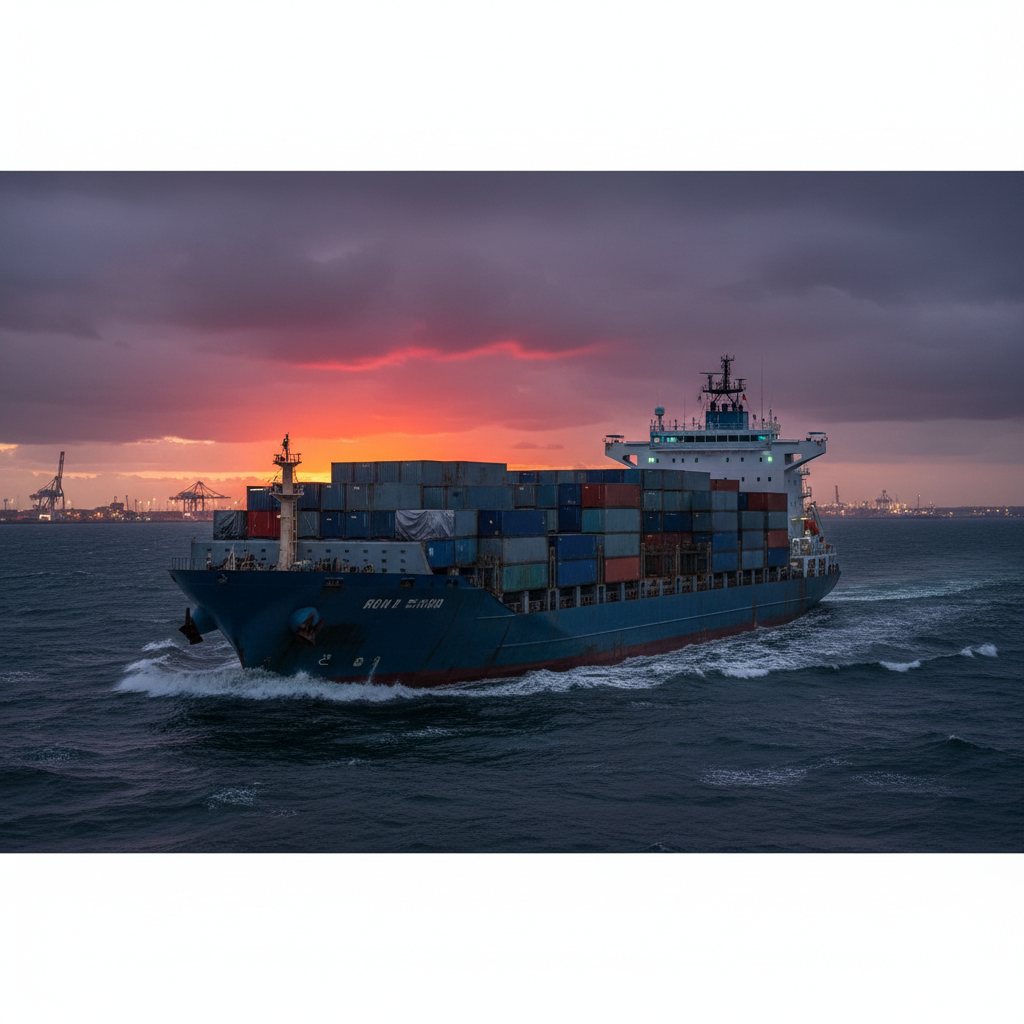
The Black Sea conflict exemplifies how regional tensions can rapidly transform maritime trade. What began as an asymmetric engagement, with each side targeting the other's shipping and port infrastructure, has now broadened into a 'fully symmetric denial regime.' This means that the entire region, and increasingly its periphery, is becoming a high-risk zone for commercial shipping. The direct consequence is a significant increase in maritime risk, compelling carriers to re-evaluate and often abandon traditional routes. Vessels are forced to undertake lengthy diversions, circumnavigating conflict zones or entirely avoiding once-efficient corridors. These re-routings lead to substantially longer transit times, consuming more fuel and incurring higher operational costs. Furthermore, insurance premiums for vessels operating in or near these areas skyrocket, adding another layer of expense to freight. The ripple effect extends to port congestion at alternative hubs, as diverted traffic strains existing infrastructure, leading to delays in loading and unloading. For shippers, this translates to unpredictable delivery schedules, increased inventory holding costs, and a higher probability of cargo damage or loss due to extended journeys and potential exposure to adverse conditions. A shipment-visibility control tower (MGS) becomes crucial here, offering real-time tracking of vessels, dynamic re-routing capabilities, and immediate updates on estimated times of arrival (ETAs) as routes change. This proactive approach allows businesses to assess new route risks and communicate potential delays to stakeholders effectively.
Impact on Airspace and Air Cargo
While the Black Sea conflict primarily affects maritime operations, geopolitical tensions rarely remain confined to a single domain. Airspace over or near conflict zones is frequently restricted or entirely closed for commercial flights, either due to direct military activity or heightened safety concerns. This forces air cargo carriers to implement significant detours, similar to their maritime counterparts. For instance, flights that would typically traverse certain regions must now take circuitous paths, adding thousands of kilometers to their journeys. These extended flight paths directly translate into increased fuel consumption, higher operational costs for airlines, and consequently, elevated air freight rates for shippers. Moreover, longer flight times reduce the efficiency of air cargo networks, potentially leading to capacity crunches on alternative, safer routes as demand shifts. The cumulative effect is a reduction in the speed advantage that air freight typically offers, impacting time-sensitive shipments and just-in-time supply chains. An MGS platform can provide critical visibility into air cargo movements, tracking flights through revised routes, monitoring real-time flight status, and alerting to potential delays or reroutes caused by airspace restrictions. This enables rapid adjustments to downstream logistics and customer expectations.
Waterway Access and Chokepoints
The Black Sea is a vital waterway for agricultural exports and other commodities. The escalation of conflict, as evidenced by strikes on Odesa and Taganrog, directly threatens access to and navigability of such critical maritime arteries. When a 'corridor war' becomes 'fully symmetric,' the risk of blockades, naval engagements, or even accidental damage to commercial vessels rises sharply. Beyond the Black Sea, the principle applies to other global chokepoints—such as the Suez Canal, Panama Canal, or the Strait of Hormuz—which are inherently vulnerable to geopolitical instability. Any disruption to these narrow passages can have catastrophic global consequences, as alternative routes are often far longer and more expensive. Reduced throughput at these chokepoints leads to immense backlogs, increased transit times for goods, and substantial rises in shipping costs. The potential for outright blockades or attacks could bring trade to a standstill in affected regions. For businesses, this means not only higher costs and delays but also a fundamental re-evaluation of supply chain design to mitigate reliance on single, vulnerable chokepoints. An MGS solution is invaluable for monitoring vessel passage through these critical waterways, providing immediate alerts on disruptions, and offering data-driven insights for alternative route analysis, helping mitigate risks associated with chokepoint vulnerabilities.
Tariffs, Sanctions, and Trade Barriers
Geopolitical events are almost invariably accompanied by an array of economic countermeasures, including tariffs, sanctions, and non-tariff barriers. As nations take sides or react to perceived aggressions, they impose restrictions on trade with specific countries or entities. While the source text focuses on physical disruptions, the 'corridor war' context implies a broader geopolitical struggle that often triggers such economic tools. Sanctions can prohibit trade in certain goods, with specific companies, or entirely with designated nations, forcing businesses to find new suppliers or markets. Tariffs, on the other hand, increase the cost of imported goods, making certain supply chains economically unviable. These measures introduce significant compliance challenges, requiring companies to meticulously track the origin, destination, and nature of their goods to avoid severe penalties. The result is a complex, ever-changing regulatory environment that can lead to goods being stranded, re-routed, or even seized if not handled correctly. Trade barriers can fundamentally alter global trade flows, pushing companies to de-risk by diversifying their sourcing and sales channels. An MGS platform can integrate compliance data, allowing businesses to track cargo against sanction lists, verify origins and destinations, and identify potential tariff impacts on specific shipments, thereby ensuring regulatory adherence and minimizing financial risk.
Supply Chain Resilience and Visibility
The escalating and broadening nature of geopolitical disruptions, as highlighted by the Black Sea's 'symmetric denial regime,' underscores the urgent need for enhanced supply chain resilience. The traditional focus on efficiency and cost-cutting is now being balanced, if not overshadowed, by the imperative for robustness and adaptability. Businesses must move beyond reactive problem-solving to proactive risk management. This involves diversifying sourcing geographically, building strategic buffer stocks for critical components, and developing agile logistics networks capable of rapid re-routing and modal shifts. However, none of this is truly effective without comprehensive supply chain visibility. An MGS control tower provides the end-to-end transparency required to understand where goods are at all times, anticipate potential disruptions, and respond decisively. It enables real-time monitoring of global events, correlating them with specific shipments to identify at-risk cargo. By integrating data from various sources—carriers, ports, customs, and geopolitical intelligence—an MGS platform empowers supply chain professionals to make informed decisions, whether it's rerouting a container, adjusting inventory levels, or engaging alternative suppliers. In an increasingly unpredictable world, such granular visibility is not merely an advantage; it is a fundamental requirement for maintaining operational continuity and competitive edge.
Conclusion
The geopolitical landscape is irrevocably altering the dynamics of global cargo movement. From escalating maritime risks and forced route diversions to airspace closures, vulnerable waterways, and the complex web of tariffs and sanctions, the consequences for trade and transport are profound and far-reaching. The 'blast radius' of conflicts is expanding, demanding that businesses adopt a more sophisticated and resilient approach to supply chain management. In this environment of heightened uncertainty, an MGS shipment-visibility control tower is no longer a luxury but a strategic imperative. It provides the critical intelligence and real-time insights necessary to navigate disruptions, optimize logistics, ensure compliance, and ultimately safeguard the flow of goods across an increasingly complex and volatile world.
Source: Container News — https://container-news.com/black-sea-the-corridor-war-is-no-longer-bilateral/