
West Coast Watch: Labor Dispute Threatens LA/LB Port Operations
A looming labor dispute involving port watchmen could severely disrupt operations at eight key marine terminals in Los Angeles and Long Beach, impacting critical trans-Pacific cargo flows and demanding immediate attention from supply chain managers. This analysis explores the potential fallout across shipping lanes, facilities, and transport modes, and outlines proactive strategies for shippers leveraging advanced visibility platforms.
Understanding the Impending Disruption
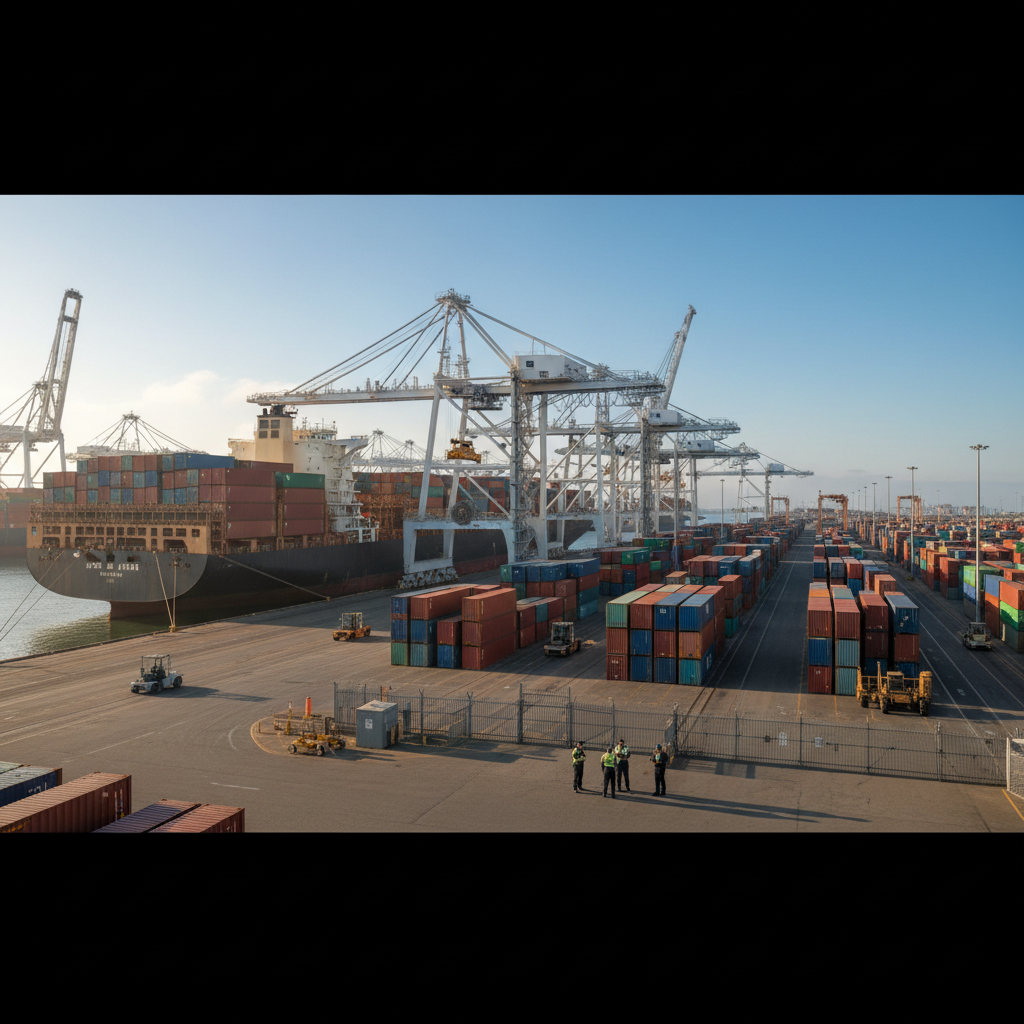
The global supply chain, still navigating a complex landscape of geopolitical shifts and demand fluctuations, faces another significant challenge on the horizon: a potential labor dispute at the crucial Ports of Los Angeles and Long Beach. As early as November 1, a disagreement involving port watchmen could lead to operational disruptions across eight marine terminals, threatening to snarl cargo movement through America's busiest port complex. These two ports collectively handle a substantial portion of all containerized cargo entering the United States, particularly from Asia, making any disruption here a matter of immediate concern for businesses worldwide. The timing is especially critical, coming just weeks after other unspecified events, highlighting the fragility of supply chain stability.
Impact on Key Shipping Lanes
The primary shipping lanes affected by any slowdown or stoppage at Los Angeles and Long Beach would be the vital trans-Pacific routes. These lanes connect manufacturing hubs in Asia, particularly China, to the vast consumer markets and industrial centers of the United States. A disruption would immediately trigger a cascade of issues:
- Vessel Diversions: Ocean carriers would be compelled to divert vessels to alternative ports, either along the US West Coast (e.g., Oakland, Seattle, Tacoma) or, for shippers willing to accept significantly longer transit times and higher costs, to East Coast or Gulf Coast ports. This re-routing places immense strain on port infrastructure and labor at these alternate gateways, often leading to secondary congestion.
- Increased Transit Times: Even for diverted cargo, the journey to its final destination would be extended. Vessels rerouted to other coasts face additional sailing days, while cargo discharged at other West Coast ports might still face delays in intermodal transfer or drayage due to unexpected volume surges.
- Freight Rate Volatility: The immediate consequence of reduced capacity and increased demand for alternative routes is often a sharp increase in spot freight rates. Shippers reliant on these lanes could see their transportation costs escalate significantly, impacting profitability and consumer prices.
- Schedule Reliability Degradation: Vessel schedules, already under pressure, would deteriorate further. Blank sailings (canceled voyages) or delayed departures would become more frequent, making it exceedingly difficult for shippers to plan inventory and meet delivery commitments.
Facilities at Risk: Eight Marine Terminals
The source material specifically highlights that "eight marine terminals in the ports of Los Angeles and Long Beach" are at risk. This concentration of impact is critical. These terminals are the gateways for countless container vessels, handling the loading, unloading, and staging of millions of TEUs (Twenty-foot Equivalent Units) annually. Port watchmen play a crucial role in maintaining security, controlling access, and facilitating the flow of traffic at these facilities. Their absence or a work slowdown can directly impede:
- Gate Operations: Restricting the entry and exit of trucks, leading to long queues outside the terminals and severe drayage delays.
- Container Movement: Slowing down the transfer of containers between ships, yards, and intermodal rail or truck loading zones.
- Security and Safety: Potentially compromising the security protocols essential for safe and efficient port operations.
Given the sheer volume of cargo processed by these eight terminals, even a short-term disruption could create a backlog that takes weeks or even months to clear, affecting the entire supply chain ecosystem that relies on these critical gateways.
Modes of Transport Under Duress
While the initial impact of a port labor dispute is felt most acutely in ocean freight, the ripple effects quickly extend to other critical modes of transport:
- Ocean Freight: As vessels face delays or diversions, the entire ocean shipping network becomes strained. Container availability can become an issue, and the repositioning of empty containers for export can be severely hampered.
- Intermodal Rail: The Ports of Los Angeles and Long Beach are major intermodal hubs, with direct rail connections extending across the United States. A slowdown at the terminals means containers cannot be efficiently transferred to railcars. This would lead to significant congestion at rail yards, delays in inland transit, and potential embargoes on certain rail routes as capacity becomes overwhelmed.
- Trucking and Drayage: Local drayage operations, responsible for moving containers between the port and nearby distribution centers or rail yards, would face immediate challenges. Long gate queues, increased driver detention times, and a scarcity of available chassis would drive up drayage costs and exacerbate delays in last-mile delivery. The efficiency of regional and national trucking networks would be compromised as drivers spend more time waiting at ports.
Proactive Strategies for Shippers
In the face of such a significant and imminent threat, shippers must adopt proactive and agile strategies to mitigate potential damage:
- Diversification of Port Entry: Explore and pre-plan alternative port entries. This could involve shifting cargo to other West Coast ports like Oakland, Seattle, or Tacoma, or even utilizing all-water services to East Coast or Gulf Coast ports, despite the longer transit times. Having established relationships and contingency plans with carriers for these alternative routes is crucial.
- Inventory Management Adjustments: Consider accelerating critical shipments ahead of the November 1 deadline to build safety stock. For ongoing operations, re-evaluate inventory levels to buffer against potential delays. This might involve increasing safety stock for essential components or finished goods, or pre-positioning inventory in alternative distribution centers.
- Enhanced Communication and Collaboration: Maintain open and continuous communication with all supply chain partners, including ocean carriers, freight forwarders, customs brokers, and 3PLs. Real-time updates and collaborative problem-solving are essential for adapting to rapidly changing circumstances.
- Contingency Planning and Scenario Analysis: Develop detailed playbooks for various strike scenarios—short-term vs. prolonged, partial vs. full disruption. Understand the cost and service implications of each alternative and be ready to execute.
- Review Contractual Obligations: Scrutinize existing contracts for clauses related to demurrage, detention, and force majeure. Understanding these terms can help manage unexpected costs and liabilities during a disruption.
The Critical Role of Shipment Visibility
In an environment of impending disruption, a robust shipment-visibility control tower platform becomes an indispensable tool for MGS clients. Such a platform provides the real-time intelligence and analytical capabilities necessary to navigate the complexities of a port labor dispute:
- Real-time Tracking and Monitoring: An MGS control tower offers granular, real-time visibility into the location and status of ocean vessels, individual containers, railcars, and trucks. Shippers can instantly identify which of their shipments are en route to or currently held at the affected "eight marine terminals" in Los Angeles and Long Beach, or are being diverted.
- Predictive Analytics and Alerts: Leveraging historical data and current operational intelligence, the platform can provide predictive ETAs (Estimated Time of Arrival) that account for potential delays caused by the dispute. Automated alerts notify shippers of deviations from planned schedules, unexpected port congestion, or changes in vessel routing, allowing for immediate response.
- Scenario Planning and Re-routing Tools: An MGS platform can empower shippers to model the impact of various alternative routing strategies in real-time. By inputting different diversion options, shippers can quickly assess the associated costs, transit time implications, and available capacity, facilitating data-driven decisions on how to re-route cargo most effectively.
- Data-Driven Decision Making: By consolidating data from across the entire supply chain—from carrier updates to port status, rail movements, and truck availability—the control tower provides a single source of truth. This holistic view enables supply chain managers to make informed decisions regarding inventory deployment, customer communication, and overall supply chain adjustments to minimize the financial and operational impact of the dispute.
- Enhanced Collaboration: The platform serves as a central hub for all stakeholders, enabling seamless information sharing and coordinated responses. This ensures that everyone, from procurement to logistics and sales, is working from the same, up-to-date information, fostering greater agility and resilience.
By providing unparalleled insight and actionable intelligence, an MGS shipment-visibility control tower transforms a reactive response into a proactive strategy, allowing shippers to maintain control and minimize the ripple effects of unforeseen disruptions like the looming labor dispute at the Ports of Los Angeles and Long Beach.