
Weather's Chokehold: Baltic Sea Bottleneck Exposes Supply Chain Vulnerabilities
Adverse weather conditions in the Gulf of Finland have led to a significant maritime traffic jam, with approximately 150 vessels stalled en route to key Russian ports. This incident underscores the critical impact of atmospheric phenomena on global cargo movement and highlights the urgent need for enhanced supply chain visibility and resilience strategies.
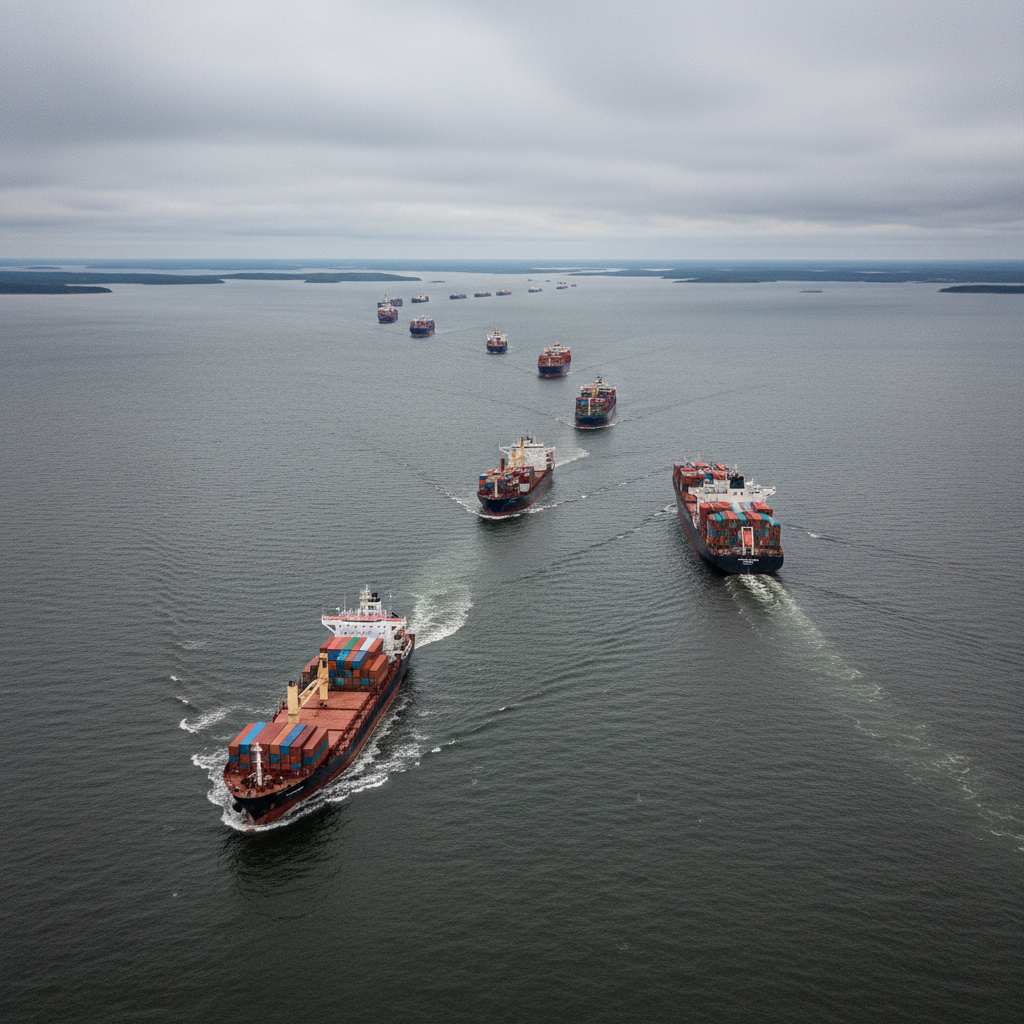
The intricate web of global supply chains is constantly at the mercy of myriad external factors, with weather emerging as an increasingly disruptive force. A recent incident in the Gulf of Finland starkly illustrates this vulnerability, where a substantial number of cargo vessels have found themselves ensnared in a prolonged standstill, directly impacting trade flows into critical Russian port facilities. This event serves as a potent reminder for shippers to re-evaluate their risk management strategies and leverage advanced visibility tools to navigate such unpredictable challenges.
The Incident: A Bottleneck in the Gulf of Finland
Recent reports indicate a significant maritime congestion event unfolding in the Gulf of Finland, a vital waterway connecting the Baltic Sea to major Russian ports. Approximately 150 ships, each carrying diverse cargo, are currently stalled, forming a queue stretching an estimated 50 kilometers. These vessels are bound for key destinations such as Ust-Luga, Primorsk, and St Petersburg, all crucial hubs for Russian trade and international commerce. While the specific atmospheric conditions are not detailed, the very nature of such a widespread and prolonged maritime halt in this region is frequently attributable to adverse weather phenomena. The Gulf of Finland is known for its challenging conditions, particularly during colder months, which can include dense fog, strong gales, heavy snowfall, and significant ice formation, all of which severely impede navigation and necessitate reduced speeds or complete halts in transit. This bottleneck represents more than just a delay; it signifies a substantial disruption to scheduled deliveries and port operations, with ripple effects extending far beyond the immediate vicinity.
Affected Lanes and Facilities
The primary lane directly impacted by this incident is the shipping channel within the Gulf of Finland itself, which serves as the maritime artery for trade entering and exiting the major Russian ports on the Baltic Sea. This narrow and often congested waterway is a critical transit point for a vast array of goods, from energy products to manufactured goods and raw materials. The 50-kilometer queue of 150 ships highlights the severe constriction of this lane, effectively choking off access to the destination ports.
Consequently, the facilities most directly affected are the destination ports themselves: Ust-Luga, Primorsk, and St Petersburg. Even once the weather conditions improve and vessels are able to proceed, these ports will face an immediate surge of arrivals, leading to severe congestion at berths, extended waiting times for offloading, and potential backlogs in cargo handling. This influx will strain port infrastructure, equipment, and labor resources. Furthermore, the ripple effect extends to upstream facilities, such as feeder ports or transshipment hubs that rely on timely departures from these Russian ports, and downstream facilities like warehouses and distribution centers that expect steady cargo flow. The disruption creates a domino effect, impacting the entire logistics network connected to these critical maritime gateways.
Impact on Modes of Transport
The immediate and most evident impact of this weather-induced bottleneck is on maritime transport. With 150 vessels stuck, ocean freight schedules are severely compromised. This leads to substantial delays for cargo owners, potential demurrage charges for carriers, and a significant deviation from planned transit times. The longer ships remain idle, the greater the financial burden and the more profound the disruption to subsequent voyages and vessel rotations across global networks.
Beyond the sea, the incident has significant repercussions for intermodal and land-based transport. Cargo that was scheduled to be offloaded at Ust-Luga, Primorsk, or St Petersburg for onward movement by rail or truck will now face considerable delays. This means trucks will sit idle waiting for cargo, rail cars will be underutilized, and warehousing facilities might experience unexpected surges or shortages. The synchronized flow between maritime and land modes is broken, creating inefficiencies and additional costs. For time-sensitive goods, this delay could render them unsellable or significantly devalue them, impacting industries from perishable goods to automotive components operating on just-in-time principles.
Broader Supply Chain Implications
The consequences of such a concentrated disruption extend far beyond the immediate delays. Firstly, schedule integrity is severely compromised, leading to a cascade of missed connections, production halts, and late deliveries across various industries. This unpredictability makes inventory management a nightmare, potentially leading to stockouts at destination markets or, conversely, excess inventory piling up at origin points if shipments cannot depart.
Increased operational costs are an inevitable outcome. Carriers face higher fuel consumption from idling, potential re-routing expenses, and the aforementioned demurrage. Shippers might incur expedited shipping costs for critical cargo, storage fees, and penalties for late deliveries. The financial burden can be substantial, eroding profit margins and impacting overall business viability.
Crucially, such events expose significant visibility gaps within supply chains. Without real-time, granular insight into the location and status of their cargo, shippers are left guessing, unable to make informed decisions or communicate effectively with their customers. This is where a shipment-visibility control tower platform like MGS becomes indispensable. By providing end-to-end tracking and predictive analytics, MGS can alert shippers to impending disruptions, allowing them to assess the impact on specific orders and proactively explore alternative strategies. This enhanced visibility transforms uncertainty into actionable intelligence, mitigating the financial and reputational damage associated with unforeseen events.
Shipper Strategies for Mitigation
In the face of increasing volatility driven by weather and other external factors, shippers must adopt robust strategies to build resilience into their supply chains.
- Embrace Advanced Shipment Visibility: The cornerstone of effective mitigation is real-time data. A shipment-visibility control tower (MGS) provides unparalleled insight into cargo location, estimated times of arrival (ETAs), and potential delays. This allows shippers to identify impacted shipments early, understand the extent of the disruption, and make proactive decisions, such as re-routing, expediting, or informing customers, rather than reacting after the fact. MGS platforms can integrate weather data with vessel tracking, offering predictive insights into potential delays before they fully materialize.
- Diversify Routes and Ports: Over-reliance on a single shipping lane or port creates a critical single point of failure. Shippers should explore and pre-qualify alternative routes, carriers, and even modes of transport (e.g., rail or air for critical segments) to ensure flexibility when primary channels are disrupted. While the Gulf of Finland is a direct route to specific Russian ports, understanding alternative entry points or transshipment options can be vital.
- Implement Buffer Stock Strategies: For critical components or high-demand products, maintaining strategic buffer stock or safety inventories can absorb the shock of unexpected delays without immediately impacting production or sales. This requires a careful balance to avoid excessive holding costs.
- Develop Robust Contingency Plans: Proactive planning for various disruption scenarios is essential. This includes pre-negotiated agreements with alternative carriers, identifying backup warehousing, and establishing clear communication protocols for internal and external stakeholders. Regularly testing these plans ensures their effectiveness.
- Leverage Data Analytics for Predictive Insights: Beyond real-time tracking, advanced analytics can help identify patterns and predict potential disruptions. By analyzing historical weather data, port congestion trends, and carrier performance, shippers can better anticipate risks and build more resilient networks. MGS platforms often incorporate such analytical capabilities, turning raw data into strategic foresight.
- Foster Strong Carrier Relationships: Close collaboration and open communication with carriers are paramount. Reliable carriers can often provide early warnings of potential issues and work with shippers to find the best alternative solutions during a crisis.
Conclusion
The incident in the Gulf of Finland serves as a potent, real-world case study illustrating the profound and often unpredictable impact of weather on global cargo movement. With 150 ships and a 50-kilometer queue, the scale of disruption is undeniable, affecting critical trade lanes and facilities. As climate patterns become more volatile, such events are likely to increase in frequency and intensity. For shippers, the imperative is clear: investing in robust supply chain visibility solutions like an MGS control tower is no longer a luxury but a fundamental necessity. By gaining real-time insights, embracing diversification, and developing comprehensive contingency plans, businesses can transform potential crises into manageable challenges, ensuring the continued flow of goods even when nature throws its worst.
Source: Marine Insight — https://www.marineinsight.com/150-ships-bound-for-russian-ports-stuck-in-gulf-of-finland-in-50-km-long-queue/?utm_source=rss&utm_medium=rss&utm_campaign=150-ships-bound-for-russian-ports-stuck-in-gulf-of-finland-in-50-km-long-queue