
Wallenius Wilhelmsen's $1 Billion Contract: A Bellwether for Supply Chain Stability
Wallenius Wilhelmsen's recent $1 billion, three-year contract signals a significant shift towards long-term supply chain commitments. This analysis explores its impact on global trade flows, capacity, financial dynamics, and how advanced visibility platforms like MGS become indispensable in navigating this evolving landscape.
How this impacts the global supply chain
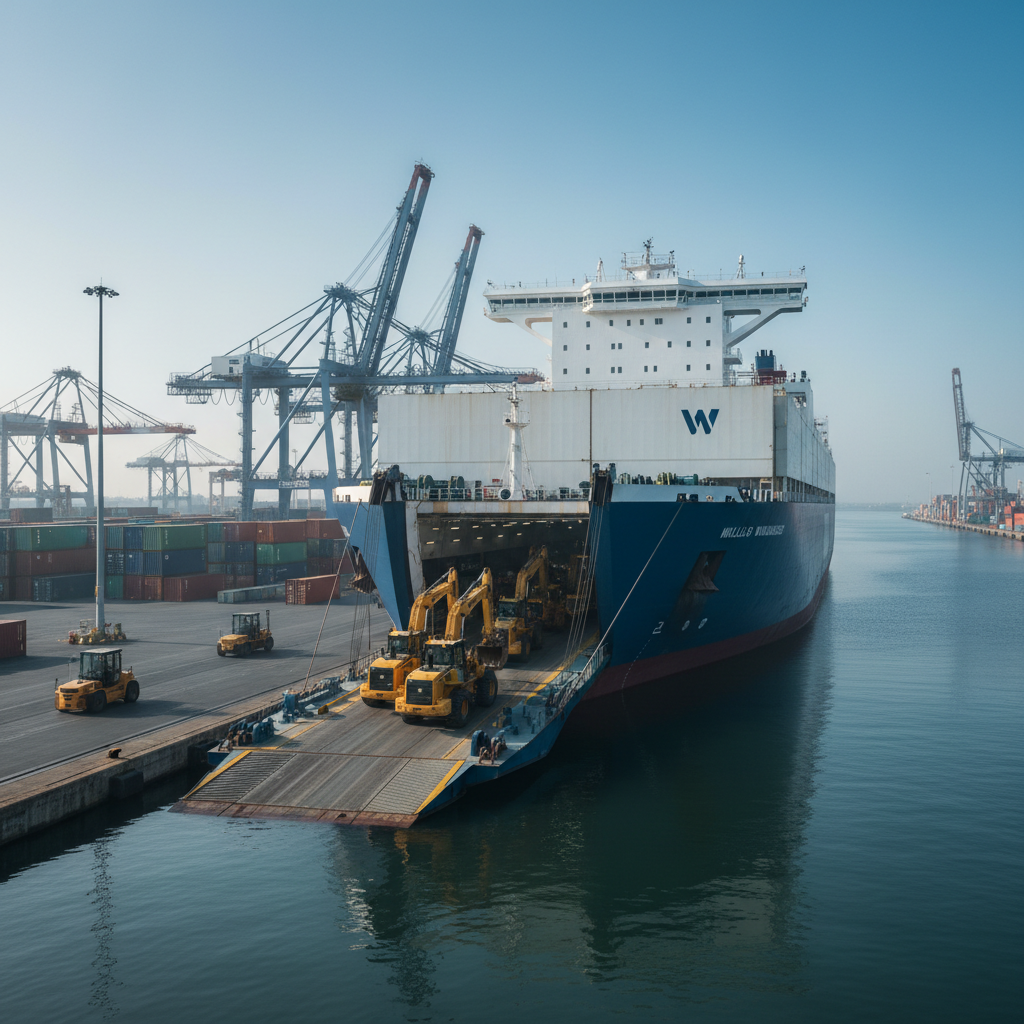
Wallenius Wilhelmsen's securing of a substantial $1 billion contract over three years with a major equipment manufacturer represents a significant development for global supply chains, particularly within the specialized cargo sector. This agreement, with ocean transportation accounting for approximately $950 million, will profoundly influence how goods move across the world.
Firstly, regarding flows and routes, such a multi-year commitment suggests a dedication to stable, predictable shipping lanes for a considerable volume of specialized cargo. For Wallenius Wilhelmsen, this likely translates into optimized vessel scheduling, potentially leading to increased frequency or dedicated services on specific routes catering to the equipment manufacturer's needs. This long-term visibility allows for more efficient network design, reducing wasted capacity and streamlining transit times for the contracted cargo. For other shippers, while not directly impacting their routes, it indirectly signals a tightening of specialized vessel availability on certain trade lanes, potentially pushing them to explore alternative carriers or adjust their own shipping strategies.
Secondly, the impact on capacity is substantial. Committing $950 million worth of shipping services over three years effectively locks in a significant portion of Wallenius Wilhelmsen's specialized fleet capacity, likely comprising Roll-on/Roll-off (RoRo) vessels designed for heavy and oversized equipment. This reduces the available capacity on the spot market for other shippers requiring similar services. In a market where specialized vessel capacity can be tight, especially for project cargo or large industrial equipment, this deal could lead to increased lead times or higher rates for those without similar long-term agreements. It also demonstrates confidence from both parties in the sustained demand for such equipment, implying robust activity in sectors like construction, mining, or agriculture that rely on these heavy assets.
Finally, the operational implications are far-reaching. For Wallenius Wilhelmsen, this contract provides a solid foundation for operational stability, enabling better resource planning, crew scheduling, and potentially justifying investments in new assets or technology to enhance service delivery. The inclusion of "logistics services" alongside ocean transportation indicates a move towards integrated solutions, meaning the carrier will likely manage more than just port-to-port movements, potentially encompassing inland transport, warehousing, and customs. For the equipment manufacturer, this agreement ensures critical supply chain reliability and predictability, mitigating risks associated with volatile freight markets and allowing them to focus on their core manufacturing operations with greater certainty regarding their product's global distribution.
Global financial impact
The financial implications of Wallenius Wilhelmsen's $1 billion, three-year contract reverberate across shippers, carriers, and global trade, highlighting a strategic shift towards stability and predictability in a volatile market.
For the equipment manufacturer acting as the shipper, the primary financial benefit is cost predictability and risk mitigation. By securing ocean transportation and logistics services for three years, they insulate themselves from the extreme fluctuations often seen in spot freight rates. This long-term commitment likely provides them with favorable, stable pricing, allowing for more accurate budgeting and reduced exposure to market spikes that could otherwise erode profit margins or disrupt production schedules. This strategic investment in supply chain stability effectively hedges against the financial uncertainties of a dynamic global trade environment.
For Wallenius Wilhelmsen, the carrier, this contract provides substantial revenue stability and improved cash flow visibility over a three-year horizon. A $1 billion commitment, with $950 million allocated to shipping, significantly strengthens their financial position, reducing reliance on the often-unpredictable spot market. This financial security enables strategic planning, potential investment in fleet modernization or expansion, and enhanced operational efficiency. It also reinforces their market leadership in specialized cargo and integrated logistics, potentially attracting other major manufacturers seeking similar long-term, reliable partnerships. While other carriers might experience a slight tightening of available specialized capacity, the deal also signals robust demand for such services, potentially driving overall market confidence and investment.
For trade at large, this agreement underscores a broader trend towards strategic partnerships and long-term contracts in the post-pandemic era, where supply chain resilience and predictability have become paramount. The significant value and duration of the contract indicate sustained global demand for heavy equipment, suggesting a positive outlook for industrial and infrastructure development worldwide. Financially, this trend can lead to more stable, albeit potentially less flexible, global trade flows. It encourages major players to lock in essential services, which can reduce overall market volatility but might also make it harder for smaller or less established players to secure capacity during peak demand periods without similar commitments. Ultimately, such deals contribute to a more structured and financially secure global logistics landscape for key industries.
How MGS can help navigate today's global trade environment
In an environment characterized by multi-year, high-value contracts like the one Wallenius Wilhelmsen has secured, a shipment-visibility control tower platform such as MGS becomes an indispensable tool for both the carrier and the equipment manufacturer. Its capabilities are directly relevant to optimizing the execution and maximizing the value of such a significant agreement.
For Wallenius Wilhelmsen, MGS provides the real-time, end-to-end visibility crucial for managing the complex interplay of ocean transportation and integrated logistics services. With a $950 million shipping component over three years, tracking thousands of specialized equipment movements is paramount. MGS can offer precise location tracking of vessels and cargo, dynamic Estimated Times of Arrival (ETAs), and alerts for potential delays due to weather, port congestion, or customs issues. This proactive insight allows Wallenius Wilhelmsen to optimize vessel utilization, manage transshipment points efficiently, and allocate resources effectively across the entire logistics chain, ensuring compliance with contractual service level agreements and maintaining operational excellence.
For the major equipment manufacturer, MGS offers unparalleled transparency into their critical supply chain. Knowing the exact status and location of high-value equipment, from factory gate to final destination, is vital for production planning, inventory management, and customer delivery commitments. MGS can consolidate data from various sources – carrier systems, port authorities, and even inland transport providers – into a single, intuitive dashboard. This unified view enables the manufacturer to anticipate potential disruptions, make informed decisions regarding inventory buffers, or communicate proactively with their clients about delivery schedules. For instance, if a vessel carrying critical components is delayed, MGS can immediately flag this, allowing the manufacturer to adjust production lines or explore alternative sourcing, thereby minimizing costly downtime.
Furthermore, the "logistics services" portion of the contract benefits immensely from MGS. This typically involves warehousing, customs clearance, and last-mile delivery, all of which are prone to bottlenecks and require precise coordination. MGS can provide visibility into these land-side operations, ensuring smooth handovers and identifying any chokepoints. This comprehensive oversight facilitates seamless information exchange and collaboration between all stakeholders involved in the execution of this complex, multi-faceted contract, ensuring that the manufacturer's valuable equipment reaches its destination efficiently and predictably, reinforcing the value proposition of their long-term commitment.
Demand–supply analysis & improvement
The Wallenius Wilhelmsen contract provides clear insights into the current demand-supply dynamics within the specialized cargo sector and highlights concrete levers for improvement.
Demand: The $1 billion, three-year commitment unequivocally signals robust and sustained demand for specialized equipment. This suggests a positive outlook for industries that rely on heavy machinery, such as construction, mining, agriculture, or potentially large-scale infrastructure projects. The sheer scale and duration of the contract indicate that this demand is not fleeting but is expected to persist for the foreseeable future, driving the need for reliable, dedicated logistics solutions. The equipment manufacturer's willingness to lock in such a significant sum reflects their confidence in future sales and production volumes, underpinning a strong underlying market for their products.
Supply: On the supply side, the contract demonstrates that specialized vessel capacity, particularly for Roll-on/Roll-off (RoRo) and project cargo, is a valuable and finite resource. By committing $950 million of shipping services, Wallenius Wilhelmsen is dedicating a substantial portion of its fleet to this single client. This effectively removes a significant chunk of specialized capacity from the general spot market, indicating that supply in this niche is not overly abundant. While Wallenius Wilhelmsen is a major player, such a large-scale, long-term deal suggests that other shippers seeking similar services might face tighter capacity and potentially less flexibility in securing vessels on short notice.
Improvement Levers:
- For Wallenius Wilhelmsen: This contract provides the financial stability and long-term visibility to invest strategically. They can optimize their fleet deployment, potentially investing in new, more efficient vessels or upgrading existing ones to meet the specific needs of this major client. They can also enhance their integrated logistics capabilities, leveraging the "logistics services" component to offer more comprehensive, value-added solutions, thereby improving their overall service offering and operational efficiency.
- For the Equipment Manufacturer: The primary improvement lever is enhanced supply chain resilience and predictability. By securing guaranteed capacity and stable costs, they can optimize their production schedules, reduce inventory holding costs by relying on more predictable lead times, and improve customer satisfaction through reliable delivery. This allows them to focus internal resources on product innovation and market expansion, rather than grappling with logistics uncertainties.
- For the Broader Market: This deal could spur other carriers to invest in specialized assets or develop more integrated logistics offerings to compete for similar long-term contracts. It also encourages other major shippers to consider long-term strategic partnerships as a way to de-risk their supply chains, potentially leading to a more stable but less spot-market-driven global logistics landscape for specialized cargo.
ROI-focused resilience
The Wallenius Wilhelmsen contract exemplifies a significant investment in supply chain resilience, framed directly in terms of Return on Investment (ROI) for the major equipment manufacturer. This $1 billion, three-year commitment is not merely a transaction; it's a strategic decision to protect against quantified risks and secure tangible benefits.
Investment in Resilience: The core investment here is the long-term commitment itself – the $1 billion allocated over three years for ocean transportation and logistics services. This represents a proactive decision by the equipment manufacturer to secure critical supply chain infrastructure, rather than relying on the volatile spot market. They are essentially paying for guaranteed capacity, predictable costs, and integrated service delivery.
Quantified Risk Protection: The alternative to this long-term contract is exposure to significant and quantifiable risks:
- Volatile Freight Costs: Without a fixed-term agreement, the manufacturer would be subject to unpredictable spot market rates, which can spike dramatically during periods of high demand or disruption. These spikes could easily add tens or even hundreds of millions of dollars to their shipping costs over three years, directly impacting profitability.
- Capacity Shortages: In a tight market, securing specialized vessel space for heavy equipment can be challenging, leading to production delays, missed delivery deadlines, and potentially lost sales. Each day of delay for high-value equipment can translate into substantial financial losses, including inventory holding costs, expedited freight charges, and contractual penalties.
- Operational Disruptions: Relying on fragmented logistics providers for ocean and land services increases the risk of miscommunication, delays, and damage. The "logistics services" portion of the contract mitigates this by integrating the entire process under one provider, reducing points of failure.
ROI Calculation: The return on this investment in resilience is multifaceted and significant:
- Cost Predictability: Guaranteed rates for three years allow for precise budgeting and financial planning, eliminating the uncertainty that can plague companies reliant on spot rates. This financial stability is invaluable.
- Guaranteed Capacity: Knowing that specialized vessel space is secured ensures that production schedules can be met, and products can reach their markets on time. This directly translates into sustained revenue generation and avoids the costs associated with production stoppages or lost sales due to logistics bottlenecks.
- Operational Efficiency and Reliability: The integrated logistics services streamline the entire supply chain, reducing administrative overhead, minimizing transit times, and decreasing the likelihood of errors or delays. This operational efficiency contributes directly to lower overall supply chain costs and improved customer satisfaction.
- Strategic Focus: By offloading logistics complexities to a trusted partner, the equipment manufacturer can reallocate internal resources to core competencies like product development, manufacturing, and sales, ultimately driving greater long-term value.
In essence, the $1 billion contract is an insurance policy against supply chain volatility, with an ROI measured in avoided costs, preserved revenue, and enhanced strategic focus. A shipment-visibility control tower like MGS further amplifies this ROI by providing the real-time data and predictive analytics necessary to proactively manage the contract, identify potential issues before they escalate, and continuously optimize performance, ensuring the maximum return on this critical investment in resilience.
Source: Splash247 — https://splash247.com/wallenius-wilhelmsen-locks-in-1bn-contract-haul/