
Unlocking $128 Billion: Tariff Refunds, Bottlenecks, and the Supply Chain's Uneven Flow
US Customs has certified $127.7 billion in tariff refunds, yet a significant portion remains undistributed due to banking bottlenecks and legal disputes. This analysis explores the profound implications for global supply chains, financial stability, and how visibility platforms can help navigate these complex trade dynamics.
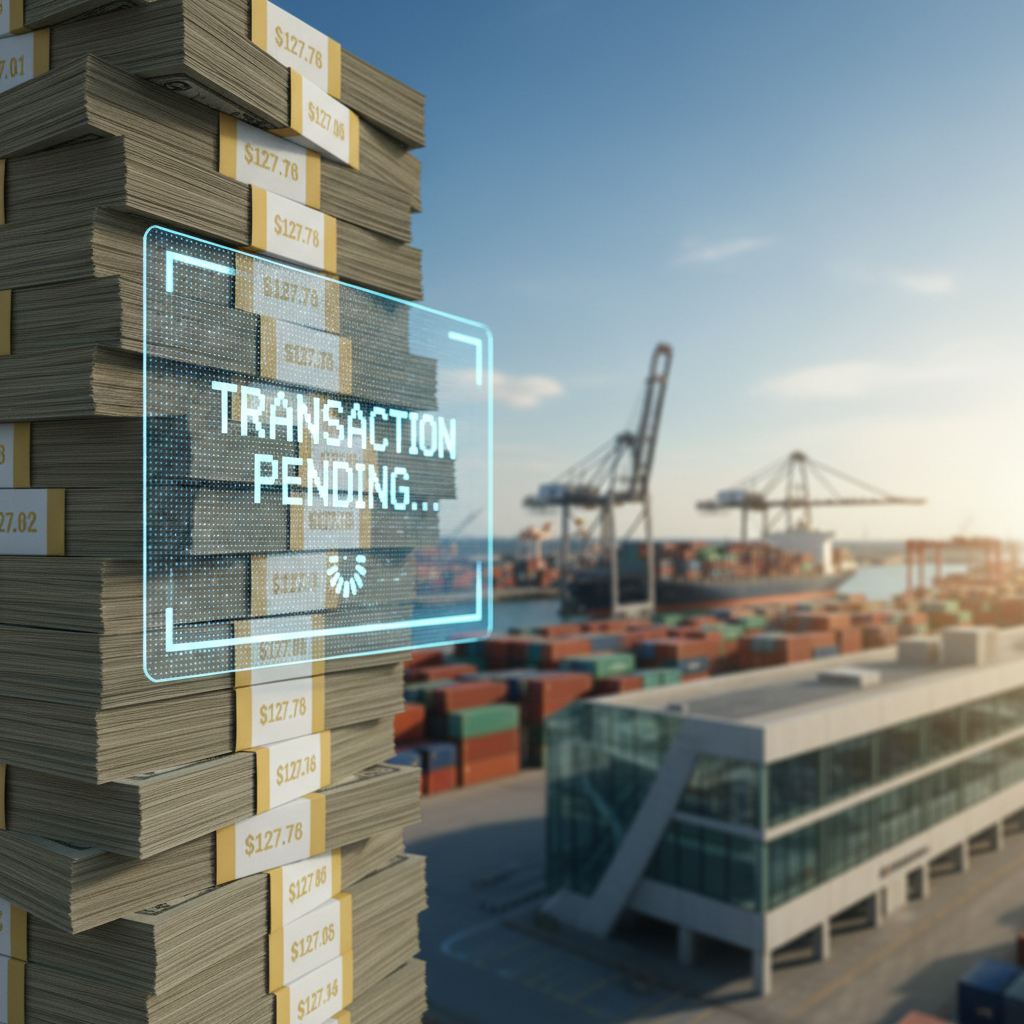
How this impacts the global supply chain
The revelation that US Customs and Border Protection (CBP) has certified $127.7 billion in unlawful emergency-duty refunds, yet a substantial portion remains undistributed, introduces a significant element of financial uncertainty into global supply chain operations. While the physical movement of goods is not directly affected, the financial health and operational agility of importers are. For companies awaiting these refunds, the delay in receiving what amounts to a significant capital injection can constrain working capital. This directly impacts their ability to invest in new inventory, secure favorable freight rates, or even expand their operational footprint. Such financial friction can lead to more conservative inventory strategies, potentially reducing demand for certain logistics services or specific product lines, thus indirectly influencing global trade flows.
The uneven distribution of these funds – with some importers paid and others caught in a nearly $1 billion banking-information bottleneck or a legal divide – creates an unlevel playing field. Those who have received their refunds gain a competitive advantage through enhanced liquidity, enabling them to make more strategic purchasing decisions, negotiate better terms with suppliers, or absorb unexpected costs. Conversely, those still waiting face prolonged financial strain, which can hinder their competitiveness and long-term planning. This disparity can lead to operational inefficiencies across the supply chain, as financially constrained entities may struggle to maintain optimal inventory levels or adapt to market changes, ultimately affecting overall supply chain resilience and responsiveness.
Global financial impact
The financial implications for shippers, carriers, and international trade are substantial. For shippers, particularly importers, the $127.7 billion in certified refunds represents a massive correction of previously incurred costs. However, the delay in disbursement, specifically the nearly $1 billion stuck in banking bottlenecks, translates directly into an opportunity cost. This capital, intended to bolster balance sheets, remains tied up, preventing businesses from deploying it for debt reduction, operational improvements, or strategic investments. The legal disputes further compound this financial uncertainty, forcing some importers to incur additional legal expenses and prolonging their wait for rightful funds. This situation underscores the unpredictable nature of trade policy and its subsequent financial adjustments, which can significantly impact a company's cash flow and profitability.
Carriers, while not directly receiving these refunds, are indirectly affected. A financially robust shipper base is crucial for a healthy freight market. If a significant number of shippers are experiencing cash flow issues due to delayed refunds, it could potentially lead to slower payment cycles for carriers, increased pressure on freight rates, or even reduced shipping volumes if importers scale back operations. The overall confidence in the stability of international trade mechanisms can also be eroded. While the US government has demonstrated an efficient system for processing these refunds, the challenges in disbursing them highlight a critical flaw in the final stage of financial reconciliation. This scenario emphasizes the need for businesses to factor in potential delays and complexities in trade finance when assessing their overall financial risk and planning for future operations.
How MGS can help navigate today's global trade environment
In an environment characterized by significant financial adjustments and administrative bottlenecks, a shipment-visibility control tower like MGS becomes an invaluable tool for operators. While MGS does not directly process tariff refunds, its core capabilities provide critical support for managing the implications of such events.
Firstly, MGS offers unparalleled historical data on shipments. To claim and track tariff refunds effectively, importers need meticulous records of goods shipped, their origins, classifications, and the duties paid at the time of import. MGS centralizes and digitizes this information, providing an auditable trail that can streamline the internal process of identifying eligible refunds and substantiating claims. This historical data is crucial for navigating complex customs procedures and legal challenges, ensuring that companies have the necessary evidence to pursue their rightful reimbursements.
Secondly, by providing real-time and historical data on landed costs, including duties and tariffs, MGS enables more accurate financial modeling and risk assessment. Operators can leverage this data to understand the true cost of their supply chain, factoring in the potential for future duty adjustments or refunds. This enhanced financial visibility allows for more informed decision-making regarding procurement, inventory management, and overall budgeting, mitigating the impact of unexpected financial shifts like those seen with the tariff refunds. For companies awaiting significant sums, MGS can help them quantify the financial impact of delays and better plan their cash flow, even if the actual refund disbursement is outside the platform's direct control.
Finally, MGS contributes to operational agility by providing a holistic view of the supply chain. While not directly tracking refund payments, the platform's insights into inventory levels, transit times, and supplier performance allow companies to optimize their operations even when faced with financial uncertainties. By understanding where their goods are and when they will arrive, companies can make more strategic decisions about capital allocation, potentially offsetting some of the negative effects of delayed refunds by optimizing other areas of their business. This integrated visibility helps operators maintain control and make data-driven choices in a complex and financially volatile global trade landscape.
Demand–supply analysis & improvement
The scenario of $127.7 billion in certified tariff refunds, with nearly $1 billion stalled, reveals a critical dynamic impacting the supply of capital within the global trade ecosystem. For the businesses awaiting these funds, this represents capital that cannot be deployed. This financial bottleneck can directly influence their ability to place new orders, pay for logistics services, or invest in inventory, thereby indirectly dampening demand for goods and services across the supply chain. If a significant number of importers are cash-strapped, it could lead to reduced purchasing power, slower inventory turns, and a more cautious approach to expansion, affecting upstream suppliers and downstream distribution.
Concrete improvement levers exist at both governmental and corporate levels. For governments, the immediate focus should be on resolving the banking-information bottleneck and expediting the legal resolution process. This involves improving communication channels between customs agencies and financial institutions, standardizing data submission requirements, and dedicating resources to clear backlogs. For businesses, the imperative is to enhance internal financial and data management systems. This includes implementing robust processes for tracking all duty payments, maintaining accurate banking information with all relevant authorities, and proactively engaging with customs and legal counsel to navigate the refund process. Diversifying banking relationships or exploring alternative financial instruments could also mitigate the risk of single-point bottlenecks. By addressing these systemic and internal inefficiencies, the supply of capital can flow more freely, supporting healthier demand and overall trade growth.
ROI-focused resilience
The situation with delayed tariff refunds presents a clear case for ROI-focused resilience strategies, particularly concerning financial liquidity and data management. The quantified risk here is the potential for nearly $1 billion in rightful refunds to be held up indefinitely due to administrative or legal hurdles, leading to significant opportunity costs and cash flow disruptions for affected businesses. For an individual company, this could mean millions of dollars in capital that is unavailable for operations or investment.
Investing in enhanced compliance and data management systems offers a tangible ROI in this context. For instance, a company that invests in a robust system to meticulously track all import documentation, duty payments, and customs interactions (a function where a visibility control tower like MGS provides critical data foundations) can significantly reduce the time and resources required to prepare and submit refund claims. If such a system helps a company recover a $5 million refund six months faster, the ROI can be calculated based on the interest saved, the opportunity cost of deploying that capital elsewhere, or the avoidance of short-term borrowing. This investment protects against the risk of prolonged financial uncertainty and ensures the timely recovery of capital that was unlawfully collected.
Furthermore, proactive engagement with specialized trade compliance consultants or legal counsel, while an upfront investment, can yield substantial returns by navigating complex legal divides and administrative processes. For a business facing a contested refund, the cost of expert advice is often far outweighed by the value of securing a multi-million-dollar reimbursement. Building financial resilience also involves diversifying banking relationships and ensuring robust internal controls for financial data, which can prevent a company from falling victim to systemic banking bottlenecks. The ROI is the direct protection against financial paralysis and the assurance of capital availability, turning a potential liability into a timely asset recovery. This strategic investment in financial and data infrastructure directly mitigates the quantified risk of delayed or lost funds, ensuring business continuity and competitive advantage.
Source: The Loadstar — https://theloadstar.com/128bn-tariff-refunds-the-money-has-moved-yet-not-everyone-has-been-paid/