
Panama Canal Water Levels Rebound: A Crucial Reprieve for Global Supply Chains
An unexpected October rainfall has significantly improved water levels in the Panama Canal's Gatun Lake, offering a crucial reprieve for global shipping routes and supply chain stability amidst ongoing challenges.
How this impacts the global supply chain
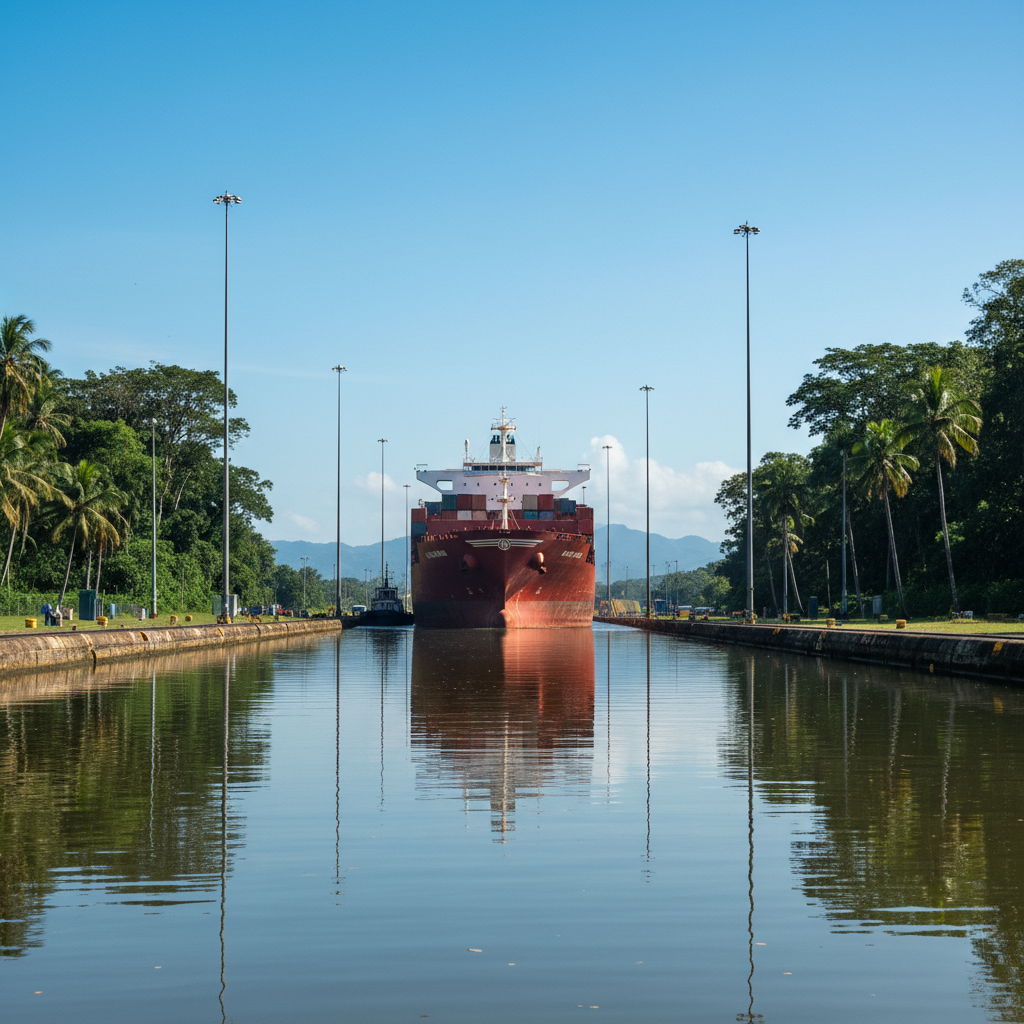
The recent and surprisingly wet October has brought much-needed relief to the Panama Canal, with Gatun Lake levels recovering to an average of 85.80 ft (26.15 m). This development carries significant implications for global supply chain flows, capacity, and operational efficiency. For months, the canal has grappled with severe drought conditions, leading to unprecedented restrictions on daily transits and vessel draft, forcing many carriers to seek alternative, longer routes.
The primary impact is the potential easing of these critical transit restrictions. When water levels are low, the Panama Canal Authority (ACP) typically imposes draft limitations, dictating how deep a ship can sit in the water, and often caps the number of daily passages. The recovery of Gatun Lake to near its historical average suggests that these constraints can be relaxed or even removed. This means that vessels previously compelled to navigate longer, more expensive journeys – such as around the Cape of Good Hope or via the Suez Canal for certain East-West routes – can now utilize the Panama Canal more reliably. This restoration of a vital shortcut is particularly crucial for trade between Asia and the US East Coast, re-establishing a degree of predictability in transit times.
From a capacity perspective, improved water levels directly translate to enhanced canal throughput. Ships can now carry more cargo, reducing the need for 'light-loading' to meet draft requirements, thereby maximizing payload per transit. Furthermore, if the number of daily transits is increased, it effectively injects additional capacity into the global shipping network. This alleviates the congestion and prolonged waiting times that had become a significant operational challenge, contributing to a smoother flow of goods.
Operationally, this positive shift offers considerable benefits for carriers and shippers alike. For shipping lines, it means more predictable scheduling, reduced operational complexities, and less need for costly contingency planning, such as splitting cargo or utilizing land bridges. For shippers, it implies greater certainty in delivery schedules and a reduced risk of delays, which are paramount for maintaining lean inventory levels and meeting customer commitments. Overall, this natural recovery brings a welcome measure of stability and efficiency back to one of the world's most critical maritime arteries.