
UK Rail Disruption: Storms Cripple Key Port Connections, Triggering Supply Chain Ripples
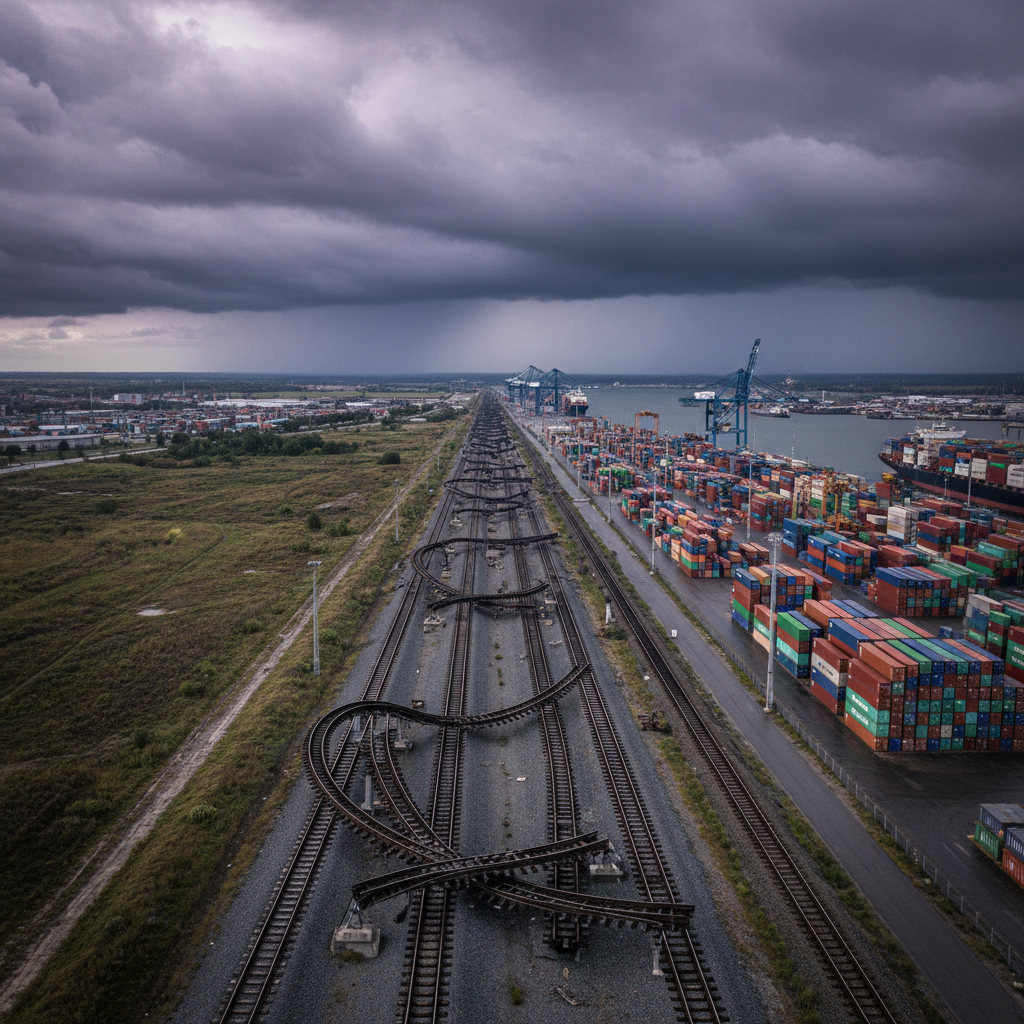
Recent storms have crippled rail freight services from major UK ports, London Gateway and Tilbury, forcing shippers to scramble for alternatives and highlighting vulnerabilities in global logistics networks. This brief analyzes the far-reaching implications and how advanced visibility platforms can mitigate such disruptions.
How this impacts the global supply chain
The suspension of rail freight services from critical UK terminals like DP World London Gateway and Tilbury, following a train derailment and extensive track damage, sends immediate and cascading effects through the global supply chain. Firstly, it directly impacts flows and routes. Containers arriving at these major deep-sea ports, typically destined for inland distribution via rail, are now stranded or require immediate re-routing. This forces a sudden and significant shift from rail to road transport for inland movements across the UK's south-east. The immediate consequence is increased congestion on road networks, particularly around the affected port areas, leading to longer transit times and potential delays for goods reaching their final destinations or being exported. This localized disruption can also create bottlenecks at other inland depots as they absorb diverted volumes.
Secondly, the incident severely strains capacity. The sudden loss of rail capacity for a week from two major ports creates an instant surge in demand for road haulage. While the UK has a robust road transport network, it operates with finite resources. This unexpected demand can quickly exhaust available truck and driver capacity, leading to higher spot rates and potential equipment imbalances, where empty containers cannot be efficiently repositioned. Furthermore, if containers cannot be cleared from the port quickly enough, it can lead to yard congestion, slowing down vessel turnaround times and potentially causing ships to miss their onward schedules, creating a ripple effect across global shipping lanes and port rotations.
Finally, operations for shippers, carriers, and logistics providers are significantly disrupted. Shippers face the immediate challenge of re-planning their distribution strategies, securing alternative transport, and managing revised delivery schedules. This reactive scramble consumes valuable resources and can lead to increased administrative overhead. Carriers may experience delays in container retrieval and repositioning, impacting their operational efficiency and potentially leading to additional costs. For the broader global supply chain, such localized but significant disruptions underscore the fragility of 'just-in-time' models and highlight the need for robust contingency planning, especially in regions prone to extreme weather events or infrastructure vulnerabilities. The incident serves as a stark reminder that even seemingly localized issues in key logistics hubs can have far-reaching consequences for global trade flows.
Global financial impact
The financial and cost implications of this rail disruption are substantial, affecting various stakeholders across the supply chain. For shippers, the immediate financial burden comes from the necessity to secure alternative inland transport. Road haulage is typically more expensive per container than rail, especially for longer distances, leading to an increase in overall logistics costs. The 'scrambling' for alternatives suggests a competitive market for available trucks, likely driving up spot rates even further. Beyond direct transport costs, shippers face potential demurrage and detention charges if containers cannot be moved from the port within free time limits due to lack of available transport. Delays in delivery can also result in lost sales, penalties for missed deadlines, and damage to customer relationships, impacting revenue and brand reputation. For manufacturers, disruptions to inbound raw materials or outbound finished goods can halt production, incurring significant operational losses.
Carriers (both ocean and land-based) also bear financial consequences. Ocean carriers may face increased operational costs if vessel schedules are disrupted due to port congestion or delays in container handling. The need to reposition empty containers, which might be stuck at ports or inland depots, can also incur additional expenses. Rail operators, like those affected by the track damage, face significant costs for infrastructure repair, lost revenue from suspended services, and potential liability claims. Road hauliers, while benefiting from increased demand, may also face challenges in managing the sudden surge, potentially leading to driver overtime costs or increased fuel consumption due to congestion.
For trade at large, such disruptions contribute to inflationary pressures within the supply chain. Higher logistics costs for moving goods from port to market ultimately get passed on to consumers, impacting the cost of living. If these types of disruptions become more frequent or prolonged, they can erode the competitiveness of UK exports and imports, potentially influencing trade volumes and investment decisions. The incident highlights the economic vulnerability of relying on single modes of transport or concentrated infrastructure, emphasizing the need for diversified logistics strategies to mitigate financial risks associated with unforeseen events.
How MGS can help navigate today's global trade environment
In the face of unexpected disruptions like the UK rail freight suspension, a shipment-visibility control tower platform like MGS becomes an indispensable tool for operators. Its core value lies in providing real-time, end-to-end visibility across the entire supply chain. When rail services are suddenly halted, MGS can immediately identify all affected shipments destined for or originating from London Gateway and Tilbury. This granular insight allows shippers to pinpoint exactly which containers are impacted, their current location, and their original planned route and ETA.
Beyond mere tracking, MGS facilitates proactive decision-making and rapid response. Instead of 'scrambling' reactively, operators can leverage MGS to quickly assess the scale of the disruption. The platform can provide alerts and notifications regarding delays, allowing logistics teams to initiate alternative arrangements much sooner. This might involve identifying available road haulage capacity, exploring alternative inland depots, or even re-routing shipments to different ports if feasible. By having a consolidated view of all shipments and their status, MGS empowers users to prioritize critical cargo and allocate resources effectively to mitigate the most severe impacts.
Furthermore, MGS supports enhanced communication and collaboration. In a crisis, clear and timely communication with carriers, freight forwarders, and end customers is paramount. MGS can serve as a single source of truth, providing updated ETAs and revised logistics plans to all stakeholders. This reduces the administrative burden of manual updates and ensures everyone is working from the same, accurate information. By centralizing data and communication, MGS helps maintain transparency, manage expectations, and ultimately minimize the financial and reputational damage caused by unforeseen supply chain interruptions, transforming a reactive scramble into a more controlled and informed response.
Demand–supply analysis & improvement
The rail disruption in the UK vividly illustrates a classic demand-supply imbalance. The sudden and complete cessation of rail services from London Gateway and Tilbury created an immediate, unforeseen surge in demand for alternative inland transport, primarily road haulage. Simultaneously, the supply of road transport capacity, while generally robust, is not infinitely elastic and cannot instantly scale to absorb such a significant and concentrated shift in volume. This imbalance leads to increased competition for available trucks, higher spot market rates, and potential delays as demand outstrips immediate supply.
To improve resilience against such dynamics, several levers can be pulled. Firstly, diversification of transport modes is crucial. Relying heavily on a single mode, even one as efficient as rail, exposes the supply chain to significant risk. Shippers should explore and establish relationships with multiple transport providers across different modes (road, rail, barge where applicable) to enable swift transitions. Secondly, pre-negotiated contingency contracts with alternative carriers can provide a safety net, ensuring access to capacity at pre-agreed rates during disruptions, avoiding the high costs of spot markets. Thirdly, enhanced information sharing and collaboration between ports, rail operators, and road hauliers can help manage capacity more effectively. Real-time data on rail outages and available road capacity could facilitate better resource allocation.
Finally, digital platforms and advanced analytics play a pivotal role. Tools like MGS can provide insights into potential bottlenecks and available capacity, allowing for more intelligent matching of demand and supply. By analyzing historical data and real-time conditions, these platforms can help identify optimal re-routing strategies, predict capacity shortfalls, and even suggest alternative distribution points, thereby transforming a reactive scramble into a more strategic and data-driven response to demand-supply shocks.
ROI-focused resilience
The 'scrambling' observed among shippers in response to the UK rail disruption underscores the high cost of reactive logistics, making a strong case for ROI-focused resilience investments. The immediate risk quantified by this event is the complete loss of a primary inland transport mode for a week, affecting potentially thousands of containers. The implied cost of this risk includes significantly higher spot market rates for road transport (often 2-3x rail rates), potential demurrage and detention charges (which can quickly accumulate to hundreds of dollars per container per day), lost sales due to delays, and reputational damage. For a single week of disruption across major ports, these costs can easily run into millions for large-volume shippers.
Investing in resilience, therefore, offers a clear return. Consider the investment in a multi-modal strategy and the associated operational flexibility. The cost of maintaining relationships with diverse carriers and potentially slightly higher base rates for flexibility pales in comparison to the exorbitant costs of emergency re-routing and penalties during a crisis. For instance, a 10-15% increase in base transport costs for a diversified network could save 50-100% or more in emergency surcharges and avoided penalties during a disruption.
Similarly, the implementation of a shipment-visibility control tower like MGS represents a strategic investment. While there's an upfront cost for the platform and integration, the ROI is realized through several avenues: reduced demurrage and detention fees due to proactive container movement, optimized re-routing that minimizes higher-cost alternatives, improved customer satisfaction from accurate ETAs, and reduced administrative overhead from manual tracking. By enabling proactive rather than reactive management, MGS can help avoid a significant portion of the 'scrambling' costs, potentially saving hundreds of thousands to millions annually for large enterprises by mitigating the financial impact of just a few major disruptions. The investment in resilience is not merely an insurance policy; it's a strategic move that protects revenue, controls costs, and enhances operational efficiency in an increasingly volatile global trade environment.
Source: The Loadstar — https://theloadstar.com/no-rail-freight-from-london-gateway-and-tilbury-after-storms/