
Navigating Shifting Tides: East-West Container Reliability and Its Supply Chain Implications
Recent data reveals a nuanced landscape in east-west container trade reliability, with MSC slightly outperforming the Gemini Cooperation. This analysis delves into the operational and financial ripple effects for global supply chains and highlights how advanced visibility platforms can mitigate risks.
How this impacts the global supply chain
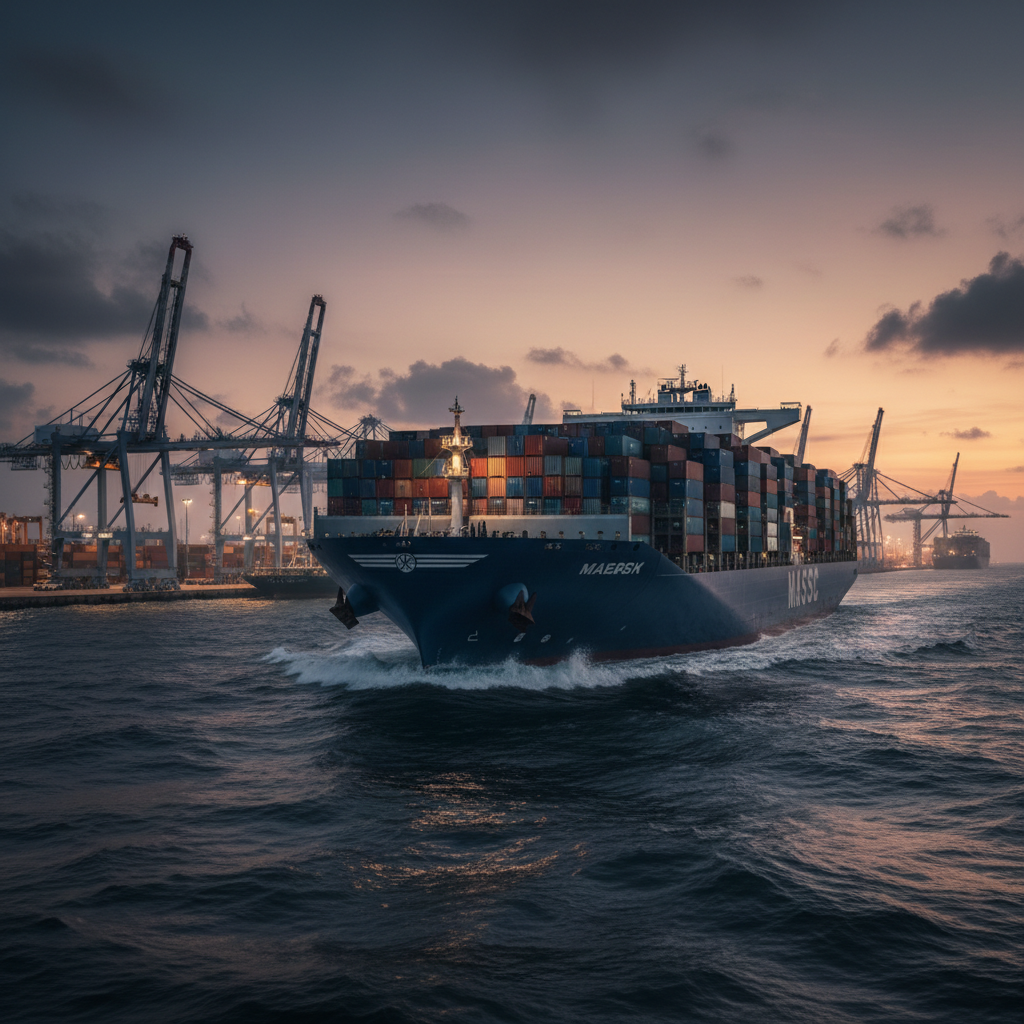
The recent shifts in carrier reliability across the vital east-west container trades present a critical challenge for global supply chains. While Maersk maintained its position as the most reliable individual carrier, the broader Gemini Cooperation, comprising Maersk and Hapag-Lloyd, experienced a significant month-on-month decline of 9.4 percentage points in reliability, settling at 68.4%. This contrasts with MSC, which, despite a more modest 1.2 percentage point dip, edged slightly ahead with 68.9% reliability. Such fluctuations, even if seemingly small in percentage terms, translate into substantial operational complexities that ripple through the entire logistics ecosystem.
Firstly, these developments directly impact global supply chain flows. A drop in carrier reliability means less predictable vessel arrivals and departures. This irregularity disrupts the carefully orchestrated flow of goods, leading to bottlenecks at ports, uneven distribution of cargo, and potential delays in onward transportation. For manufacturers and retailers relying on precise delivery windows, this forces a re-evaluation of inventory strategies and production schedules, often necessitating larger safety stocks to buffer against uncertainty.
Secondly, the implications for routes are subtle but significant. While carriers don't immediately alter primary east-west routes due to short-term reliability shifts, persistent unreliability on specific services or by certain alliances could prompt shippers to diversify their carrier portfolios or even consider alternative, potentially longer or more expensive, routes that offer greater predictability. The slight performance difference between MSC and the Gemini Cooperation might influence shipper preference, leading to shifts in cargo allocation across different services.
Thirdly, capacity management becomes more challenging. Unreliable schedules create a paradox: at times, multiple delayed vessels may converge on a port simultaneously, overwhelming terminal capacity and leading to congestion. At other times, scheduled capacity might sit idle due to late arrivals, leading to underutilization. This operational inefficiency impacts port operators, trucking companies, and warehouses, all of whom struggle to manage resources effectively when vessel schedules are inconsistent. The 9.4 percentage point drop for Gemini partners indicates a substantial increase in unpredictability that directly strains capacity planning.
Finally, the impact on operations is pervasive. Businesses built on just-in-time (JIT) inventory models are particularly vulnerable, as even minor delays can halt production lines. Extended and unpredictable lead times complicate planning for product launches, seasonal sales, and raw material procurement. This forces companies to either absorb higher costs associated with expedited shipping (e.g., air freight) or risk stockouts and missed market opportunities. Furthermore, port operations face increased pressure to handle irregular vessel calls, often leading to slower turnaround times and increased costs associated with demurrage and detention for shippers.
Global financial impact
The fluctuating reliability in east-west container trades, as evidenced by the recent performance of MSC and the Gemini Cooperation, carries significant financial and cost implications for all stakeholders involved in global trade. These impacts extend beyond immediate shipping expenses, influencing broader economic stability.
For shippers, the financial burden is multifaceted. A decline in carrier reliability, such as the 9.4 percentage point drop experienced by Gemini partners, directly translates to increased inventory holding costs. To mitigate the risk of production stoppages or missed sales, businesses are compelled to maintain larger buffer stocks, tying up valuable capital in warehouses and increasing insurance expenses. Furthermore, unpredictable delays often necessitate the use of more expensive expedited shipping options, such as air freight, for critical or time-sensitive goods, eroding profit margins. Shippers may also incur demurrage and detention charges at ports if containers are not moved swiftly due to congestion caused by irregular vessel arrivals. Ultimately, consistent unreliability can lead to lost sales opportunities, particularly for seasonal products or those with short market windows, directly impacting revenue.
Carriers themselves face considerable financial pressures. While Maersk maintains its individual reliability, the alliance's overall dip indicates operational inefficiencies. Off-schedule operations lead to increased fuel consumption as vessels attempt to catch up, higher labor costs for overtime at ports, and potential penalties for failing to meet contractual service level agreements. A reputation for unreliability can also lead to a loss of market share, as shippers may opt for more dependable alternatives, such as MSC, which demonstrated slightly better reliability. The competitive landscape, where even a slight edge (like MSC's 68.9% over Gemini's 68.4%) can sway customer decisions, puts immense pressure on carriers to invest in operational improvements, which in turn carries its own cost.
For trade at large, these reliability issues contribute to broader economic instability. Increased logistics costs, whether from higher inventory, expedited shipping, or operational inefficiencies, are often passed on to consumers, contributing to inflationary pressures. This can dampen consumer demand and impact overall economic growth. Moreover, unpredictable supply chains deter foreign direct investment and can make global sourcing strategies riskier, potentially leading to a shift towards regionalization or nearshoring, which may not always be the most cost-effective solution. The cumulative effect of these financial strains can hinder global trade expansion and make goods more expensive and less accessible for end-users worldwide.
How MGS can help navigate today's global trade environment
In an environment characterized by shifting carrier reliability, such as the recent performance variations between MSC and the Gemini Cooperation, a sophisticated shipment-visibility control tower like MGS becomes an indispensable tool for operators. MGS empowers businesses to move beyond reactive problem-solving to proactive risk mitigation, ensuring greater resilience and efficiency in their supply chains.
Firstly, MGS provides unparalleled real-time, end-to-end visibility. When carrier reliability fluctuates, as seen with the significant 9.4 percentage point drop for Gemini partners, MGS immediately flags potential deviations from scheduled arrival times. This real-time insight allows logistics teams to identify specific shipments that might be impacted well in advance. For example, if a critical component is on a vessel from a carrier experiencing a dip in performance, MGS can alert stakeholders to a potential delay, enabling them to adjust production schedules, inform downstream partners, or even explore alternative transport options before the delay becomes a crisis. This proactive capability is crucial when dealing with the inherent unpredictability of ocean freight.
Secondly, MGS facilitates data-driven carrier selection and performance monitoring. The reported reliability figures (MSC at 68.9% vs. Gemini at 68.4%, with Maersk as the most reliable individual carrier) highlight the dynamic nature of carrier performance. MGS continuously aggregates and analyzes historical and real-time data on carrier reliability, on-time performance, and transit times across specific lanes. This objective data allows shippers to move beyond anecdotal evidence or static contracts, providing a factual basis for evaluating carrier performance. Businesses can use this intelligence to make informed decisions when allocating cargo, negotiating contracts, and identifying which carriers consistently meet their service level agreements, thereby optimizing their carrier portfolio for reliability and cost-effectiveness.
Thirdly, MGS enhances exception management and contingency activation. When delays are inevitable, MGS's control tower capabilities enable rapid identification of affected shipments and their cascading impact on the entire supply chain. If a critical order is on a vessel experiencing a significant delay, MGS can trigger automated alerts and provide actionable insights. This could involve recommending alternative transport modes for urgent cargo, rerouting subsequent legs of the journey, or activating pre-planned contingency measures. By centralizing communication and providing a single source of truth, MGS ensures that all stakeholders – from procurement to warehousing to final delivery – are aligned and can collaborate effectively to minimize the financial and operational fallout from unforeseen disruptions, such as a month-on-month reliability decline.
Source: The Loadstar — https://theloadstar.com/maersk-the-most-reliable-carrier-hits-and-misses-for-gemini/