
The Integrated Warehouse: Unlocking Global Supply Chain Potential
The convergence of advanced technologies like WMS, AI, and robotics is revolutionizing warehouse operations. This brief explores the profound impact of these interconnected systems on global supply chains, financial landscapes, and how advanced visibility platforms like MGS are crucial for navigating this new era of logistics.
How this impacts the global supply chain
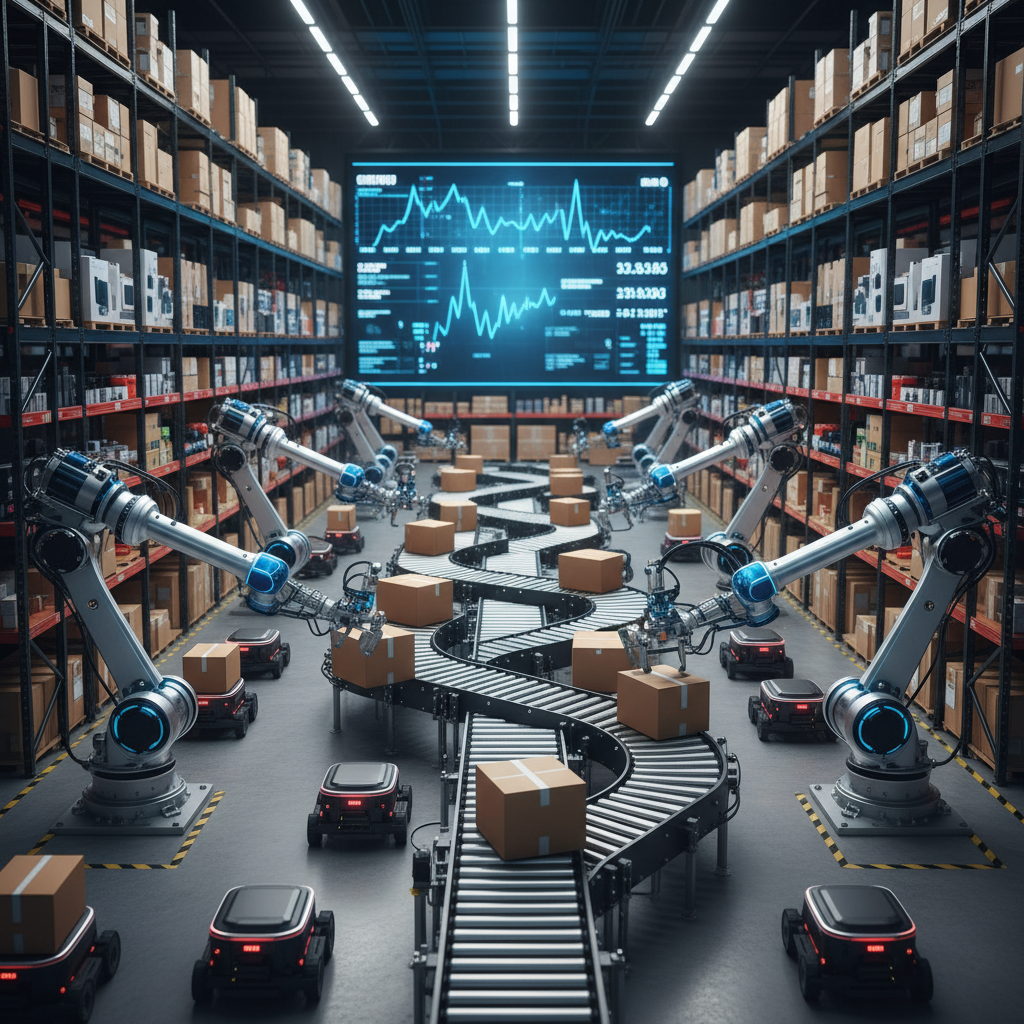
The evolution of warehouse management into a highly interconnected ecosystem, integrating systems like WMS, automation, robotics, and artificial intelligence, signals a transformative shift for global supply chains. This development moves beyond mere functional software selection to the intricate challenge of ensuring seamless interoperability in complex operational settings. The primary impact is a significant acceleration and optimization of goods movement from origin to final destination.
Firstly, enhanced integration within warehouses leads to unprecedented levels of operational efficiency. Automated picking, packing, and sorting, guided by AI, reduce processing times dramatically. This translates directly into faster order fulfillment cycles, shortening lead times across international borders. For global supply chains, this means goods can move through distribution hubs with greater velocity, improving responsiveness to market demands.
Secondly, the precision offered by these integrated systems minimizes errors and damage. Robotics perform repetitive tasks with consistent accuracy, while AI-driven analytics can identify potential issues before they escalate. This reduction in operational discrepancies means fewer delays due to mis-shipments, incorrect inventory counts, or damaged goods, thereby streamlining cross-border logistics.
Thirdly, the real-time data generated by these interconnected technologies provides a granular view of inventory. This improved visibility within the warehouse allows for more accurate demand forecasting and inventory positioning. Globally, this can lead to optimized stock levels across various distribution centers, reducing the need for excessive buffer stock and freeing up capital. It also enables more strategic routing and allocation of goods, potentially influencing the location and design of future distribution networks, favoring facilities that can best leverage these advanced technologies.
Finally, the increasing sophistication of warehouse operations can influence global trade routes and capacity. As certain hubs become highly efficient and automated, they may attract a greater volume of goods, potentially consolidating freight flows through these advanced facilities. This could lead to a re-evaluation of traditional shipping lanes and port choices, prioritizing those that can efficiently integrate with and leverage these cutting-edge warehouse capabilities. The long-term operational gains foster a more agile, resilient, and efficient global supply chain capable of responding rapidly to dynamic market conditions.
Global financial impact
The widespread adoption and integration of advanced warehouse technologies—including WMS, automation, robotics, and artificial intelligence—carry significant financial and cost implications for all stakeholders within the global trade ecosystem. While the initial capital outlay for implementing such sophisticated systems can be substantial, the long-term financial benefits promise a paradigm shift in operational economics.
For shippers, the primary financial impact manifests as a reduction in operational costs and an improvement in service levels. Automated processes significantly lower labor costs associated with manual handling, picking, and packing. Furthermore, the enhanced accuracy from AI-driven systems minimizes errors, reducing expenses related to mis-shipments, returns processing, and inventory discrepancies. Faster throughput and reduced lead times mean less capital is tied up in inventory, improving cash flow and reducing inventory holding costs. Shippers can also benefit from improved customer satisfaction due to faster, more reliable delivery, potentially leading to increased sales and market share. The return on investment for these technologies often comes from a combination of direct cost savings and indirect revenue gains.
Carriers, while not directly operating these warehouses, benefit from increased efficiency at loading and unloading docks. Faster turnaround times for trucks and containers at highly automated facilities reduce demurrage and detention charges, optimize fleet utilization, and improve schedule adherence. This efficiency can translate into lower operating costs for carriers and potentially more competitive pricing for shippers, fostering a more robust and efficient transportation network.
At the broader trade level, the financial implications are profound. The overall reduction in logistics costs, coupled with faster and more reliable movement of goods, can stimulate economic activity. Products reach markets quicker, allowing businesses to respond more rapidly to consumer trends and reduce the risk of obsolescence. This efficiency can contribute to lower consumer prices for goods, as supply chain inefficiencies are reduced. Countries and regions that invest heavily in these integrated warehouse solutions may gain a competitive edge in attracting manufacturing and distribution operations, leading to economic growth and job creation in high-tech logistics sectors. Conversely, regions lagging in adoption might face higher logistics costs and reduced competitiveness. The challenge lies in managing the significant upfront investment against the promise of substantial long-term operational savings and strategic advantages.
How MGS can help navigate today's global trade environment
In an era where warehouse operations are becoming increasingly complex and interconnected, the role of a sophisticated shipment-visibility control tower like MGS becomes genuinely critical for navigating the global trade environment. The challenge highlighted by the source material isn't just about selecting individual technologies, but ensuring their reliable interoperability within complex settings. MGS directly addresses this by providing the overarching intelligence layer necessary to make sense of this intricate ecosystem.
As warehouses integrate WMS, robotics, automation, and AI, they generate vast amounts of real-time operational data. MGS can ingest and synthesize this data, providing end-to-end visibility that extends beyond the warehouse walls. For operators, this means not just knowing where a shipment is in transit, but understanding its precise status within an automated warehouse—whether it's being picked by a robot, awaiting packing, or queued for loading. This granular insight into internal warehouse processes, often a black box for traditional visibility platforms, becomes crucial.
Specifically, MGS can help operators by:
- Providing Holistic Operational Context: By integrating data from advanced warehouse systems with in-transit tracking, MGS offers a complete picture of a shipment's journey. If an automated warehouse experiences a temporary slowdown or a robotics issue, MGS can flag this potential delay, allowing operators to proactively adjust downstream logistics, such as rescheduling carrier pickups or re-routing subsequent legs of the journey.
- Enhancing Predictive Capabilities: With real-time data flowing from interconnected warehouse technologies, MGS's AI-driven analytics can more accurately predict potential delays or exceptions. For instance, if an AI-powered WMS indicates a higher-than-expected volume of orders for a specific SKU, MGS can predict potential bottlenecks at the loading dock and alert operators to prepare for increased outbound activity or even suggest alternative distribution paths.
- Facilitating Proactive Decision-Making: In complex operating environments, minor issues can quickly cascade into major disruptions. MGS provides the centralized dashboard and actionable insights needed to make informed decisions. If a specific automated picking system is underperforming, affecting a critical order, operators can immediately see the impact on their global supply chain and initiate contingency plans, such as rerouting other orders or expediting alternative shipments, minimizing the overall impact.
- Improving Collaboration and Communication: MGS serves as a single source of truth, allowing all stakeholders—shippers, carriers, and even warehouse operators—to view the same real-time data. This shared visibility is essential for coordinating efforts in a highly integrated environment, ensuring that everyone is working with the most current information, reducing miscommunication, and streamlining problem resolution.
In essence, as warehouses become more technologically advanced and interconnected, the challenge shifts from managing individual components to orchestrating the entire system. MGS provides the necessary control tower functionality to oversee this orchestration, transforming raw data from complex warehouse operations into actionable intelligence that empowers operators to navigate today's dynamic and often unpredictable global trade environment with greater confidence and efficiency.
Demand–supply analysis & improvement
The increasing interconnectedness of warehouse management systems, automation, robotics, and artificial intelligence, as described, profoundly impacts the dynamics between demand and supply, offering significant levers for improvement. The core challenge of ensuring multiple technologies work reliably in complex operating environments directly relates to a supply chain's ability to accurately and efficiently meet market demand.
Firstly, the enhanced data granularity and real-time visibility afforded by these integrated warehouse technologies provide a much clearer picture of available inventory. AI-driven WMS can track stock levels with extreme precision, reducing discrepancies and enabling more accurate demand forecasting. This precision helps businesses to better align their supply with actual demand, minimizing both overstocking (which ties up capital and incurs holding costs) and understocking (which leads to lost sales and customer dissatisfaction). The ability to know exactly what is available, and where, at any given moment, is a fundamental improvement in demand-supply matching.
Secondly, the operational efficiency gained through automation and robotics directly translates into improved responsiveness to demand fluctuations. Faster picking, packing, and shipping processes mean that orders can be fulfilled more rapidly. This agility allows companies to react quickly to sudden spikes in demand or unexpected shifts in consumer preferences. Instead of relying on long lead times and large safety stocks, businesses can operate with a leaner, more responsive supply chain, bringing products to market faster and capturing sales opportunities that might otherwise be missed.
Thirdly, the complex operating environments mentioned in the source imply a need for systems that can adapt and optimize. AI and advanced controls within the warehouse can dynamically allocate resources, manage workflows, and even re-route tasks to ensure optimal throughput. This adaptive capability is crucial for balancing fluctuating demand with available supply-side resources. For example, during peak seasons, AI can optimize robot paths and human-robot collaboration to maximize output, ensuring that increased demand is met without overwhelming the system.
Concrete improvement levers stemming from this trend include:
- Real-time Inventory Optimization: Leveraging AI-powered WMS to maintain optimal stock levels, reducing carrying costs and improving service rates.
- Accelerated Order Fulfillment: Implementing robotics and automation to drastically cut down order processing times, enhancing customer satisfaction and enabling just-in-time delivery models.
- Dynamic Resource Allocation: Using AI and interconnected systems to intelligently manage warehouse resources (labor, robots, space) in response to real-time demand signals.
- Enhanced Demand Forecasting Accuracy: Integrating warehouse data with sales and market data to feed AI models, leading to more precise predictions of future demand.
By embracing these integrated warehouse technologies, businesses can transform their distribution operations from reactive cost centers into proactive, demand-driven engines, significantly improving their ability to match supply with market needs in an increasingly complex global environment.
Source: Logistics Viewpoints — https://logisticsviewpoints.com/2026/10/21/meson-logistics-solutions-ceo-jonathan-kwok-on-the-future-of-warehouse-execution/