
Strait of Hormuz Incidents: Navigating Heightened Maritime Security Risks
Recent reports confirm a container ship sinking near the Strait of Hormuz after a projectile strike, alongside another dry bulk vessel incident. This alarming development signals escalating maritime security risks, demanding immediate attention from shippers to safeguard cargo and maintain supply chain resilience.
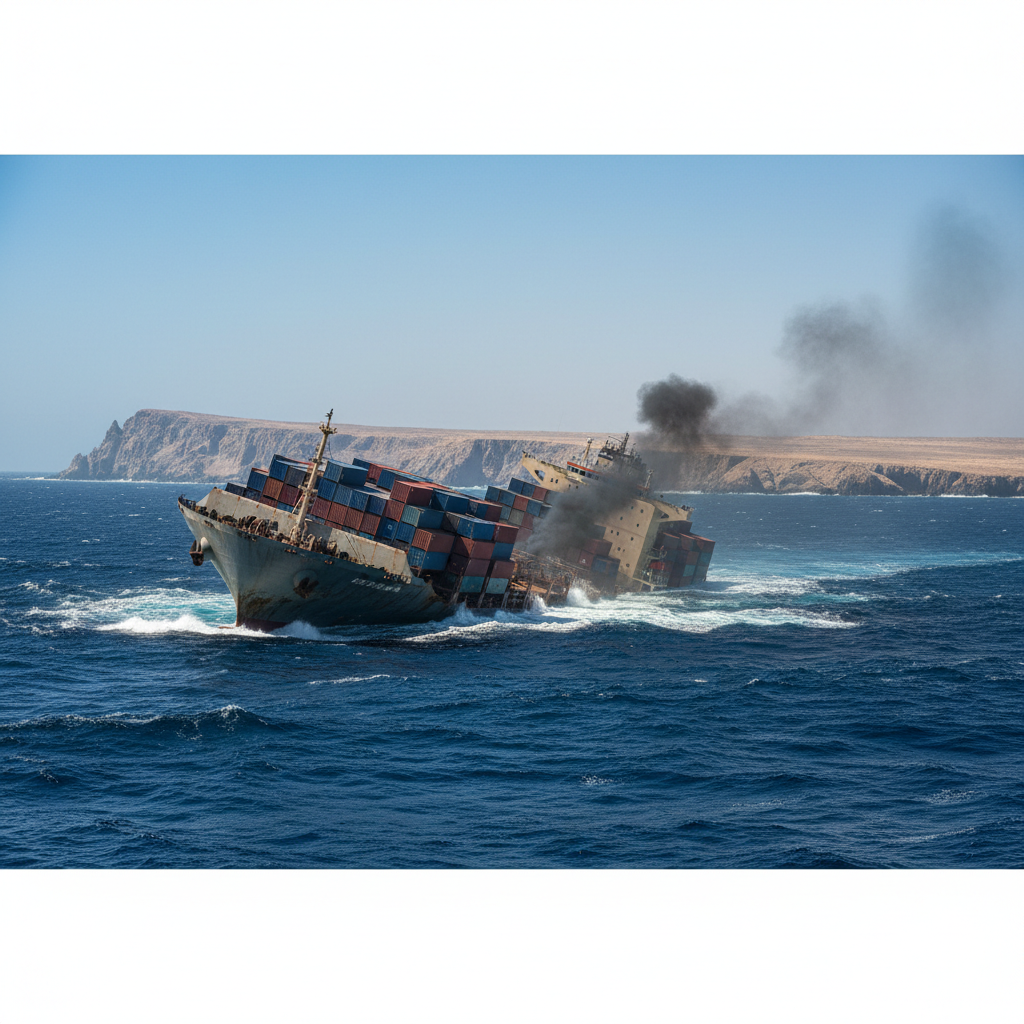
Executive Summary
Recent developments in the critical Strait of Hormuz have sent ripples through global supply chains. Maritime security sources confirm the sinking of a container ship following a projectile strike, an incident that underscores the escalating risks in this vital waterway. Concurrently, a separate dry bulk vessel is reported to be sinking, further highlighting the precarious operational environment. These events, occurring on Wednesday, represent a significant disruption, demanding immediate assessment and strategic responses from shippers and logistics providers worldwide. As an MGS supply-chain analyst, our focus is on understanding the implications of such security breaches and empowering our clients with the insights and tools necessary to navigate these complex challenges.
Impact on Critical Shipping Lanes and Facilities
The Strait of Hormuz is arguably the world's most critical chokepoint for maritime oil transit, but its significance extends to all forms of cargo movement. Connecting the Persian Gulf to the open ocean, it is an indispensable artery for international trade. The confirmed sinking of a container ship and the distress of a dry bulk vessel within or near this strait immediately elevate the risk profile for all vessels transiting the area. Shippers must now contend with potential direct threats to their cargo and vessels, leading to increased insurance premiums, re-routing decisions, and extended transit times. Facilities in the region, including major ports and terminals, may experience reduced vessel traffic as carriers assess the risks, or face congestion if alternative routes lead to bottlenecks at other ports. The immediate impact is a heightened state of alert, with potential for significant delays and increased operational costs across the entire maritime network reliant on this passage.
Affected Modes and Cargo Types
The incidents directly involve a container ship and a dry bulk vessel. This indicates that a broad spectrum of global trade is immediately vulnerable. Container ships are the backbone of modern global commerce, carrying everything from consumer goods and electronics to machinery and perishable items. Disruptions to container shipping in the Strait of Hormuz can therefore affect diverse industries, leading to shortages, production delays, and increased costs for businesses and consumers globally. The involvement of a dry bulk vessel points to potential impacts on commodities such as grains, ores, and other raw materials, which are crucial inputs for manufacturing and food supply chains. The nature of these incidents—a projectile strike—suggests a deliberate act, which could lead to a sustained period of heightened risk, affecting the scheduling and routing for these vessel types and their respective cargo. Shippers of high-value or time-sensitive goods, in particular, face immediate pressure to re-evaluate their risk exposure.
Mitigating Actions for Shippers
In the face of such unpredictable and severe disruptions, shippers must adopt a proactive and agile approach. The first step involves immediate risk assessment of all current and planned shipments transiting the Strait of Hormuz. This includes reviewing vessel schedules, cargo insurance policies, and contractual agreements. Diversification of shipping lanes, where feasible, becomes paramount. While longer and more costly, alternative routes may offer greater security. Shippers should also consider adjusting inventory levels, building strategic buffer stocks for critical components or finished goods that rely on this trade route, to absorb potential delays. Enhanced communication with carriers, freight forwarders, and logistics partners is crucial to stay abreast of the evolving security situation and any advisories issued by maritime authorities. Furthermore, exploring multimodal transport options, even if partially, could offer a degree of flexibility, although the primary impact here is on ocean freight.
The Role of Shipment Visibility for MGS Clients
In times of heightened geopolitical risk and operational uncertainty, a robust shipment-visibility control tower becomes an indispensable asset for MGS clients. Our platform provides real-time, end-to-end visibility into cargo movements, enabling shippers to monitor their assets even in volatile regions like the Strait of Hormuz. With MGS, clients can track the exact location of their container ships and dry bulk vessels, receive immediate alerts on deviations, delays, or incidents, and quickly assess the impact on their supply chain. This proactive insight allows for rapid decision-making, such as rerouting cargo, communicating with affected parties, or activating contingency plans. The ability to simulate different scenarios and understand the ripple effect of a chokepoint disruption empowers shippers to mitigate risks effectively, minimize financial losses, and maintain customer commitments. In an environment where every minute counts, MGS provides the clarity needed to transform potential chaos into controlled response, ensuring resilience even when faced with unforeseen security challenges.
Source: gCaptain — https://gcaptain.com/container-ship-sinks-near-hormuz-after-being-hit-by-projectile-sources-say/