
Predictable Global Trade: FedEx's New App and Its Supply Chain Implications
FedEx's new Shopify app, offering guaranteed duty and tax costs, marks a significant step towards predictable cross-border e-commerce. This brief analyzes its impact on global supply chains, financial dynamics, and how MGS enhances operational oversight.
How this impacts the global supply chain
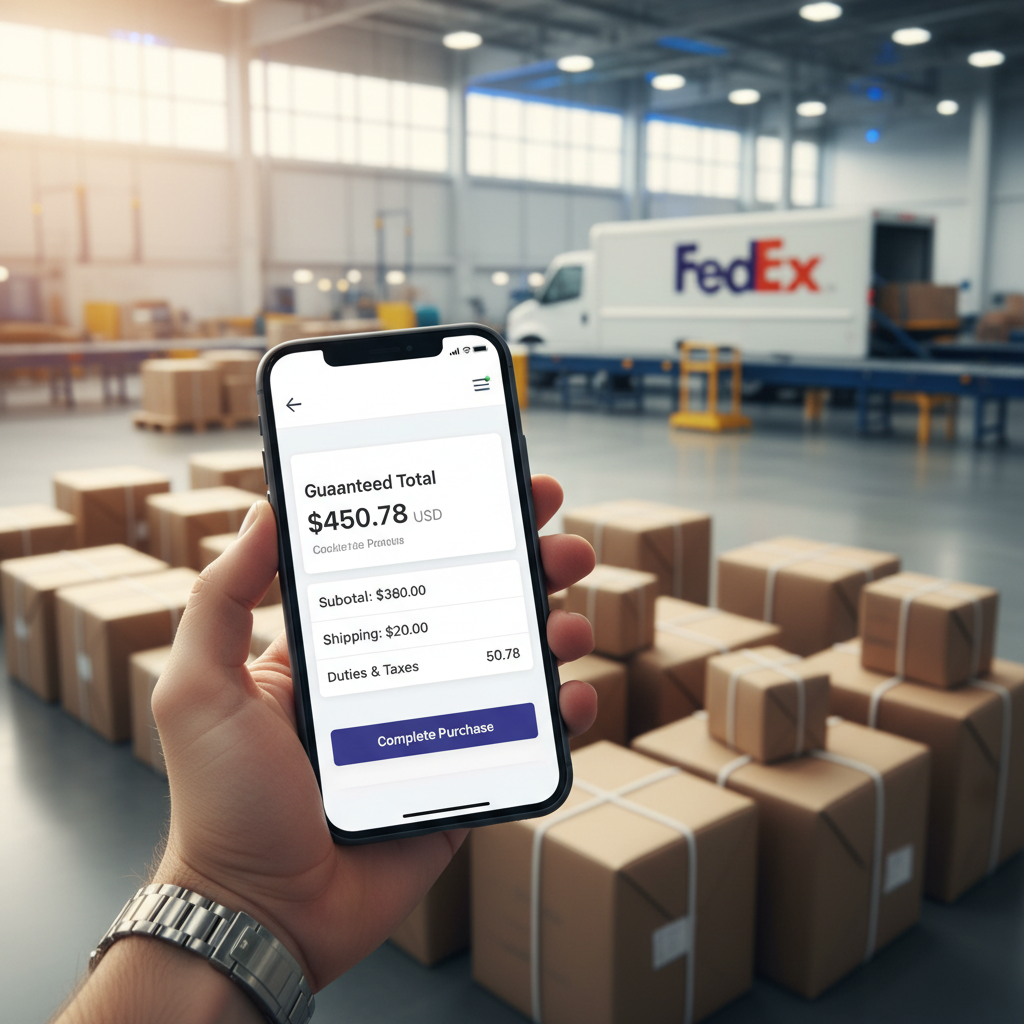
FedEx's introduction of a Shopify application that guarantees import duty and tax costs at the point of sale represents a notable evolution in cross-border e-commerce logistics. This development primarily streamlines global supply-chain flows for small parcel shipments. By eliminating the uncertainty of unexpected import charges, it significantly reduces friction at customs for direct-to-consumer (DTC) transactions. Merchants can offer a transparent landed cost to international customers, which is likely to boost conversion rates and encourage more cross-border sales.
Operationally, this initiative simplifies the customs declaration process for e-commerce businesses utilizing the app. Instead of customers being surprised by additional fees upon delivery, the financial aspect is resolved upfront. This can lead to fewer refused deliveries, reduced returns due to cost disputes, and a generally smoother last-mile experience. While it doesn't fundamentally alter physical shipping routes, it is expected to increase the volume of international small parcel traffic, particularly through FedEx's integrated network, as merchants gravitate towards solutions offering such predictability. This could place increased demand on FedEx's international sorting hubs and last-mile delivery capacity in destination markets, requiring robust operational planning and resource allocation to maintain service levels. The shift towards guaranteed costs also implies a greater reliance on accurate data exchange between e-commerce platforms, carriers, and customs authorities to ensure the upfront calculations are precise, thereby enhancing overall data integrity within the supply chain.
Global financial impact
The financial implications of FedEx's new service are substantial for various stakeholders in global trade. For e-commerce shippers, the primary benefit is the elimination of financial risk associated with fluctuating or unexpected import duties and taxes. This predictability allows merchants to price their international products more accurately, improving profit margins and reducing the administrative burden of handling customer inquiries or chargebacks related to surprise fees. The guarantee of covering any overages beyond the quoted amount provides a strong incentive for merchants to expand their international reach, as it mitigates a significant barrier to entry for global sales. This could translate into increased revenue from international markets and improved customer loyalty due to a transparent purchasing experience.
For FedEx, this offering provides a distinct competitive advantage in the highly contested e-commerce logistics sector. By addressing a critical pain point for both merchants and consumers, FedEx is likely to attract a larger share of international small parcel shipments. While the carrier assumes the risk of covering any duty and tax overages, this risk is likely managed through sophisticated algorithms for duty and tax estimation and potentially factored into their service pricing. The value-added nature of this service allows FedEx to differentiate itself, potentially leading to higher revenue per shipment and stronger market positioning in the cross-border e-commerce segment. For global trade at large, this initiative fosters greater transparency and reduces trade barriers, particularly for small and medium-sized enterprises (SMEs) looking to engage in international commerce. It promotes a more predictable and efficient flow of goods, ultimately supporting the growth of the global digital economy by making cross-border transactions more accessible and reliable.
How MGS can help navigate today's global trade environment
In an environment where services like FedEx Duty and Tax are enhancing financial predictability, a shipment-visibility control tower like MGS becomes even more critical for operational oversight and strategic decision-making. While FedEx's new tool guarantees the cost of duties and taxes, MGS provides the essential visibility into the physical movement and customs clearance process of these international shipments. Merchants using MGS can track parcels end-to-end, gaining real-time insights into their journey, including specific customs clearance milestones.
This granular visibility allows operators to proactively manage expectations and respond to potential operational disruptions, even when financial risks are covered. For instance, if an MGS alert indicates a shipment is held at customs for reasons unrelated to duties (e.g., missing documentation, regulatory compliance issues, or inspection), the merchant can intervene swiftly. This proactive approach minimizes delays, prevents customer dissatisfaction, and avoids potential storage fees or return costs that are not covered by the duty/tax guarantee. Furthermore, MGS can aggregate performance data across all international shipments, including those utilizing services like FedEx Duty and Tax. This data enables comprehensive analysis of transit times, customs efficiency by lane or product category, and overall delivery performance. Such insights are invaluable for optimizing future shipping strategies, evaluating carrier performance, and identifying potential bottlenecks in the global supply chain, ensuring that the operational flow matches the financial predictability offered by new carrier services.
Demand–supply analysis & improvement
The introduction of FedEx Duty and Tax directly addresses a clear demand within the global e-commerce landscape: the need for transparent and predictable international shipping costs. Consumers frequently abandon online shopping carts when faced with ambiguous or unexpectedly high import charges at the point of delivery. Merchants, in turn, demand solutions that reduce this friction, improve conversion rates for international sales, and mitigate the operational headaches associated with managing customer disputes over surprise fees. FedEx's offering represents a supply-side response to this pervasive demand, providing a concrete solution that guarantees the total landed cost at checkout.
This development highlights a broader trend towards Delivery Duty Paid (DDP) models in cross-border e-commerce. The improvement levers here are multifaceted. Firstly, increased adoption of such integrated solutions by e-commerce platforms and logistics providers will further normalize transparent pricing. Secondly, continuous technological advancements in duty and tax calculation engines, coupled with improved data sharing between e-commerce systems, carriers, and customs agencies, will enhance the accuracy and efficiency of these guarantees. This fosters a more mature and reliable ecosystem for international online trade, encouraging more businesses to participate and consumers to purchase globally with confidence. The competitive landscape will likely see other carriers developing similar offerings, driving innovation and further improving the supply of predictable cross-border shipping services.
ROI-focused resilience
Investing in services like FedEx Duty and Tax offers a clear return on investment (ROI) by building resilience against specific, quantifiable risks in cross-border e-commerce. The primary investment is the adoption of such a service, which may involve integration costs or slightly higher shipping rates that incorporate the guarantee. The resilience gained is protection against significant financial and reputational risks. Quantified risks include lost sales due to abandoned carts (where unexpected import charges are a major deterrent), the direct costs associated with processing returns or refunds for customers surprised by fees, and the operational overhead of managing customer service inquiries and disputes related to duties and taxes.
By guaranteeing the total cost at checkout and covering any overages, the service directly mitigates these risks. The ROI is realized through increased international sales conversion rates, reduced customer service costs, fewer chargebacks, and enhanced brand reputation. For instance, if a merchant typically loses 10% of international sales due to opaque pricing, a service that provides a cost guarantee could convert a significant portion of those lost sales into completed transactions. This direct revenue uplift, combined with savings from reduced operational friction and improved customer satisfaction, demonstrates a tangible ROI. It's an investment in a smoother, more predictable customer journey that directly translates into financial gains and strengthens a business's ability to thrive in the complex global trade environment.