
AI-Powered Logistics: DHL & Alibaba.com's Partnership Reshapes SME Global Trade
DHL Global Forwarding and Alibaba.com's collaboration to integrate AI into end-to-end logistics promises to revolutionize international trade for small and medium-sized enterprises, enhancing efficiency and accessibility.
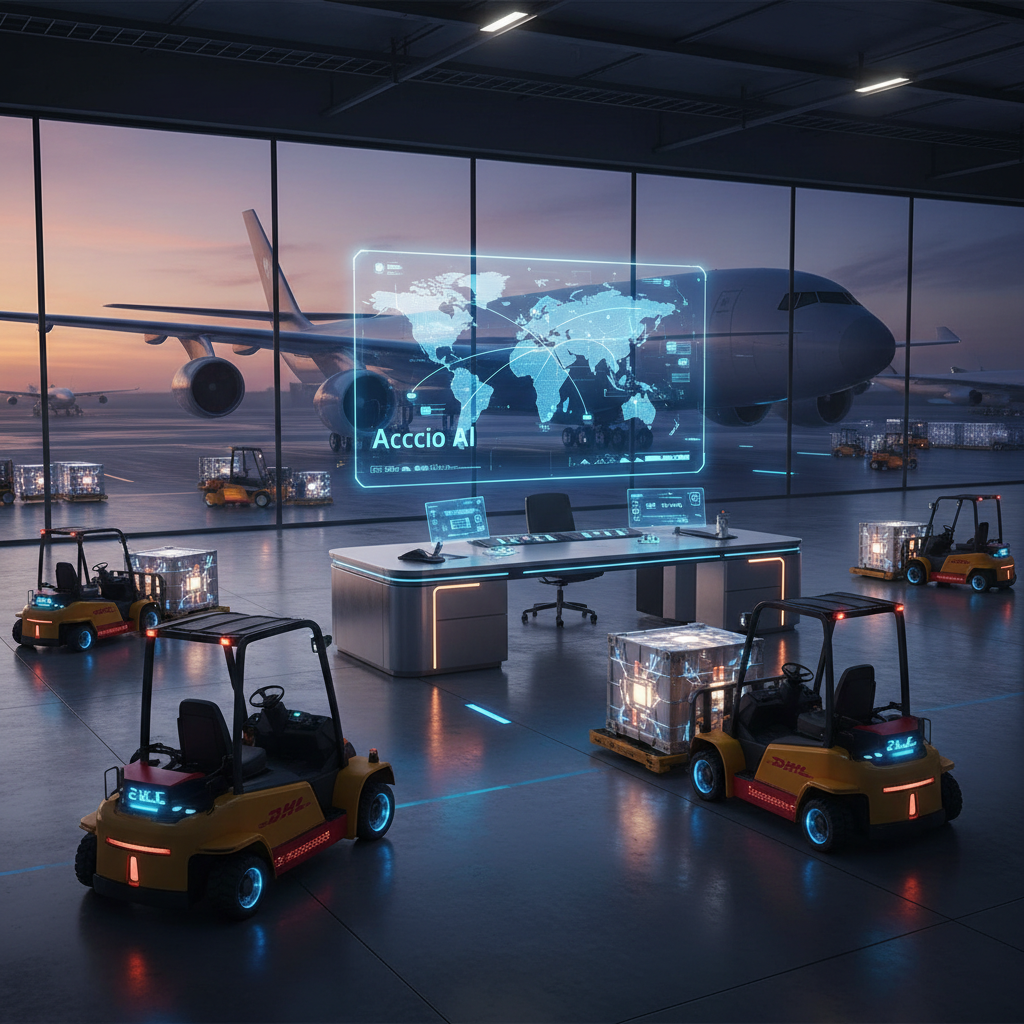
How this impacts the global supply chain
The DHL Group and Alibaba.com collaboration, leveraging AI for small and medium-sized enterprises (SMEs) in international trade, signals a significant shift in global supply chain dynamics, streamlining the entire logistics journey from sourcing to shipment execution. For global supply chain flows, AI creates more fluid and predictable movements. SMEs gain simplified access to tools for supplier discovery, quotation, and booking, reducing friction, leading to faster transit times and more reliable cross-border movement. This could increase overall trade volume and diversity. The impact on routes is substantial, with AI dynamically assessing options based on cost, transit time, and customs efficiency, leading to more diversified and efficient pathways. Capacity utilization improves significantly as AI helps carriers like DHL better match available capacity with SME demand, meaning fewer empty containers and more efficient scheduling. For SMEs, this translates to easier access to shipping capacity and potentially more competitive pricing. Finally, operations transform through automation of critical logistical steps, reducing manual intervention, minimizing human error, and accelerating administrative processes, creating a more cohesive and transparent operational environment.
Global financial impact
The DHL Global Forwarding and Alibaba.com partnership, leveraging AI for SME logistics, carries significant financial and cost implications across the global trade ecosystem. For shippers, particularly SMEs, the primary financial benefit is reduced logistics costs. AI-powered tools provide accurate, competitive logistics quotations by analyzing real-time market rates and optimal routing, helping SMEs secure better freight rates and avoid hidden costs. Streamlined booking and execution lead to time savings, reducing operational costs and accelerating time-to-market. Lowering international trade barriers allows SMEs to access new markets, increasing sales and revenue, while effective supply chain management mitigates financial risks. For carriers like DHL Group, initial investment in AI platforms is balanced with substantial returns. AI drives operational efficiencies, reducing administrative overheads through automation and improving capacity utilization to maximize revenue. This attracts a larger share of the SME international trade market, leading to increased shipment volumes, revenue growth, and a competitive advantage. At the level of trade at large, the financial impact is transformative. Making international trade more accessible and affordable for SMEs boosts global trade volumes and fosters broader economic development. Increased trade efficiency reduces overall cost of goods, benefiting consumers. Enhanced transparency and predictability in logistics foster greater trust, encouraging more businesses to participate and creating new financial opportunities.
How MGS can help navigate today's global trade environment
In a complex global trade environment, characterized by initiatives like the DHL-Alibaba.com AI collaboration, a shipment-visibility control tower platform like MGS becomes an indispensable tool. While AI optimizes logistics, overarching visibility, proactive management, and human oversight remain paramount. MGS's core value is providing real-time, end-to-end visibility across diverse logistics networks. Even with AI-driven booking and execution, shipments traverse multiple modes and carriers. MGS aggregates data from various sources – including new AI platforms, traditional carrier systems, customs data, and IoT devices – into a single dashboard. This comprehensive view allows shippers to monitor precise location and status of goods, crucial for verifying AI-promised efficiencies and maintaining control. MGS also empowers proactive problem-solving and exception management. While AI predicts delays, MGS provides actionable intelligence for human operators to intervene. If an AI-optimized shipment encounters disruption, MGS flags the anomaly, allowing managers to assess, communicate, and implement contingency plans before escalation. This complements AI's predictive power. Furthermore, MGS plays a critical role in performance monitoring and continuous improvement. As AI-driven solutions become prevalent, MGS tracks KPIs like on-time delivery, providing objective data to evaluate AI integration effectiveness, refine algorithms, and optimize processes, verifying expected value for SMEs.
Demand–supply analysis & improvement
The DHL-Alibaba.com collaboration, focusing on AI-driven logistics for SMEs, directly addresses critical dynamics within global demand and supply, aiming to bridge historical inefficiencies between fragmented SME demand and complex shipping capacity. From a demand perspective, SMEs represent a diverse and often unpredictable segment. The "sourcing and supplier discovery" aspect of the AI platform aims to better understand and shape this demand. By integrating logistics directly into Alibaba.com's sourcing process, demand signals are captured earlier, allowing for improved forecasting of SME shipping requirements. AI analyzes historical data and market trends to predict future logistics demand, enabling more strategic resource allocation and proactive capacity planning. On the supply side, international logistics capacity is finite and dynamic. Matching this supply with granular SME demand has been labor-intensive. The AI-powered tools optimize this matching. By providing "logistics quotation, booking and shipment execution," the platform dynamically allocates available capacity to SME shipments. AI identifies optimal routes and carriers based on real-time capacity, pricing, and service levels, ensuring supply is utilized efficiently and reducing unused cargo hold. Key improvement levers include: dynamic pricing and quoting, enhanced capacity optimization, reduced lead times and improved reliability, and network optimization. This symbiotic relationship promises a more agile and responsive global logistics ecosystem for SMEs.
ROI-focused resilience
The DHL-Alibaba.com initiative, while emphasizing efficiency, also significantly enhances supply chain resilience, which can be framed in clear ROI terms. Resilience means protecting investments and ensuring business continuity against disruptions, with AI as a key enabler. The investment in AI-powered platforms, like Alibaba.com's Accio and its integration with DHL, is substantial. This investment directly protects against several quantified risks prevalent in global supply chains for SMEs: financial losses from delays (e.g., demurrage, lost sales), inventory holding costs (tied-up capital), reputational damage, and operational inefficiencies. The Return on Investment (ROI) for enhancing resilience through AI-driven logistics manifests in several ways. By streamlining "logistics quotation, booking and shipment execution," AI reduces human error and improves shipment predictability. This translates to: reduced financial exposure to disruptions (proactive mitigation avoiding costly rerouting), optimized inventory management (predictable lead times reducing safety stock), enhanced customer satisfaction and revenue protection (reliable logistics building trust), and improved operational efficiency and cost savings (automation reducing expenses). A shipment-visibility control tower like MGS further amplifies this ROI for resilience. While AI optimizes and predicts, MGS provides real-time data and alert mechanisms for human operators to validate AI's recommendations and respond to unforeseen events. This combination ensures that AI investment for efficiency also translates into robust, measurable resilience.
Source: Parcel and Postal Technology International — https://www.parcelandpostaltechnologyinternational.com/news/technology/dhl-global-forwarding-services-to-link-with-alibaba-coms-accio-ai-platform.html