
Persistent Atmospheric Rivers Disrupt US West Coast Port Operations, Inland Rail
Weather-related disruptions are becoming a constant challenge for global supply chains, impacting critical trade lanes, facilities, and transportation modes. From intense rainfall on the US West Coast to drought-induced low water levels in Europe and powerful tropical cyclones in Asia, these events demand strategic adaptation from shippers.
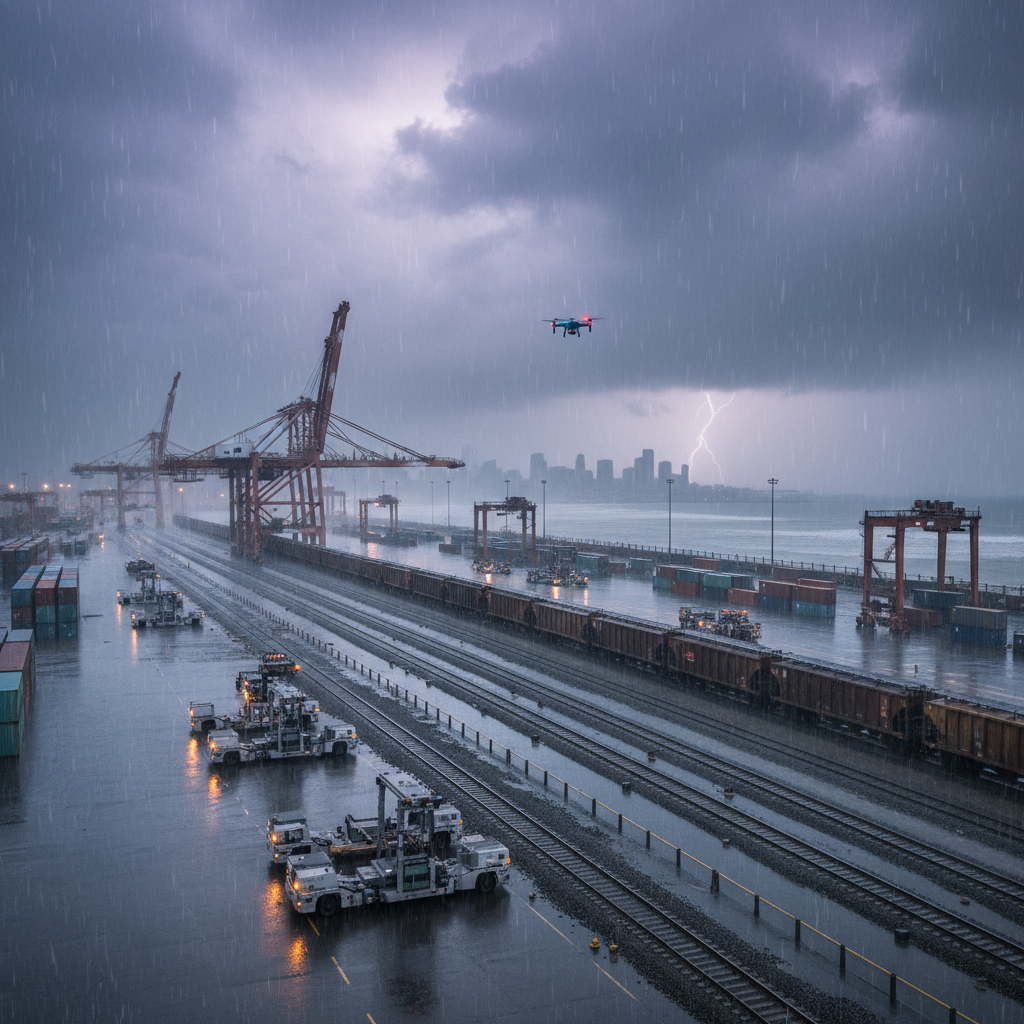
Atmospheric Rivers Snarl US West Coast Port and Rail Throughput
The US West Coast, a critical gateway for trans-Pacific trade, has recently experienced significant disruptions due to atmospheric rivers. These intense bands of moisture, delivering heavy rainfall and strong winds, have led to widespread flooding, mudslides, and infrastructure damage across California, Oregon, and Washington. The immediate consequence for cargo movement is a severe impediment to port operations and inland rail connectivity. Port terminals in Los Angeles, Long Beach, Oakland, Seattle, and Tacoma face reduced productivity as high winds make crane operations unsafe and heavy rain slows down yard movements. Trucking operations are also hampered by flooded roads, road closures, and reduced visibility, creating bottlenecks for cargo exiting or entering the ports. Crucially, the impact extends inland, with major rail lines experiencing washouts, track closures, and speed restrictions. This directly affects the flow of containers from West Coast ports to key distribution hubs in the Midwest and East Coast, leading to accumulating backlogs and extended transit times. Shippers relying on these routes must contend with unpredictable delays and increased demurrage and detention charges as containers dwell longer at terminals and rail yards.
Low Water Levels Cripple European Inland Waterway Barges
Europe's vital inland waterway network, particularly the Rhine River, has repeatedly suffered from critically low water levels due to prolonged droughts and reduced snowmelt. This phenomenon, exacerbated by changing climate patterns, significantly curtails the carrying capacity of barges. When water levels drop below a certain threshold, vessels must reduce their load to navigate safely, sometimes by as much as 50% or more. This effectively halves the available capacity for bulk commodities, chemicals, and containerized goods moving between major ports like Rotterdam and inland industrial centers in Germany, France, and Switzerland. The reduced capacity forces shippers to seek alternative transportation modes, primarily road and rail. However, these modes often lack the immediate capacity to absorb the diverted volume, leading to congestion, increased freight rates, and longer lead times. The shift also carries higher carbon emissions, contradicting sustainability goals. For industries dependent on just-in-time deliveries via the Rhine, such as automotive and chemical manufacturing, these disruptions translate directly into production delays and potential stock-outs, highlighting the fragility of supply chains reliant on specific environmental conditions.
Tropical Cyclones Force Asia-Pacific Ocean and Air Rerouting
The Asia-Pacific region, a powerhouse of global manufacturing and trade, is increasingly vulnerable to the intensifying frequency and strength of tropical cyclones, including typhoons and hurricanes. These powerful storms cause widespread disruption to both ocean and air cargo movements. For ocean freight, approaching storms necessitate vessel rerouting, leading to longer voyages and schedule deviations. Ports in affected areas, such as Shanghai, Tokyo, Manila, and Busan, often close or operate with severe restrictions, causing significant berthing delays and creating a ripple effect across global shipping schedules. Container yards become congested, and cargo handling is halted for safety reasons. Air cargo operations are similarly affected, with flight cancellations and delays at major hubs like Hong Kong, Narita, and Incheon. This not only impacts express shipments but also critical components and high-value goods. The cumulative effect of these weather events is a reduction in available capacity, increased freight costs due to rerouting and surcharges, and a general erosion of supply chain predictability. Shippers must factor in these seasonal and increasingly unpredictable weather patterns when planning their logistics, especially for time-sensitive or high-value cargo.
Strategic Planning and Network Diversification for Weather Resilience
Given the escalating impact of weather on global cargo movement, shippers must adopt a proactive and resilient approach. The first step involves enhancing visibility into weather forecasts and their potential impact on specific lanes and facilities. Integrating advanced weather analytics with logistics planning systems can provide early warnings, allowing for pre-emptive adjustments. Secondly, diversifying transportation networks and modes is crucial. Relying heavily on a single port, rail line, or waterway increases vulnerability. Exploring multi-modal options, such as combining ocean with air freight for critical components, or utilizing alternative rail corridors when primary ones are disrupted, can mitigate risks. For instance, shippers affected by European waterway issues might pre-book rail capacity. Thirdly, building inventory buffers for critical goods can absorb short-term disruptions without halting production or sales. While this incurs carrying costs, it can be a strategic investment against significant weather-induced delays. Finally, fostering robust communication channels with logistics partners, including carriers, forwarders, and port operators, is essential for rapid decision-making and collaborative problem-solving during weather events. This collective approach helps ensure cargo keeps moving, even when nature presents its most formidable challenges.
Weather Volatility Now a Constant Supply Chain Factor
The increasing frequency and intensity of weather events represent a fundamental shift in supply chain risk, demanding continuous adaptation rather than reactive measures. Shippers must integrate climate resilience into their core logistics strategy, moving beyond traditional risk assessments to embrace dynamic planning and network flexibility. The strongest reason this verdict could prove wrong is if significant global investment in climate-resilient infrastructure, such as elevated ports, reinforced rail lines, and advanced flood control systems, dramatically outpaces the rate of climate change impacts. This would require unprecedented international cooperation and funding to fundamentally alter the physical vulnerabilities of global trade infrastructure.
Source: gCaptain — https://gcaptain.com/more-than-110-trade-groups-urge-deal-as-la-long-beach-port-strike-deadline-nears/