
Panama Canal Increases Daily Transits to 34 Vessels, Restores 50-Foot Draft
The Panama Canal has significantly eased transit restrictions, raising daily vessel capacity to 34 and restoring maximum draft to 50 feet. This move offers crucial relief for global shipping, particularly for Asia-US East Coast trade, after prolonged drought-induced limitations.
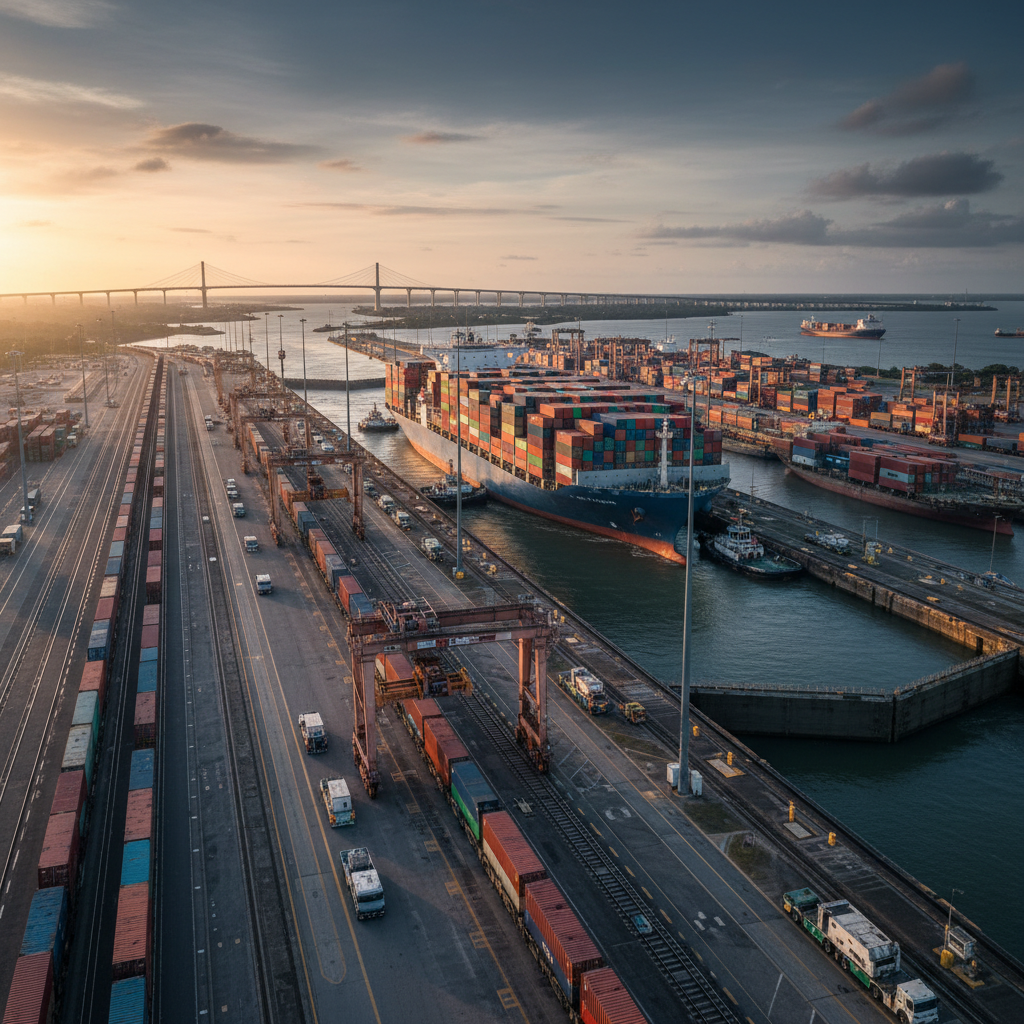
Panama Canal Restores Critical East-West Capacity
The global supply chain is experiencing a welcome reprieve as the Panama Canal Authority implements a significant easing of transit restrictions. Following a prolonged period of drought-induced limitations, the vital waterway has increased its daily transit capacity to 34 vessels and restored the maximum allowable draft at its Neopanamax locks to 50 feet. This decision marks a pivotal moment for international trade, directly addressing the bottlenecks and increased operational costs that have plagued shippers and forwarders for months.
The Panama Canal, a critical chokepoint connecting the Atlantic and Pacific Oceans, has faced unprecedented challenges due to historically low water levels in Gatun Lake, its primary freshwater reservoir. These conditions, exacerbated by climate patterns such as El Niño, necessitated severe restrictions on daily transits and vessel draft, forcing many carriers to either lighten their loads, use smaller vessels, or undertake lengthy and costly diversions around the Cape of Good Hope or through the Suez Canal. The restoration of capacity and draft signals a return to more normal operating parameters, allowing larger vessels to traverse the canal fully loaded, thereby optimizing cargo movement and reducing the need for alternative, less efficient routes. This development is not merely an operational adjustment; it represents a tangible improvement in the fluidity of a key global trade artery, directly impacting the efficiency and predictability of maritime logistics.
Easing Pressure on Asia-US East Coast and South American Routes
The immediate beneficiaries of the Panama Canal's improved conditions are the trade lanes heavily reliant on this interoceanic shortcut. Foremost among these is the Asia-US East Coast route, where container ships carrying consumer goods, electronics, and various manufactured products frequently utilize the canal to reach major American ports. During the restriction period, shippers on this lane faced extended transit times, higher fuel costs from longer voyages, and increased uncertainty, sometimes opting for intermodal rail connections across the US land bridge or entirely rerouting via other continents. The increased capacity and draft will alleviate these pressures, making the Panama Canal a more attractive and reliable option once again.
Beyond the major East-West container flows, South American trade, particularly between its Pacific and Atlantic coasts, and commodity exports from countries like Brazil and Ecuador, also stand to benefit significantly. Bulk carriers and LNG tankers, which often have deep drafts, were particularly impacted by the previous restrictions. The ability to carry full loads through the canal will enhance the competitiveness of these exports and reduce the logistical complexities for regional trade. Forwarders, who have been navigating a complex web of alternative routes and surcharges, will find greater stability in planning and execution, potentially leading to a stabilization or even reduction in freight rates on these specific lanes as capacity constraints ease and schedule reliability improves. This operational flexibility is crucial for maintaining efficient inventory levels and meeting delivery deadlines across diverse industries.
The Enduring Challenge of Climate-Driven Supply Chain Volatility
While the current easing of Panama Canal restrictions is a positive development, it is crucial for supply chain professionals to view this as a temporary reprieve rather than a definitive end to climate-induced disruptions. The underlying vulnerability of critical infrastructure to extreme weather events remains a significant concern. The drought that impacted the Panama Canal is a stark reminder of how interconnected global weather patterns are with logistical operations. Similar climate-driven challenges continue to manifest across various regions and modes of transport, from low water levels affecting river navigation in Europe to extreme weather events disrupting rail and road networks globally, and even impacting port operations through storms and rising sea levels.
This incident underscores the increasing frequency and intensity of climate-related disruptions, which demand a fundamental shift in how supply chains are designed and managed. Relying solely on historical data for forecasting and planning is no longer sufficient. Businesses must anticipate and adapt to a future where weather variability is a constant, unpredictable factor. The Panama Canal's experience serves as a case study for the broader challenge: how to build resilience into systems that are inherently exposed to environmental fluctuations. This necessitates a proactive approach to risk management, moving beyond reactive problem-solving to strategic long-term planning that accounts for climate change impacts across the entire supply chain network.
Building Resilience: Strategic Imperatives for Shippers
Given the ongoing threat of climate-driven volatility, shippers must adopt robust strategies to future-proof their supply chains. The first imperative is diversification of routes and modes. While the Panama Canal is now more accessible, relying solely on a single chokepoint or transport method remains a significant risk. Exploring multi-modal options, assessing alternative sea routes (e.g., Suez Canal, Cape of Good Hope, or even Arctic routes as they become viable), and leveraging rail or air freight for critical shipments can mitigate the impact of localized disruptions.
Secondly, enhanced visibility and data-driven decision-making are paramount. Real-time tracking of cargo, weather patterns, and port conditions allows shippers to anticipate potential delays and react swiftly. This includes leveraging predictive analytics to model the impact of various scenarios and pre-positioning inventory where necessary. Thirdly, collaborative partnerships with carriers, forwarders, and logistics providers are essential. Open communication and shared risk management strategies can lead to more agile responses and innovative solutions during times of crisis. Finally, strategic inventory management must be re-evaluated. While lean inventory models offer cost efficiencies, the increasing frequency of disruptions may necessitate maintaining strategic buffer stocks for critical components or finished goods to absorb unexpected delays without halting production or disappointing customers. These proactive measures, rather than reactive adjustments, will define the resilience of supply chains in an era of unpredictable weather.
Temporary Relief Underscores Deeper Climate Vulnerabilities
The Panama Canal's successful restoration of capacity offers immediate and significant relief to global shipping lanes, particularly those connecting Asia with the US East Coast and South America. However, this positive development should not overshadow the persistent and growing challenge of climate-induced disruptions to critical infrastructure.
- Lane Optimization: The restoration of full Panama Canal capacity directly improves transit times and reliability for Asia-US East Coast and South American trade lanes, reducing the need for costly diversions and stabilizing operational schedules.
- Operational Predictability: Forwarders and carriers gain greater certainty in planning and scheduling, allowing for more efficient vessel deployment and potentially stabilizing freight rates on affected routes.
- Strategic Imperative: While welcome, this development serves as a stark reminder for shippers to proactively build resilience through diversified routing, advanced data analytics, and robust risk management against future climate-induced disruptions.
Source: gCaptain — https://gcaptain.com/panama-canal-raises-daily-transit-capacity-as-water-conditions-improve/