
Panama Canal Increases Daily Transit Slots to 34
The Panama Canal has boosted its daily transit capacity to 34 booking slots, a welcome development for global shipping. This enhancement, driven by improved lake levels and hydrological forecasts, offers a measure of relief in a global supply chain increasingly strained by widespread geopolitical disruptions across other critical maritime routes, airspace, and trade policies.
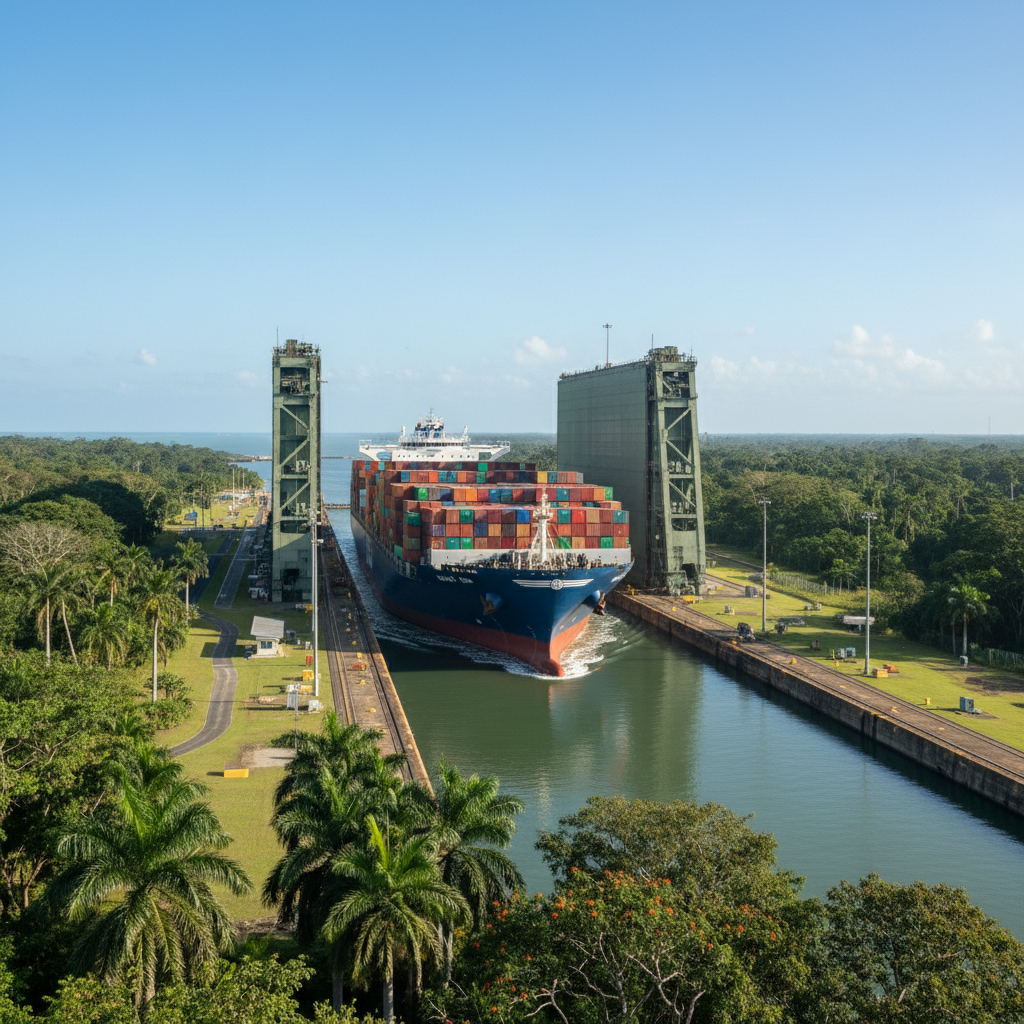
Panama Canal Adds 34th Daily Slot
In a significant operational update, the Panama Canal Authority has increased its daily transit capacity to 34 booking slots. This expansion, effective from November 9, 2026, also includes a raised maximum allowable draft for vessels utilizing the Neopanamax locks. The adjustments are a direct result of improved lake levels and more favorable hydrological forecasts, indicating a positive shift in the environmental conditions that had previously constrained the waterway's throughput. This additional capacity for one of the world's most vital maritime arteries is a welcome development for shippers and forwarders, offering enhanced predictability and reduced waiting times for vessels navigating between the Atlantic and Pacific oceans. The Panama Canal serves as a crucial link for East-West trade, particularly impacting routes connecting Asia with the eastern seaboard of the Americas, and any improvement in its operational efficiency has tangible benefits for global cargo movement.
Geopolitical Rerouting and Maritime Chokepoint Pressures
While the Panama Canal offers a localized positive development, the broader global maritime landscape remains under significant stress from geopolitical events. The ongoing disruptions in the Red Sea and Gulf of Aden, stemming from Houthi attacks on commercial shipping, continue to force major carriers to reroute vessels around the Cape of Good Hope. This diversion adds thousands of nautical miles to voyages, translating directly into increased transit times, higher fuel consumption, and elevated operational costs. Insurance premiums for vessels transiting high-risk areas have surged, further burdening freight rates. Similarly, the conflict in Ukraine has severely impacted shipping in the Black Sea, leading to restricted access, heightened security risks, and significant disruptions to the movement of essential commodities like grain and fertilizers. These politically driven blockages and threats create a domino effect across global supply chains, pushing up lead times and making inventory management more complex. The stability offered by the Panama Canal's increased capacity, while beneficial, stands in stark contrast to the volatility experienced in other critical maritime chokepoints, underscoring the systemic fragility of global trade routes.
Airspace Restrictions and Trade Barrier Fragmentation
Beyond maritime routes, geopolitical tensions have also reshaped global air cargo networks and introduced significant trade barriers. Airspace closures, particularly those stemming from the conflict in Eastern Europe, have necessitated longer flight paths for cargo aircraft, especially between Asia and Europe. These extended routes result in increased fuel burn, higher operational costs for airlines, and longer delivery times for high-value and time-sensitive goods. The ripple effects include reduced cargo capacity on certain routes as aircraft need more fuel, displacing potential payloads. Concurrently, the proliferation of tariffs, sanctions, and export controls imposed by various nations as instruments of foreign policy continues to fragment global trade. These measures target specific industries, technologies, or countries, compelling businesses to re-evaluate their sourcing strategies, diversify manufacturing bases, and navigate complex compliance landscapes. The result is often increased administrative burden, higher costs due to trade friction, and a push towards regionalization or 'friend-shoring' of supply chains, moving away from purely cost-driven global optimization. This fragmentation reduces overall trade efficiency and introduces new layers of complexity for logistics managers.
Strategic Adaptations to Heightened Volatility
In response to this pervasive geopolitical volatility, shippers and forwarders are increasingly prioritizing resilience and adaptability over pure cost efficiency. The ability to quickly pivot routes, secure alternative transport modes, and manage unforeseen delays has become paramount. This involves investing in robust risk management frameworks, enhancing real-time visibility across the supply chain, and developing flexible logistics networks. Companies are exploring diversified sourcing strategies to reduce dependence on single regions or suppliers vulnerable to geopolitical shocks. The emphasis is shifting towards building redundancy into the system, whether through maintaining higher inventory levels, establishing multiple manufacturing sites, or pre-qualifying alternative transport providers. While the Panama Canal's operational improvement offers a welcome, albeit localized, boost to efficiency, it also highlights the critical importance of every stable link in a global network otherwise characterized by unpredictable and politically driven disruptions. The ongoing challenge for supply chain professionals is to integrate these disparate developments into a cohesive strategy that mitigates risk and ensures continuity of cargo movement.
Source: Container News — https://container-news.com/panama-canal-increases-daily-transit-capacity-to-34-slots/