
Panama Canal Drought: A Deep Dive into Weather's Disruptive Impact on Global Shipping
A severe drought at the Panama Canal is forcing major shipping diversions, with traffic through the Strait of Magellan surging over 70%. This brief analyzes the impact on global trade lanes, facilities, and modes, offering strategies for shippers to navigate these climate-induced disruptions.
Executive Summary
The ongoing drought impacting the Panama Canal is creating significant disruptions across global maritime trade, compelling a notable shift in established shipping patterns. This severe weather event has led to reduced transit capacity and increased waiting times at the vital waterway, forcing many vessels to seek alternative, longer routes. Data from the Chilean Navy reveals a dramatic surge in traffic through the Strait of Magellan, with an increase exceeding 70% in both August and September compared to the previous year. This diversion highlights the vulnerability of global supply chains to climate-induced events at critical chokepoints. For shippers, this translates to extended transit times, higher operational costs, and increased uncertainty. Proactive strategies, supported by advanced visibility tools, are now more crucial than ever to mitigate these challenges and maintain supply chain resilience.
Impacted Lanes and Facilities
The primary facility impacted by this weather phenomenon is, unequivocally, the Panama Canal itself. As a crucial man-made waterway connecting the Atlantic and Pacific Oceans, its operational integrity is paramount to global trade. The drought conditions have led to reduced water levels, which in turn restrict the draft (how deep a ship sits in the water) of vessels that can transit and limit the number of daily passages. This directly affects the efficiency and capacity of the canal, creating bottlenecks and delays for ships awaiting passage.
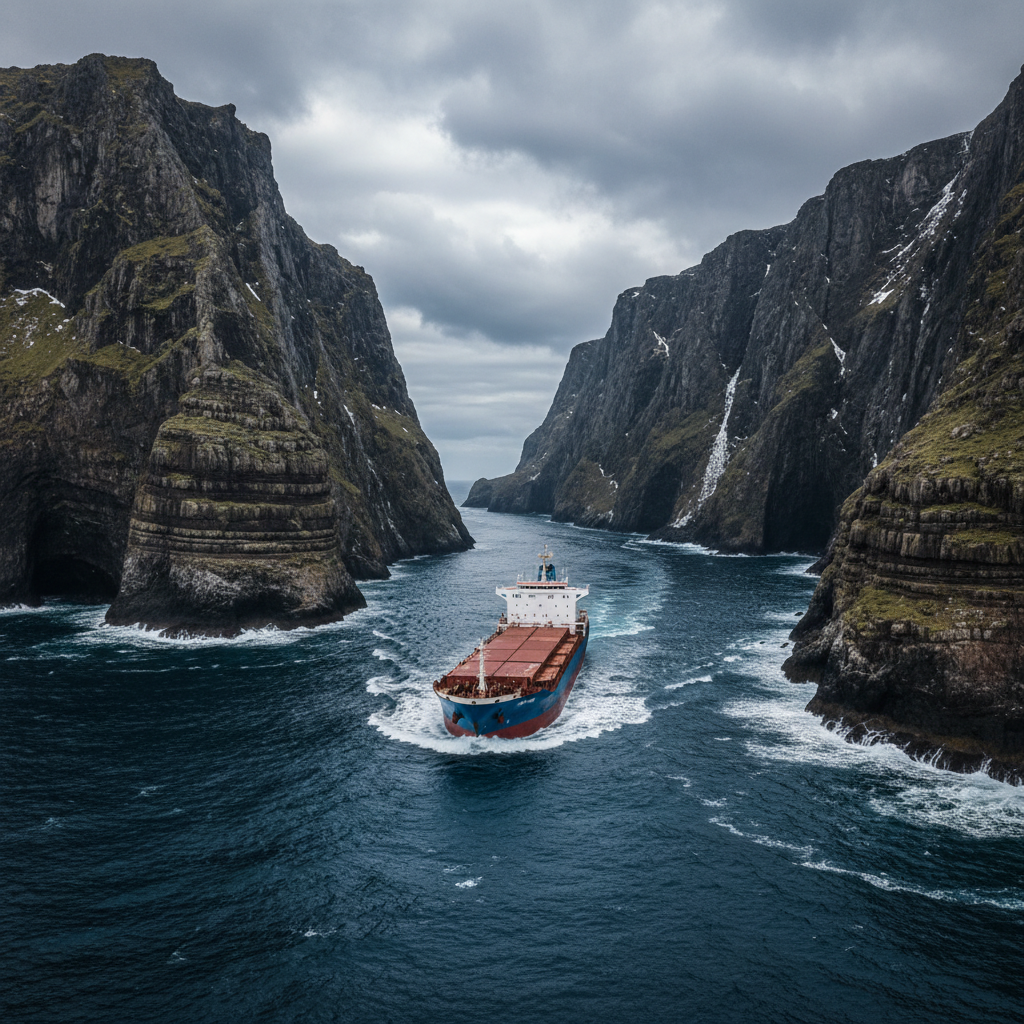
Consequently, the traditional East-West trade lanes that heavily rely on the Panama Canal are experiencing profound disruption. Routes connecting Asia to the U.S. East Coast, and to a lesser extent, Europe to the U.S. West Coast, are particularly vulnerable. The most significant direct consequence is the diversion of vessels to the Strait of Magellan, located at the southern tip of South America. This natural waterway, historically a key passage before the Panama Canal's construction, has seen a substantial resurgence in activity. Chilean Navy data indicates that traffic through the Strait of Magellan jumped by more than 70% in both August and September compared to the previous year, underscoring its role as a critical alternative during the canal's constraints.
This rerouting significantly extends voyage distances and transit times, impacting not only the vessels themselves but also the ports at either end of these extended lanes. Ports on the U.S. East Coast and Gulf Coast that typically receive goods via the Panama Canal may experience delayed arrivals and potential schedule bunching as vessels arrive after longer journeys. Similarly, ports in Asia involved in these trade routes will face adjustments to their outbound and inbound schedules. While not explicitly mentioned, the increased traffic through the Strait of Magellan also puts additional strain on the navigational services and infrastructure in that region, though its capacity is generally less constrained by water levels than the canal. The ripple effect extends to intermodal facilities as well, as delayed port arrivals can disrupt inland transportation schedules and create backlogs at rail yards and distribution centers.
Affected Modes of Transport
The immediate and most profoundly affected mode of transport is maritime shipping, specifically container vessels, bulk carriers, and tankers that traditionally utilize the Panama Canal. The restrictions on draft and daily transits directly impede the movement of these large ocean-going vessels, forcing them to either wait for extended periods or embark on significantly longer voyages. The dramatic increase in traffic through the Strait of Magellan, noted at over 70% in August and September, is a direct testament to the shift in maritime operations.
While the primary impact is on ocean freight, there are significant knock-on effects for other modes within the broader supply chain. Extended maritime transit times mean delays for cargo reaching destination ports, which then impacts subsequent land-based transportation. For instance, intermodal rail and truck services that are scheduled to pick up containers from East Coast ports will experience disruptions due to unpredictable vessel arrival times. This can lead to increased dwell times for containers at ports, potential demurrage charges, and a general destabilization of inland logistics networks. Air freight, while not directly impacted by the canal's drought, may see a marginal increase in demand for urgent shipments as shippers try to bypass the maritime delays, though this is typically a much higher-cost alternative and not a scalable solution for the bulk of affected cargo. The overall effect is a systemic slowdown and increased complexity across the entire multimodal transport chain that relies on the timely flow of goods through key maritime chokepoints.
Shipper Strategies and Recommendations
In the face of ongoing disruptions at critical chokepoints like the Panama Canal, shippers must adopt proactive and flexible strategies to maintain supply chain fluidity. The immediate priority is enhanced visibility and dynamic planning. Shippers should leverage advanced shipment-visibility control tower platforms, such as MGS, to gain real-time insights into vessel positions, estimated times of arrival (ETAs), and potential delays. This allows for early detection of issues and facilitates rapid decision-making regarding rerouting or alternative transport arrangements.
One key strategy is diversification of routes and carriers. While the Strait of Magellan offers an alternative, its increased usage, evidenced by the 70% jump in traffic, means longer transit times and potentially higher fuel costs. Shippers should evaluate the cost-benefit of different routes, including land bridges (if feasible for specific cargo), or even considering air freight for high-value or time-sensitive goods, despite the higher expense. Building relationships with multiple carriers operating on various lanes can provide more options when primary routes are constrained.
Optimized inventory management becomes crucial. With extended transit times, safety stock levels may need to be adjusted to prevent stockouts. This requires a careful balance to avoid excessive inventory carrying costs while ensuring supply continuity. Shippers should also re-evaluate lead times with their suppliers and customers, communicating potential delays transparently to manage expectations.
Furthermore, proactive risk assessment and scenario planning are essential. Shippers should model the impact of various disruptions, including extended transit times or complete route closures, on their supply chain costs and service levels. This includes understanding the specific implications of longer voyages around South America, such as increased fuel consumption, potential for adverse weather conditions in the southern oceans, and the need for more robust cargo insurance.
Finally, collaboration with logistics partners is paramount. Working closely with freight forwarders, customs brokers, and port operators can help streamline processes and mitigate the impact of delays. An MGS platform can facilitate this collaboration by providing a single source of truth for all stakeholders, enabling coordinated responses to evolving conditions and ensuring that all parties are working from the same, up-to-date information. This integrated approach allows shippers to adapt quickly, minimize financial impact, and maintain customer satisfaction amidst challenging operational environments.
Long-term Outlook and Preparedness
The current situation at the Panama Canal serves as a stark reminder of the increasing vulnerability of global supply chains to climate-induced weather events. The drought is not an isolated incident but rather indicative of a broader trend towards more frequent and intense weather phenomena that can disrupt critical infrastructure. In the long term, supply chain resilience will hinge on a fundamental shift from reactive problem-solving to proactive, adaptive planning.
For the Panama Canal specifically, while measures like water conservation and potential future infrastructure investments might be explored, the reliance on rainfall makes it susceptible to ongoing climate variability. This suggests that the Strait of Magellan, or other longer routes, may become more regularly utilized alternatives, impacting global shipping schedules and costs for the foreseeable future. The 70% increase in traffic through the Strait of Magellan in recent months underscores this emerging pattern.
To prepare for such a future, businesses must invest in robust supply chain mapping and network optimization. Understanding every node and lane, and identifying potential chokepoints and their alternatives, is foundational. This includes exploring nearshoring or reshoring strategies for certain production, or diversifying manufacturing locations to reduce reliance on single, vulnerable trade routes.
Furthermore, data analytics and predictive capabilities will become indispensable. Leveraging historical weather data, climate forecasts, and real-time operational data, supply chain professionals can develop more accurate risk models and anticipate disruptions before they fully materialize. An MGS control tower, with its ability to aggregate and analyze vast amounts of data, can provide the intelligence needed to forecast potential impacts and inform strategic decisions, such as pre-positioning inventory or adjusting production schedules.
Finally, sustainability considerations will increasingly intersect with supply chain resilience. As climate change continues to influence weather patterns, companies will need to factor environmental risks into their long-term planning, not just as a compliance issue but as a core component of operational stability. This might involve investing in more fuel-efficient vessels for longer routes or exploring alternative, lower-carbon transport options where feasible. The overarching goal is to build supply chains that are not only efficient but also inherently adaptable and resilient to a future characterized by greater environmental uncertainty.
Source: gCaptain — https://gcaptain.com/ships-take-long-way-around-as-drought-snarls-panama-canal/