
Orchestrating the Future: Bridging the Execution Gap in Global Supply Chains
Supply chain orchestration is emerging as a critical control layer, closing the costly gap between strategic decisions and operational execution. This brief explores its profound impact on global logistics, financial performance, and how real-time visibility platforms like MGS empower resilient operations.
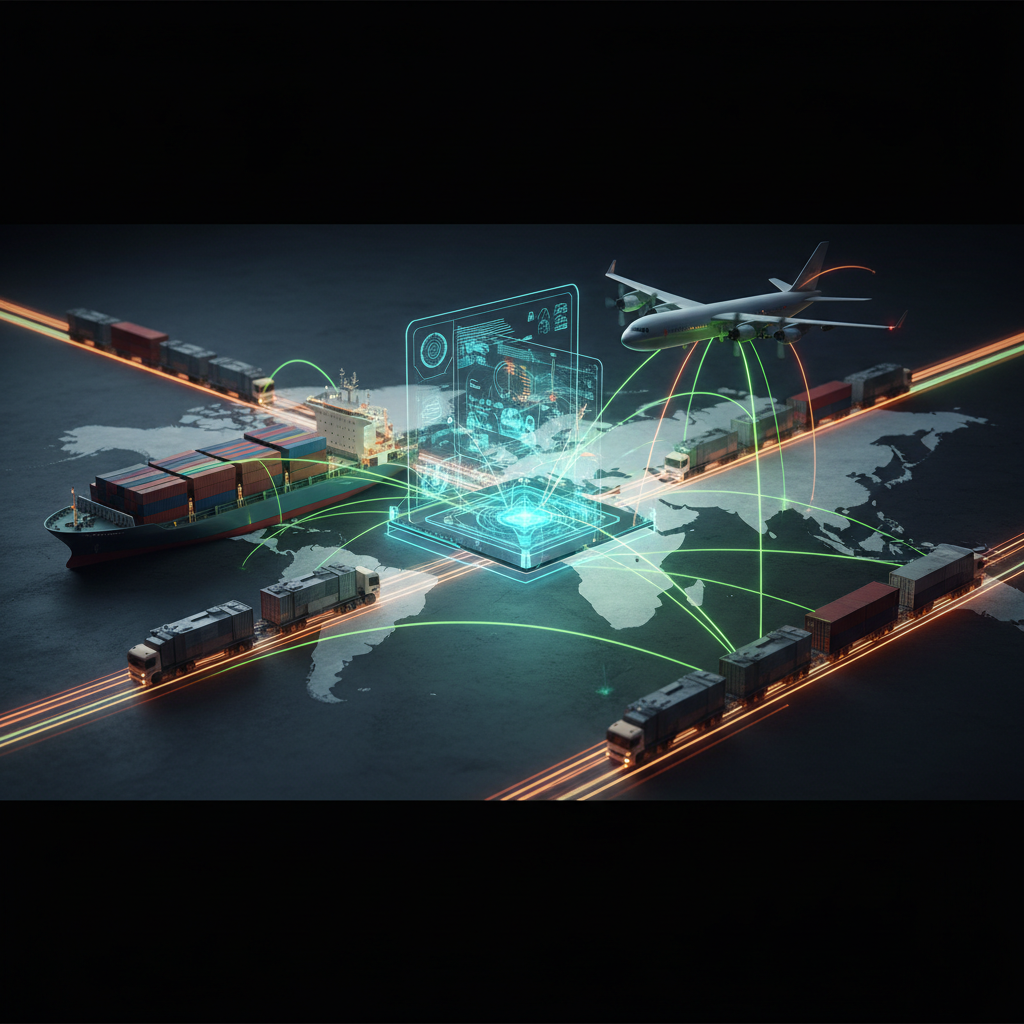
How this impacts the global supply chain
The modern global supply chain is a complex tapestry where significant value is often lost in the "gap between deciding and doing." While strategic planning has advanced, translating those plans into flawless, real-world execution remains a persistent challenge. Supply chain orchestration is emerging as the essential control layer designed to bridge this chasm by coordinating the "state" of goods, the "workflow" of processes, "approvals," "actions," "retries," and "recovery" across disparate systems.
For global flows, orchestration introduces dynamic responsiveness. Instead of rigid paths, it enables real-time adjustments – optimizing container movements through congested ports, rerouting air cargo around weather, or dynamically allocating capacity. This results in smoother, more predictable movement, reducing bottlenecks and improving velocity.
Regarding routes, orchestration moves beyond static planning to facilitate adaptive routing. Immediate course corrections are possible when disruptions occur or more efficient alternatives arise, minimizing transit times and enhancing delivery reliability.
The impact on capacity utilization is equally transformative. By coordinating activities from sourcing to final mile, orchestration ensures assets like vessels, aircraft, and warehouses are utilized optimally. Reduced idle times, fewer empty backhauls, and better scheduling mean existing capacity handles greater volume more efficiently, maximizing return on current assets.
Finally, operations become significantly more streamlined and resilient. Orchestration automates task coordination, approvals, and information exchange, reducing manual errors and accelerating decision-making. When disruptions occur, it provides the framework for rapid assessment, coordinated response, and efficient recovery, minimizing ripple effects across the global supply chain. This holistic approach transforms execution into a synchronized, intelligent flow.
Global financial impact
Effectively bridging the gap between supply chain decisions and execution has profound financial implications for shippers, carriers, and global trade. The value currently lost in this disconnect represents a substantial drain on profitability.
For shippers, benefits include reduced operational costs and enhanced revenue. Minimizing delays lowers inventory carrying costs and reduces demurrage/detention fees. Optimized freight spend avoids costly expedited shipments. Improved delivery reliability and faster time-to-market lead to higher customer satisfaction, fewer lost sales, and reduced penalties for missed deadlines, strengthening commercial relationships.
Carriers also gain substantially. Orchestration facilitates better asset utilization, meaning trucks, ships, and aircraft spend more time moving goods. This translates into fewer empty miles, optimized scheduling, and improved on-time performance, all contributing to higher revenue per asset and enhanced profitability. Reduced operational friction, such as fewer disputes, also lowers administrative costs. By participating in an orchestrated network, carriers can offer more reliable services, potentially commanding better rates.
For trade at large, widespread orchestration promises significant uplift in global economic efficiency. A more predictable and responsive supply chain reduces inherent risks in international trade, potentially lowering insurance premiums and overall cost of doing business. Enhanced efficiency means goods move faster and more reliably, stimulating economic activity and fostering greater interconnectedness. Reduced waste contributes to a more sustainable and robust global trading environment. Ultimately, by making supply chains agile and resilient, orchestration helps stabilize global commerce against disruptions, fostering greater confidence and investment.
How MGS can help navigate today's global trade environment
The effectiveness of supply chain orchestration hinges critically on the quality and timeliness of information. This is precisely where a robust shipment-visibility control tower like MGS becomes an indispensable enabler. Orchestration, by definition, requires a clear understanding of the "state" of every shipment and process step to effectively coordinate "workflow, approvals, actions, retries, and recovery across systems." Without accurate, real-time visibility, orchestration operates blindly.
MGS provides the crucial "eyes" for the orchestration "brain." By aggregating and normalizing data from carriers, ports, customs, and IoT devices, MGS offers a single, comprehensive view of a shipment's journey. This real-time data feeds directly into orchestration platforms, empowering them to make informed, data-driven decisions that close the execution gap.
For instance, when an orchestration system identifies a potential delay at a transshipment hub, MGS provides granular detail: is the vessel behind schedule? Is there port congestion? Has customs clearance begun? This precise "state" information allows the orchestration platform to trigger appropriate "actions," such as initiating a re-route, notifying partners of a revised ETA, or preparing alternative transport.
Furthermore, MGS’s ability to highlight deviations acts as an early warning system. This proactive insight enables orchestration systems to initiate "retries" or "recovery" protocols before minor issues escalate. If a container is held at a border, MGS alerts the system, which can then automatically trigger necessary "approvals" or communication, minimizing costly delays.
In essence, MGS transforms raw data into actionable intelligence, providing the foundational layer upon which effective supply chain orchestration is built. It ensures decisions are based on current reality, allowing orchestration to execute with precision and agility, thereby helping operators navigate today's global trade environment with greater confidence and control.
Demand–supply analysis & improvement
Supply chain orchestration directly addresses critical dynamics within demand and supply, offering concrete levers for improvement. The "gap between deciding and doing" is fundamentally a failure to effectively translate demand signals into responsive supply actions or adapt when demand shifts. Orchestration, by coordinating "state, workflow, approvals, actions, retries, and recovery across systems," significantly enhances the agility and precision with which supply can meet demand.
Traditional supply chains often suffer from inherent lag and inflexibility. Without orchestration, demand changes propagate slowly, leading to stockouts or excess inventory. Orchestration tackles this by creating a unified control layer.
Concrete improvement levers:
-
Enhanced Responsiveness: Real-time coordination of workflows enables faster reactions to demand fluctuations. A demand spike can immediately coordinate increased production, expedited shipping, and optimized inventory allocation. Conversely, softening demand can trigger adjustments to prevent overstocking, ensuring supply mirrors actual demand.
-
Optimized Inventory Positioning: With a clearer, real-time view of inventory "state" and the ability to coordinate "actions" for movement, orchestration allows more strategic inventory placement. This reduces the need for large safety stocks, freeing capital and cutting warehousing costs, while ensuring products are available where and when needed.
-
Reduced Lead Times: Coordination of "approvals" and "actions" streamlines processes that cause delays. Faster customs, quicker transport handoffs, and automated verification shorten overall lead times. Shorter lead times mean the supply chain reacts more swiftly, becoming inherently more demand-driven.
-
Proactive Problem Solving: "Retries" and "recovery" mechanisms address potential supply disruptions before they impact demand fulfillment. If a raw material shipment is delayed, orchestration can automatically trigger alternative sourcing or adjust production, preventing downstream shortages.
Orchestration transforms the supply chain from a reactive, sequential process into a proactive, synchronized ecosystem, allowing for tighter, more efficient alignment between customer needs and supply chain delivery.
ROI-focused resilience
Supply chain orchestration, with its emphasis on "recovery across systems" and minimizing "value lost in the gap between deciding and doing," frames resilience as a measurable investment. Resilience, often seen as an abstract goal, is now quantifiable through risk mitigation and tangible financial benefits.
The "value lost" without effective orchestration includes:
- Lost Revenue: From stockouts, missed deliveries, or inability to seize market opportunities.
- Increased Costs: Expedited shipping, demurrage, penalties, increased inventory holding, and administrative burdens of managing disruptions.
- Brand Damage: Long-term impact on customer loyalty.
Framing resilience actions in ROI terms:
-
Investment in Orchestration Platforms and Visibility Tools (e.g., MGS): This enables real-time coordination of "state, workflow, approvals, actions, retries, and recovery."
- Quantified Risk Mitigated: Extended operational downtime, significant financial penalties, and substantial revenue loss during disruptions.
- ROI Calculation: By enabling faster "recovery," orchestration minimizes the duration and severity of financial losses. If a port closure costs $X per day in lost sales and $Y in expedited freight, an orchestration system reducing recovery time by Z days directly saves Z * ($X + $Y). Proactive rerouting (enabled by visibility) avoids these costs entirely.
-
Investment in Multi-modal and Diversified Sourcing Strategies (enabled by orchestration): Facilitates management of complex, diversified networks.
- Quantified Risk Mitigated: Single-point-of-failure vulnerabilities.
- ROI Calculation: The cost of maintaining diversified options is offset by avoided costs of a complete supply chain shutdown. If a primary supplier fails, orchestration quickly shifts demand to an alternative, preventing costly production stoppages.
-
Investment in Predictive Analytics and AI: Integrated into orchestration, these tools predict potential issues.
- Quantified Risk Mitigated: Being caught off guard by disruptions, leading to reactive, costly responses.
- ROI Calculation: Proactive "actions" triggered by predictive insights (e.g., rerouting before a storm) are significantly cheaper than reactive "recovery" efforts. ROI is derived from avoiding higher costs of last-minute, emergency interventions.
Orchestration makes resilience an active, measurable strategy. It quantifies the value of agility and coordination in protecting against risks, turning investments in supply chain robustness into clear financial returns by minimizing the "value lost" when things go wrong.
Source: Logistics Viewpoints — https://logisticsviewpoints.com/2026/10/11/supply-chain-orchestration-is-becoming-the-control-layer-between-decisions-and-execution/