
ONE's Asia Pacific Consolidation: Navigating a Shifting Regional Landscape
Ocean Network Express (ONE) is consolidating its East Asia and South Asia regional headquarters into a new Asia Pacific hub in Singapore. This strategic move, effective April 1, 2027, has significant implications for global supply chains, financial operations, and how MGS can empower shippers with unparalleled visibility during this transition.
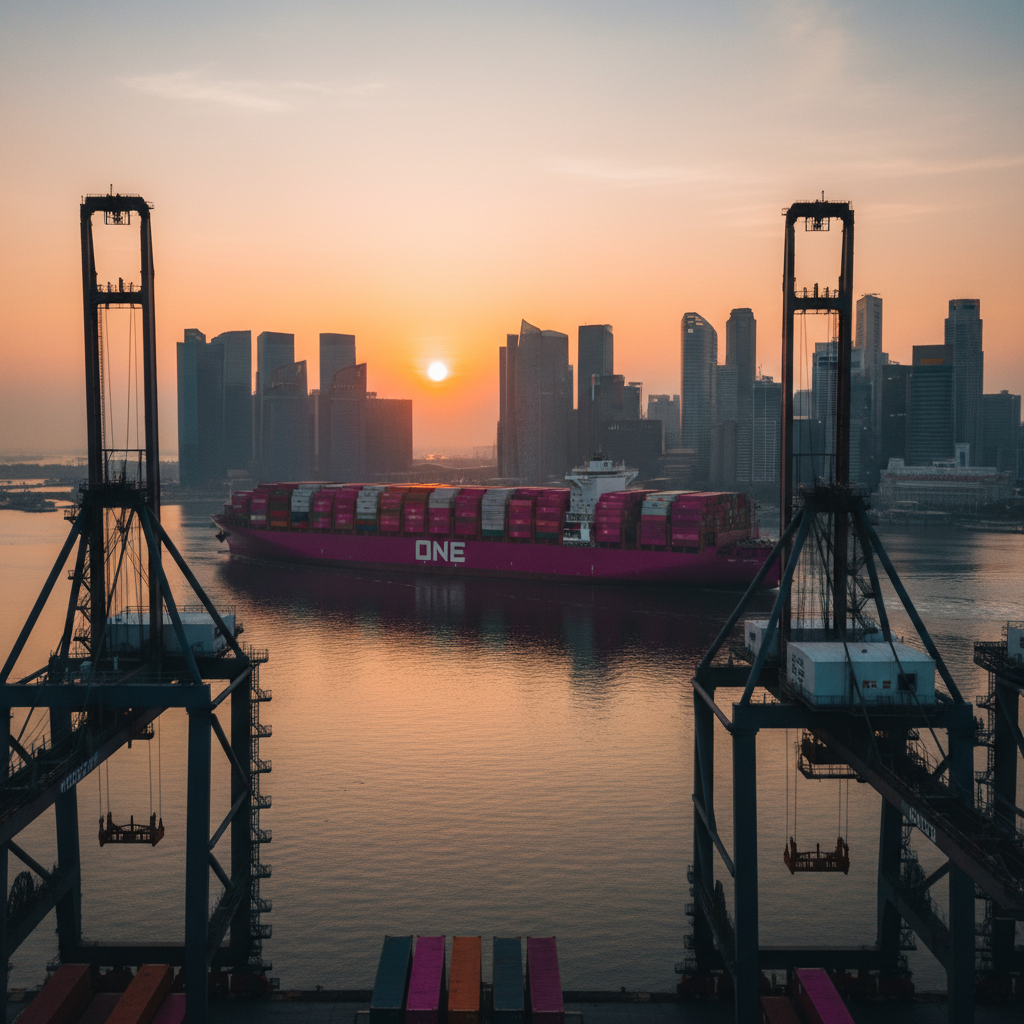
How this impacts the global supply chain
Ocean Network Express's decision to consolidate its East Asia regional headquarters from Hong Kong into its existing South Asia operations in Singapore, forming a new Asia Pacific hub by April 1, 2027, marks a significant strategic realignment for one of the world's major container lines. This move is poised to influence global supply-chain flows by centralizing decision-making and operational oversight for a vast and critical region. Singapore, already a pivotal maritime and logistics hub, will further solidify its role as a nerve center for ONE's Asian operations. This consolidation could lead to more streamlined and harmonized operational policies, service offerings, and network planning across the East and South Asian markets, which are crucial for global trade. Shippers might experience a more unified approach to service delivery and communication from ONE across this expanded region, potentially simplifying coordination efforts.
The impact on routes and capacity might not be immediate or direct in terms of physical vessel movements, but rather in the strategic emphasis and allocation of resources. With a single Asia Pacific command center, ONE may optimize vessel deployment, port calls, and feeder services with a broader regional perspective, potentially leading to efficiency gains or adjustments in network design over time. For instance, decisions regarding new service loops or capacity injections into specific trade lanes originating from or transiting through Asia could be made with a more integrated view of regional demand and supply dynamics. While Hong Kong will undoubtedly remain a significant port, its role as a primary regional operational base for ONE will diminish, potentially shifting some administrative or strategic functions to Singapore. This shift underscores the ongoing evolution of regional maritime leadership and the strategic importance of geographical positioning for global carriers. The long-term effect could be a more agile and responsive ONE network in Asia, better equipped to adapt to market changes, albeit with a transition period that requires careful management.
Global financial impact
The financial implications of ONE's regional consolidation are primarily centered on efficiency gains and cost optimization for the carrier itself, which can have ripple effects across the broader trade ecosystem. By folding two regional headquarters into one, ONE is likely targeting reductions in administrative overheads, duplicated functions, and operational complexities. This streamlining of management structures is a common corporate strategy to improve profitability and resource allocation. The cost savings derived from this consolidation could be substantial, encompassing everything from real estate and personnel costs to IT infrastructure and regional travel expenses. These internal efficiencies, if realized, could contribute to ONE's overall financial health and competitiveness in a highly dynamic shipping market.
For shippers, the direct financial impact might not be immediately apparent in freight rates. However, a more efficient and financially robust carrier can potentially offer more stable and reliable services, which indirectly benefits shippers by reducing supply chain disruptions and associated costs. A carrier operating with optimized costs might also be better positioned to offer competitive pricing in the long run, or at least maintain rate stability in volatile markets. Conversely, any initial disruptions during the transition phase, though unlikely to be significant for external stakeholders, could temporarily affect service levels, potentially incurring minor costs for shippers through delays or rerouting. For the trade at large, the move reinforces Singapore's position as a financial and logistical hub, potentially attracting further investment and talent, while Hong Kong may see a minor adjustment in its corporate presence within the shipping industry. Ultimately, this strategic financial decision by ONE aims to enhance its operational leverage and financial performance within the critical Asian market, with the potential for long-term benefits trickling down to its customer base through improved service consistency and competitive offerings.
How MGS can help navigate today's global trade environment
In an environment marked by significant corporate realignments like ONE's regional consolidation, maintaining granular visibility over shipments becomes paramount. A shipment-visibility control tower platform like MGS offers critical capabilities to navigate such transitions effectively. As ONE consolidates its East Asia and South Asia headquarters into a new Asia Pacific hub by April 1, 2027, there's an inherent period of organizational change. During this time, MGS provides shippers with an independent, real-time view of their cargo's location and status, irrespective of any internal restructuring or potential shifts in operational points of contact within the carrier's new setup. This uninterrupted visibility ensures that shippers can proactively identify any potential service disruptions, delays, or changes in routing that might arise as the new regional headquarters takes full effect.
Furthermore, MGS can help operators adapt to any new operational patterns or communication channels that might emerge from ONE's centralized Asia Pacific management. By aggregating data from multiple sources, including carrier updates, port events, and vessel movements, MGS offers a single, comprehensive source of truth. This is particularly valuable when regional decision-making is being harmonized, as it allows shippers to quickly discern if new policies or operational directives from the Singapore hub are impacting their specific cargo flows. The platform's analytical capabilities can also help shippers assess the performance of ONE's services under the new structure, comparing transit times and reliability against pre-consolidation benchmarks. This objective data empowers shippers to make informed decisions, manage expectations, and maintain resilience in their supply chains, ensuring continuity and minimizing risk during a period of significant change for a key logistics partner.
Source: Splash247 — https://splash247.com/one-folds-hong-kong-regional-hq-into-singapore/