
Ocean Freight Resilience Requires Integrated Network Design, Not Just Routing Shifts
True ocean freight resilience extends beyond rerouting vessels, demanding a comprehensive network design that integrates ports, inland transport, inventory, and decision-making structures.
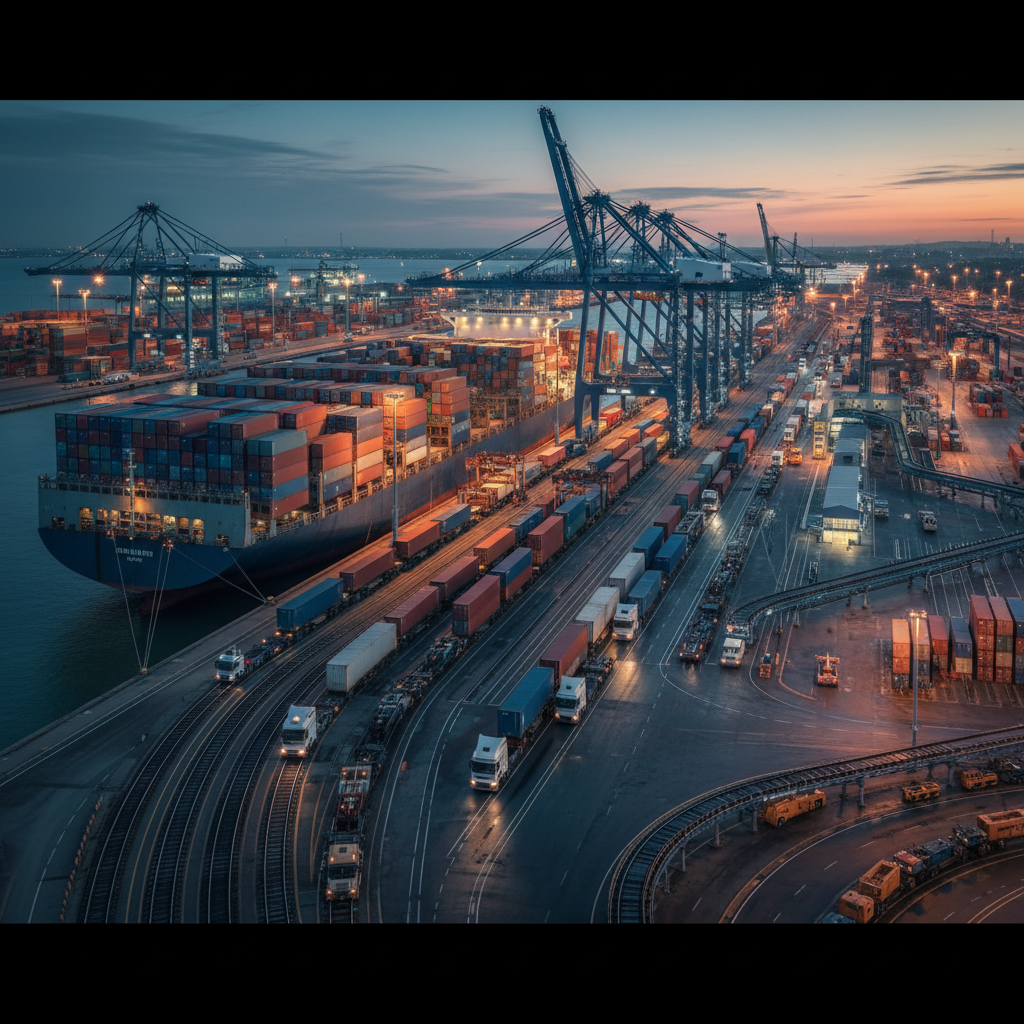
Beyond the Vessel: Reimagining Ocean Freight Resilience
The traditional view of ocean freight resilience often centers on the ability to reroute vessels when faced with disruptions like canal blockages, port strikes, or geopolitical tensions. While adjusting a ship's path is a component of managing immediate crises, this perspective fundamentally misunderstands the broader challenge. True resilience in ocean freight extends far beyond the maritime leg of a journey. It is a comprehensive network design problem, encompassing every element from origin to final destination. Shippers and forwarders who focus solely on alternative shipping lanes risk overlooking the systemic vulnerabilities that can still cripple their supply chains, even if their cargo avoids a direct maritime bottleneck.
Consider a scenario where a major shipping lane is disrupted. A carrier might successfully reroute vessels around the affected area. However, if the alternative ports lack the capacity to handle the diverted volume, or if inland transportation networks from those ports are underdeveloped or congested, the cargo will simply accumulate, creating new bottlenecks. This highlights that the "solution" of rerouting a vessel can quickly become a new problem if the downstream network is not designed to absorb the change. The actual customer experience, and therefore the business impact, is determined not by the ship's journey alone, but by the entire chain of events that follows its arrival at port. This broader understanding impacts global supply chain flows by shifting the focus from isolated maritime events to the interconnectedness of all logistical nodes. It necessitates a re-evaluation of capacity planning, not just at sea, but across port infrastructure, rail lines, trucking fleets, and warehousing facilities. Operations must be coordinated across these disparate elements, rather than managed in silos, to ensure cargo moves efficiently through the entire system.
The Interplay of Ports, Inland Logistics, and Inventory Buffers
Achieving genuine ocean freight resilience hinges on the coordinated performance of multiple supply chain components. Ports serve as key gateways, and their efficiency, capacity, and technological sophistication directly influence how quickly cargo can be processed and moved. A port's ability to handle surges in volume, its labor relations, and its connectivity to inland transport modes are all factors that contribute to or detract from overall network strength. When disruptions force changes in port calls, the receiving port's ability to scale up operations, or its lack thereof, becomes a decisive factor in preventing further delays.
Beyond the port, inland transport networks — including rail, road, and barge systems — are equally important. A strong inland network provides multiple options for cargo distribution, reducing reliance on single points of failure. Investment in diverse inland routes and modes can mitigate the impact of localized infrastructure failures or congestion. For instance, a port with excellent rail links to major distribution hubs offers more resilience than one heavily reliant on a single highway corridor. Furthermore, inventory management plays an important role. Strategic placement of inventory buffers, whether at origin, destination, or in transit hubs, can absorb shocks and provide flexibility when the physical movement of goods is impeded. Holding safety stock, while incurring carrying costs, can prevent stockouts and maintain customer service levels during periods of extended transit or unexpected delays. This integrated view of ports, inland transport, and inventory directly influences global supply chain capacity and operational efficiency, requiring a more holistic approach to planning and investment. It moves beyond simply finding an alternate route to ensuring the entire logistical pipeline can adapt.
Financial Strategy for Integrated Supply Chain Resilience
The shift from a routing-centric to a network-design approach for ocean freight resilience carries major financial implications for all stakeholders. For shippers, the cost of inaction or a narrow focus on routing can manifest as significant financial penalties, including lost sales due to stockouts, expedited shipping fees for urgent cargo, and damage to brand reputation. Investing in a more resilient network design, which might include diversifying port usage, establishing multiple inland transport contracts, or strategically increasing inventory levels, represents a proactive financial commitment. While these investments incur upfront costs, they aim to mitigate the far greater financial risks associated with prolonged disruptions. The return on investment for such resilience measures is realized through reduced operational volatility, more predictable supply chain costs, and sustained customer satisfaction.
Carriers, too, face financial considerations. Their ability to offer truly resilient services depends on their network's flexibility, which often requires investments in a broader portfolio of port partnerships, intermodal connections, and potentially even warehousing solutions. This means moving beyond optimizing for the cheapest or fastest single route to building a network capable of absorbing shocks. The financial incentive for carriers lies in attracting and retaining shippers who prioritize reliability and continuity over marginal cost savings. Trade at large benefits from a more resilient global shipping network through greater stability in commodity prices, reduced inflationary pressures from supply chain shocks, and more predictable international commerce. The financial impact extends to infrastructure development, with governments and private entities needing to invest in port expansions, inland transport upgrades, and digital infrastructure to support more adaptive supply chains. This broader financial perspective emphasizes that resilience is not a cost center but a wise investment that protects revenue streams and market share.
Empowering Agile Responses Through Strategic Decision Rights
Effective network resilience is not solely about physical infrastructure and inventory; it is also about the organizational structures and decision-making processes that govern the supply chain. The concept of "decision rights" refers to who has the authority to make important choices when disruptions occur. In a complex global supply chain, fragmented decision-making can lead to slow responses, conflicting priorities, and suboptimal outcomes. For instance, if a port operator, a trucking company, and a shipper each operate with independent objectives and limited information sharing, their collective response to a disruption will be less effective than if they had pre-defined protocols and shared decision-making frameworks.
Establishing clear decision rights, empowering local teams with the autonomy to act within defined parameters, and fostering collaborative relationships across the supply chain ecosystem are essential for agility. This involves investing in data sharing platforms and communication channels that provide real-time visibility across the entire network. When disruptions hit, the ability to quickly assess the situation, understand the implications across all nodes (ports, inland, inventory), and execute pre-approved contingency plans is essential. This thoughtful approach to decision-making directly improves demand-supply dynamics by enabling faster adjustments to production schedules, inventory deployment, and customer commitments. It allows supply chain managers to shift from reactive problem-solving to proactive risk mitigation, ensuring that the network can adapt to changing conditions and maintain a consistent flow of goods, even when faced with unexpected challenges.
Network Design as the Foundation of Future Ocean Freight
The prevailing focus on rerouting vessels as the primary solution for ocean freight disruptions is an incomplete and ultimately insufficient strategy. True resilience stems from a holistic network design that integrates ports, inland transport, inventory management, and clear decision rights into a cohesive, adaptive system. Shippers and forwarders must recognize that the vulnerability of their supply chains often lies not just at sea, but in the interconnectedness and capacity of the entire end-to-end journey. Investing in this broader network perspective, while requiring significant upfront planning and capital, offers a more robust defense against future shocks, ensuring continuity of operations and protecting financial performance in an increasingly volatile global trade environment.
Source: Logistics Viewpoints — https://logisticsviewpoints.com/2026/11/20/ocean-freight-resilience-is-a-network-design-problem-not-a-routing-exercise/