
Navigating the Storm: How Weather and Incidents Disrupt Global Supply Chains
Recent events in critical maritime chokepoints underscore the profound impact of weather and unforeseen incidents on global cargo movement. This brief analyzes how such disruptions affect key lanes, facilities, and modes, offering strategies for shippers to enhance resilience through advanced visibility platforms.
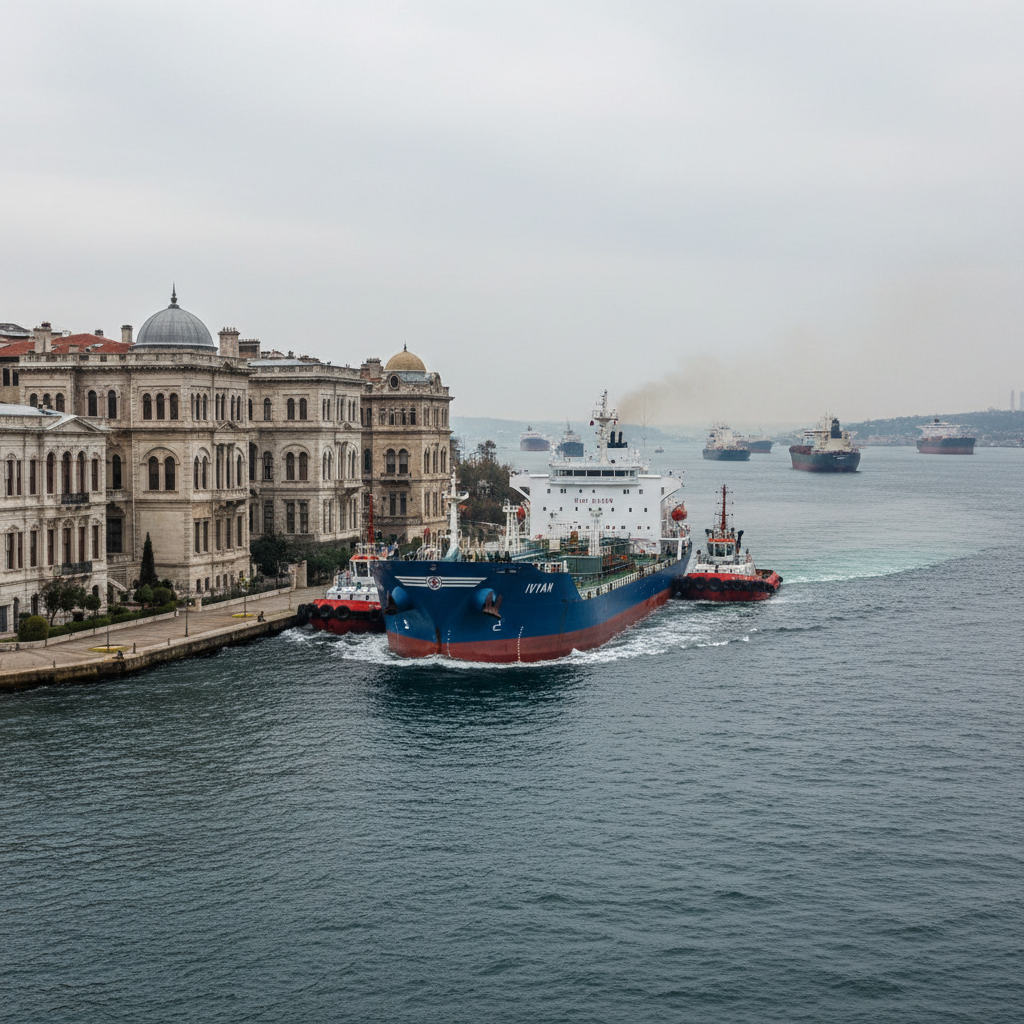
The Bosphorus Incident: A Choke Point Under Pressure
The recent incident involving the Malta-flagged chemical tanker IVYAN in the Bosphorus Strait on October 11 serves as a stark reminder of the fragility of global maritime logistics. The 100-meter vessel, carrying 6,000 tons of cargo, experienced an engine failure, leading to a temporary halt in traffic through this vital waterway. While the immediate cause was mechanical, such events frequently highlight the vulnerabilities inherent in maritime operations, which are often compounded by severe weather conditions. The Bosphorus, a narrow and busy strait, is a critical artery connecting the Black Sea to the Mediterranean, facilitating trade flows between Europe, Asia, and beyond. Any disruption here, regardless of its specific trigger, has immediate and cascading effects on global supply chains, underscoring the need for robust monitoring and contingency planning.
Weather's Pervasive Influence on Maritime Operations
Even when not the direct cause of an incident like the IVYAN's engine failure, weather remains a formidable and constant challenge for maritime shipping. High winds can make navigation treacherous, increase fuel consumption, and cause cargo shifting. Strong currents, particularly in narrow straits like the Bosphorus, can exacerbate steering difficulties or render disabled vessels even harder to control, as seen with the IVYAN drifting towards historic mansions. Fog significantly reduces visibility, leading to delays or complete halts in traffic, as vessels must either slow down or anchor for safety. Severe storms, from tropical cyclones to intense winter gales, pose existential threats to vessels and cargo, forcing ships to re-route, seek shelter, or endure prolonged voyages. These weather phenomena not only directly cause disruptions but can also strain vessel equipment, potentially contributing to mechanical failures or hindering rescue and salvage operations. The cumulative effect is increased transit times, higher operational costs, and significant uncertainty for shippers.
Critical Lanes and Facilities Affected
The Bosphorus Strait is a prime example of a critical maritime lane whose disruption sends ripples across the global trade network. As one of the world's busiest waterways, it handles millions of tons of cargo annually, including oil, chemicals, and various manufactured goods. A closure, even for a few hours or a day, creates immediate vessel congestion, forming queues that can stretch for miles. This congestion then impacts associated facilities: ports in the Black Sea (e.g., Odessa, Constanta, Novorossiysk) face delays in vessel arrivals and departures, leading to berth congestion and slower cargo processing. Similarly, Mediterranean transshipment hubs (e.g., Istanbul, Piraeus) experience knock-on effects as feeder schedules are thrown off. Beyond the Bosphorus, other critical chokepoints like the Suez Canal, Panama Canal, Strait of Malacca, and the English Channel are equally susceptible to weather-induced closures or slowdowns, each with its unique set of geopolitical and logistical implications. These disruptions don't just affect the immediate vicinity; they can force vessels to take much longer alternative routes, such as around the Cape of Good Hope, adding weeks to transit times and significantly increasing fuel costs and emissions.
Modes of Transport and Supply Chain Vulnerabilities
The primary mode affected by incidents like the Bosphorus closure is, naturally, maritime shipping. However, the impact rarely stops at the port. Modern supply chains are intricately intermodal, relying on precise timing for cargo transfer between ships, trains, and trucks. When a vessel is delayed at sea or in a congested strait, the cargo it carries misses its scheduled connections at the destination port. This creates a domino effect: rail freight operators might have to hold trains, trucking companies face idle assets and driver hour limitations, and warehouses struggle with unpredictable inbound flows. For time-sensitive goods, such as fresh produce, pharmaceuticals, or components for just-in-time manufacturing, these delays can lead to spoilage, obsolescence, or production line shutdowns. The vulnerability is amplified by the trend towards lean inventory management, where buffer stocks are minimized, making supply chains less resilient to unexpected shocks caused by weather or operational incidents.
Mitigating Disruption: Proactive Strategies for Shippers
Shippers are not powerless in the face of these disruptions. Proactive strategies are essential for building resilient supply chains. Firstly, diversified routing can reduce reliance on single chokepoints. While not always feasible for every shipment, having pre-approved alternative routes or modes can be a lifesaver. Secondly, strategic inventory management, including maintaining adequate safety stock for critical components or products, can buffer against short-term delays. Thirdly, robust contingency planning involves identifying potential disruption scenarios, assessing their impact, and developing clear response protocols. This includes understanding contractual obligations, insurance coverage, and communication plans with carriers and customers. Finally, fostering strong relationships with multiple carriers and logistics providers can offer flexibility and alternative capacity during crises.
The Indispensable Role of Shipment Visibility
This is where a sophisticated shipment-visibility control tower, like MGS, becomes an indispensable asset. In scenarios like the Bosphorus incident, or when severe weather fronts are approaching critical lanes, MGS provides real-time, end-to-end visibility of all in-transit cargo. Shippers can immediately identify which vessels are impacted by a strait closure or a developing storm. The platform's predictive analytics can estimate revised arrival times, allowing shippers to proactively communicate with downstream partners and adjust production schedules or distribution plans. For instance, if MGS shows a vessel carrying 6,000 tons of critical components is delayed due to congestion at the Bosphorus, a shipper can quickly assess the impact on their manufacturing line and explore alternative sourcing or expedite other shipments. Furthermore, MGS can integrate weather data overlays, providing early warnings of adverse conditions along planned routes. This allows for proactive decision-making, such as re-routing vessels before they encounter severe storms or adjusting port calls to avoid forecasted fog, thereby minimizing delays and mitigating potential damage to cargo or equipment. By transforming raw data into actionable insights, MGS empowers shippers to move from reactive crisis management to proactive risk mitigation, ensuring greater supply chain resilience in an unpredictable world.
Source: Marine Insight — https://www.marineinsight.com/bosphorus-halts-traffic-as-chemical-tanker-with-6000-tons-of-cargo-drifts-toward-historic-mansions/?utm_source=rss&utm_medium=rss&utm_campaign=bosphorus-halts-traffic-as-chemical-tanker-with-6000-tons-of-cargo-drifts-toward-historic-mansions