
Navigating the Storm: Geopolitical Disruptions to Global Cargo Movement
Geopolitical tensions are increasingly reshaping global trade, threatening critical routes and commodity flows. This brief examines how potential events, such as an 'energy quarantine' in a vital manufacturing hub, trigger cascading disruptions across maritime, air, and trade sectors, and highlights the essential role of real-time shipment visibility in maintaining supply chain resilience.
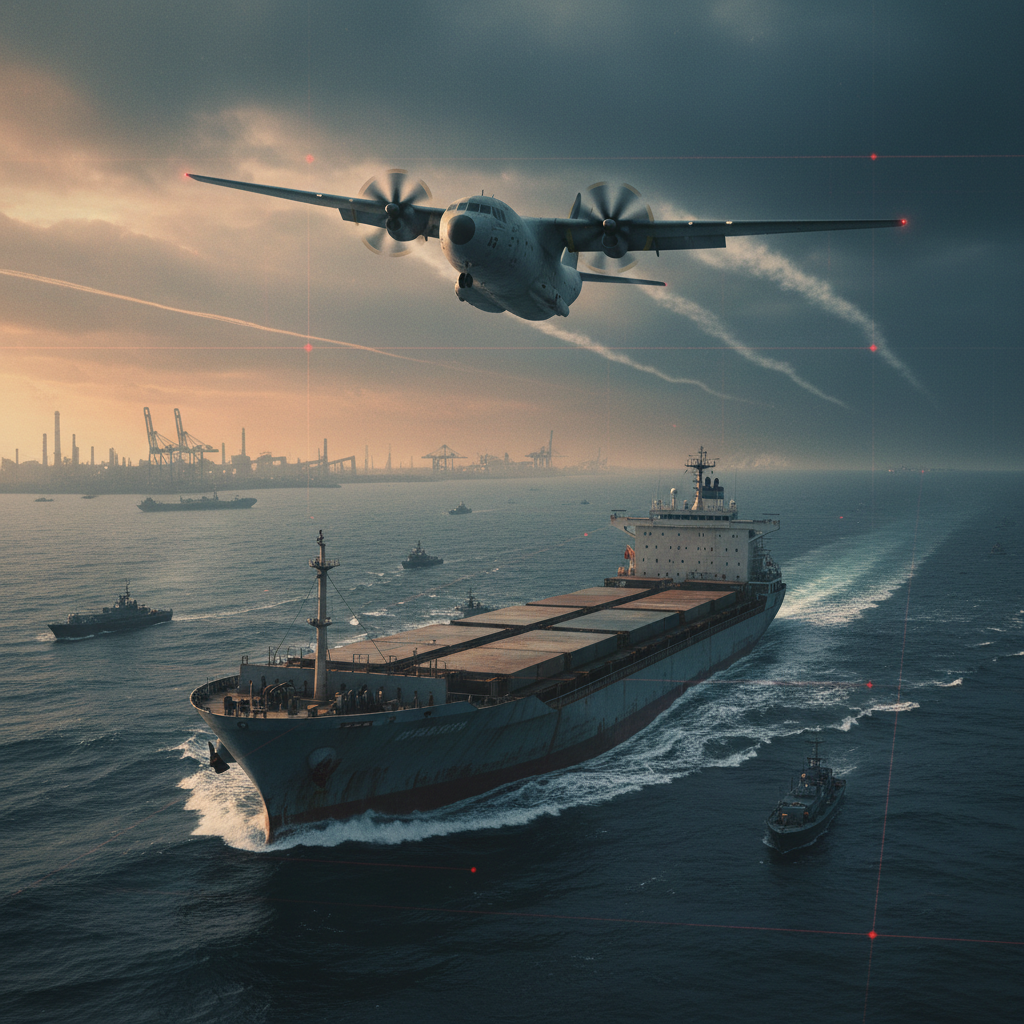
The global supply chain navigates a complex landscape, with geopolitical tensions posing an escalating challenge to established trade arteries. While political motivations are beyond this analysis, the downstream effects on cargo movement are immediate and profound. As a shipment-visibility control tower platform, understanding these disruptions is paramount for clients to maintain operational resilience. The prospect of an "energy quarantine" in a critical global manufacturing hub, as recently highlighted by geopolitical strategists, serves as a stark reminder of the fragility in today's interconnected logistics networks. Such an event, or even its credible threat, can trigger a cascade of consequences across continents, impacting everything from delivery schedules to consumer prices.
Impact on Maritime Routes and Waterways
Heightened geopolitical tension, particularly in maritime-centric regions like the Indo-Pacific, directly disrupts established shipping lanes. A situation involving an "energy quarantine" or similar strategic maneuver in the Taiwan Strait would transform one of the world's busiest maritime chokepoints into a high-risk zone. This vital artery connects major manufacturing hubs with global markets. Should this waterway become inaccessible or too dangerous, vessels would be forced to seek alternative routes, typically longer voyages around the eastern side of Taiwan or through the Luzon Strait. Such diversions mean increased fuel consumption, extended transit times, and higher operational costs. Longer journeys strain schedules, leading to port congestion at destination hubs. Moreover, perceived risk escalates war risk insurance premiums, potentially rendering routes economically unviable. Naval activities can also impede commercial traffic, creating no-go zones. The cumulative effect is reduced shipping capacity, bottlenecks, and delays, translating to stockouts and production delays for businesses.
Consequences for Airspace
Geopolitical events also profoundly impact air cargo operations. "No-fly zones" or restricted air corridors in response to an incident, like a potential quarantine scenario, severely curtail air freight capacity and efficiency. Airspace over or near contested regions might be declared unsafe, forcing commercial airlines to reroute flights. These aerial detours lead to longer flight paths, increasing fuel burn and extending delivery times. For high-value, time-sensitive cargo, even minor delays have significant financial implications. Increased operational costs for airlines are passed on to shippers as higher freight rates, contributing to inflationary pressures. Sudden airspace closure can overwhelm air traffic control in adjacent regions, causing further delays. This volatility makes air cargo logistics challenging, demanding real-time adaptability and robust contingency strategies.
Trade Flows and Critical Commodities
The implications of geopolitical events extend beyond physical movement, fundamentally altering trade flows and the availability of critical commodities. The source material highlights the vulnerability of energy supplies, underscoring how vital resources like oil and gas can become constrained. Any disruption to energy imports for a major industrial player, such as Taiwan, would have immediate and severe consequences for its manufacturing output. Beyond energy, the region is a global linchpin for other critical commodities. Taiwan dominates semiconductor manufacturing. A significant disruption here, whether through an energy quarantine impacting production or a blockade preventing exports, would send shockwaves through the global technology sector. Industries reliant on these chips—from automotive to consumer electronics—would face unprecedented shortages, leading to production halts and potentially a global economic downturn. Localized geopolitical events can quickly trigger global crises in essential component supplies.
Tariffs, Sanctions, and Regulatory Compliance
Geopolitical events frequently catalyze new tariffs, sanctions, and export controls. While the source focuses on physical disruption, the broader context often involves economic measures to exert pressure or restrict trade. New tariffs significantly increase goods costs, forcing companies to re-evaluate sourcing. Sanctions can prohibit trade with specific entities, requiring meticulous due diligence. Export controls might restrict certain technologies to designated destinations. The dynamic nature of these regulations, often changing rapidly, creates substantial compliance risks. Companies must invest in robust systems to avoid inadvertent violations, which can result in hefty fines and reputational damage. This complexity adds friction to global trade, demanding constant vigilance and adaptability.
Broader Economic and Supply Chain Ramifications
The cumulative effect of disrupted routes, restricted airspace, altered trade flows, and new regulatory hurdles destabilizes global supply chains with far-reaching economic ramifications. Increased logistics costs—from longer routes, higher fuel prices, elevated insurance premiums, and new tariffs—directly contribute to inflationary pressures. Businesses face higher operational expenses, passed to consumers, eroding purchasing power and potentially slowing economic growth. Supply chain volatility compels companies to rethink inventory strategies. The "just-in-time" model becomes vulnerable; companies may opt for "just-in-case" buffer stocks, tying up capital and increasing warehousing costs. This accelerates trends towards supply chain diversification, reshoring, or nearshoring to reduce reliance on single-source regions. While enhancing long-term resilience, these strategies involve significant capital investment and can initially lead to higher production costs and longer lead times. The overarching impact is a less efficient, more costly, and inherently more complex global trading environment.
The Indispensable Role of Shipment Visibility
In this volatile global trade landscape, a sophisticated shipment-visibility control tower platform is essential for supply chain resilience. When maritime routes are rerouted or airspace restricted, real-time tracking provides immediate insight into goods' new trajectory, enabling accurate ETA recalculation and proactive stakeholder communication. This visibility allows logistics managers to identify impacted shipments, assess delays, and initiate contingency plans, such as diverting cargo or switching modes. For critical commodities like energy or semiconductors, knowing the precise location and status of every shipment is paramount for managing production schedules. A control tower can flag potential compliance issues related to new sanctions or tariffs by consolidating trade regulations against shipment data. By aggregating data on delays, costs, and route changes, the platform offers invaluable insights for strategic planning, helping companies build robust, diversified networks. The ability to see, understand, and react in real-time is the cornerstone of maintaining operational continuity and competitive advantage.
Source: Atlantic Council — https://www.atlanticcouncil.org/in-depth-research-reports/issue-brief/how-to-prevent-an-energy-quarantine-of-taiwan/