
Navigating the Storm: Far East-US Freight Rates Skyrocket 324% Amidst Hormuz Crisis
A geopolitical crisis in the Hormuz Strait has sent Far East-US freight rates soaring by 324%, creating unprecedented challenges for global supply chains and demanding enhanced visibility solutions.
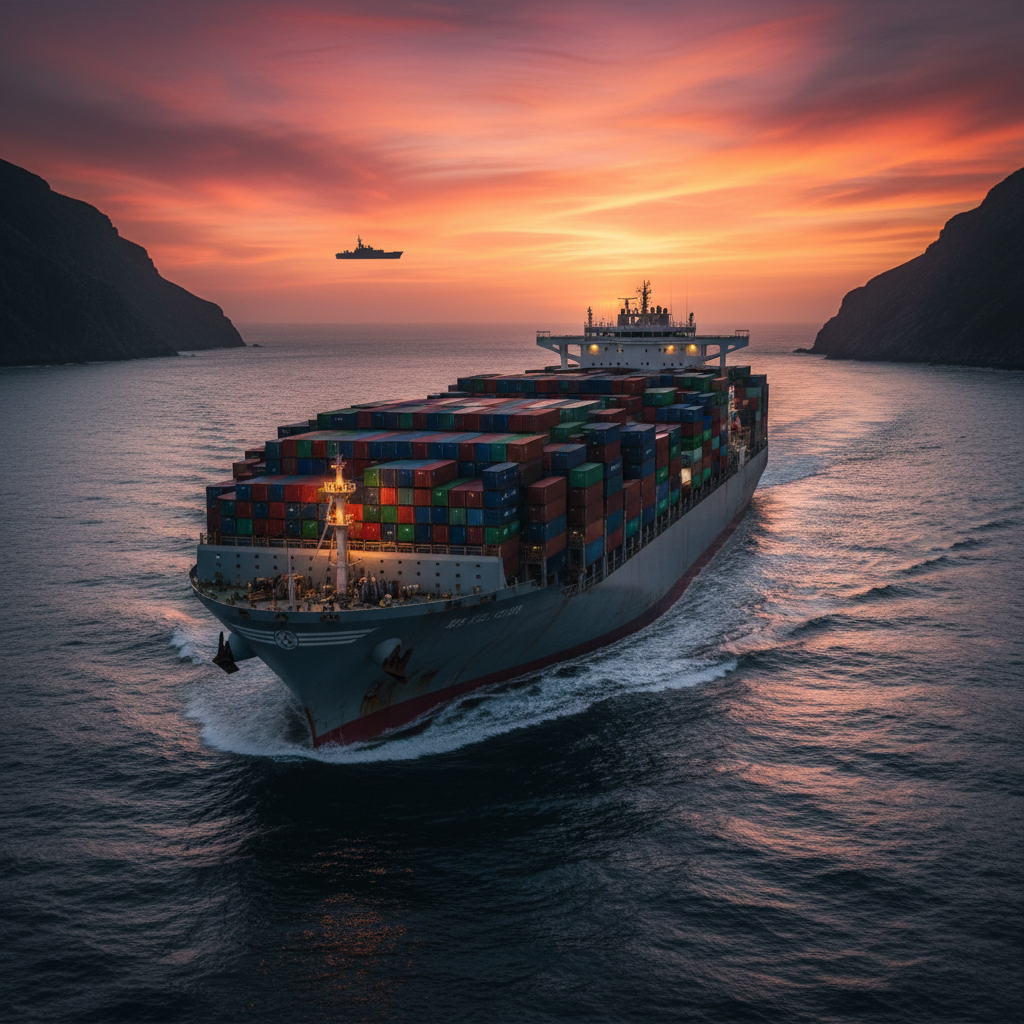
How this impacts the global supply chain
The recent surge in Far East-US freight rates, specifically a staggering 324% increase following the Hormuz Crisis, signals a profound disruption to global supply chain flows. The Strait of Hormuz, a critical maritime chokepoint, serves as a vital artery for global trade, and any instability there creates immediate and far-reaching ripple effects. While the Far East to US West Coast and East Coast routes do not directly traverse the Strait for their entire journey, the crisis introduces systemic pressures that impact the global shipping ecosystem.
Firstly, the perceived or actual security risks associated with the Hormuz region compel carriers to re-evaluate their routes and operational strategies. This can lead to diversions, even for vessels not directly passing through the Strait, as global fleets are interconnected. For instance, if vessels are rerouted away from the Middle East to avoid risk, it reduces the overall available capacity in other lanes, including those serving the Far East-US trade. Longer transit times become inevitable as ships take alternative, often thousands of miles longer, routes. This directly impacts lead times for goods, pushing out delivery schedules and creating significant uncertainty for businesses reliant on just-in-time inventory models.
Secondly, global vessel capacity is effectively reduced. When ships spend more time at sea due to rerouting, they complete fewer rotations within a given period. This 'effective capacity' crunch means fewer slots are available for cargo, intensifying competition for space. The 324% rate surge is a direct manifestation of this severe capacity constraint relative to demand. This scarcity forces shippers to pay premium prices, or face significant delays and potential stockouts. Operations become significantly more complex, requiring constant adjustments to shipping schedules, port calls, and intermodal transfers. Supply chain managers are now faced with the daunting task of navigating highly volatile transit times and unpredictable arrival dates, making inventory planning and customer commitments extremely challenging.
Global financial impact
The financial implications of a 324% surge in Far East-US freight rates are immense and multifaceted, impacting every stakeholder in the global trade ecosystem. For shippers, this represents a direct and substantial increase in their cost of goods sold. Such an exponential rise in transportation expenses can quickly erode profit margins, especially for businesses operating on tight financial frameworks. Companies may be forced to absorb these costs, leading to reduced profitability, or pass them on to consumers, contributing to inflationary pressures across various sectors. This can make products more expensive, potentially dampening consumer demand and impacting overall market stability.
Small and medium-sized enterprises (SMEs) are particularly vulnerable to such drastic cost increases. Unlike larger corporations with greater financial reserves and negotiating power, SMEs might struggle to secure affordable shipping, potentially leading to delays in product launches, inability to fulfill orders, or even business closures. The crisis effectively creates a barrier to entry for smaller players, consolidating market power among those who can withstand the financial shock.
For carriers, while the surge in rates translates to significantly higher revenues per container, it also comes with increased operational costs and risks. Rerouting vessels means higher fuel consumption over longer distances, increased insurance premiums for navigating perceived high-risk areas, and potentially higher crew wages for extended voyages. While the 324% increase likely covers these additional costs and provides substantial profits, carriers also face the challenge of managing complex logistics, potential port congestion due to altered schedules, and the risk of future demand destruction if freight costs become prohibitively high for shippers. The volatility makes long-term planning difficult even for carriers.
At a macro level, the global financial impact is one of increased economic uncertainty and potential deceleration of trade. Higher shipping costs act as a tax on international commerce, making global supply chains less efficient and more expensive. This can lead to shifts in sourcing strategies, with companies exploring nearshoring or reshoring options to mitigate reliance on distant, volatile trade lanes. Ultimately, the crisis underscores the fragility of globalized trade and its susceptibility to geopolitical events, introducing systemic risk into financial markets and national economies worldwide.
Demand–supply analysis & improvement
The 324% surge in Far East-US freight rates is a stark indicator of a severe imbalance between demand and supply in the global shipping market. On the supply side, the Hormuz Crisis acts as a significant constraint. Geopolitical instability in a key region leads to increased perceived risk, prompting carriers to either reroute vessels around affected areas or implement stricter security protocols. Both actions inherently reduce the effective capacity of the global shipping fleet. Longer transit times mean vessels spend more days at sea for each journey, resulting in fewer available ships to service the high-volume Far East-US trade lanes. This reduction in available vessel slots, coupled with potential port congestion from altered schedules, creates an artificial scarcity of shipping capacity.
On the demand side, while the crisis impacts supply, the underlying consumer and industrial demand for goods transported from the Far East to the US generally remains robust. This persistent demand, meeting a significantly constrained and risk-averse supply, inevitably drives freight rates skyward. The market becomes a seller's market, where carriers can command premium prices due to the scarcity of their service.
To improve this dynamic, several levers can be pulled. Firstly, optimizing existing capacity becomes paramount. This includes maximizing vessel utilization through efficient loading and routing, and minimizing idle time at ports. Secondly, exploring multimodal and alternative routing strategies can alleviate pressure on congested ocean lanes. While often more expensive, options like trans-Pacific rail or air freight for critical cargo can provide relief, especially for high-value or time-sensitive goods. Thirdly, diversifying port choices at both origin and destination can help circumvent bottlenecks. Finally, enhanced demand forecasting and collaborative planning with carriers and logistics partners can help smooth out demand peaks and better allocate available capacity, although this is challenging in a crisis scenario. Building stronger, more transparent relationships with carriers can also provide preferential access to limited capacity during times of disruption.
ROI-focused resilience
The 324% increase in Far East-US freight rates due to the Hormuz Crisis provides a stark, quantifiable example of the financial risk inherent in today's global supply chains. This figure serves as a powerful metric for framing the return on investment (ROI) of resilience actions. An investment in supply chain resilience is no longer merely a 'nice-to-have' but a critical strategic imperative designed to protect against such catastrophic cost surges and operational disruptions.
Consider the direct financial impact: for every container shipped, the cost has more than quadrupled. For a company moving thousands of containers annually, this translates into millions, if not tens of millions, in additional freight expenditure. The ROI of resilience can be directly measured by the avoided costs. For instance, an investment in diversifying sourcing locations, even if slightly more expensive in stable times, can prevent reliance on a single region or chokepoint, thus mitigating the impact of a crisis in one area. The ROI is the difference between paying the exorbitant 324% surge and a more manageable, albeit still increased, cost from an alternative, less impacted supply route.
Similarly, investing in robust inventory strategies, such as maintaining strategic safety stock for critical components or finished goods, can provide a buffer against extended lead times caused by rerouting. While holding inventory incurs carrying costs, these costs are often dwarfed by the financial penalties of stockouts, lost sales, emergency air freight (which can be many times more expensive than even surged ocean rates), and damaged customer relationships. The ROI is the preservation of revenue and market share during a disruption, directly offsetting the initial investment in inventory.
Crucially, investing in advanced supply chain visibility platforms like MGS offers a clear ROI by providing the intelligence needed for proactive risk mitigation. The cost of implementing and maintaining such a platform is offset by the ability to identify potential disruptions early, reroute shipments efficiently, and optimize inventory levels to avoid the worst impacts of a crisis. By enabling faster, more informed decision-making, MGS helps prevent the cascading financial losses associated with unforeseen delays and exorbitant spot market rates, turning a potential multi-million-dollar loss into a manageable challenge. The ROI is quantifiable in terms of reduced demurrage, avoided expedited shipping fees, maintained customer satisfaction, and ultimately, sustained profitability during periods of extreme volatility.
How MGS can help navigate today's global trade environment
In an environment where Far East-US freight rates have surged by 324% due to a geopolitical crisis, the ability to see, understand, and react to supply chain disruptions is no longer a luxury but a fundamental necessity. This is precisely where a shipment-visibility control tower platform like MGS becomes an indispensable asset for operators.
Firstly, MGS provides real-time, end-to-end visibility across the entire shipping journey. In a crisis like the Hormuz situation, routes can change rapidly, and transit times become highly unpredictable. MGS allows operators to track every container, vessel, and shipment in real-time, regardless of reroutes or delays. This means knowing precisely where goods are, their estimated arrival times, and any deviations from the original plan. This granular visibility is critical for managing customer expectations and making informed decisions.
Secondly, MGS empowers proactive decision-making and rapid response. With real-time data, operators can identify potential delays or impacted shipments long before they become critical problems. If a vessel is rerouted or faces security concerns, MGS can flag this instantly, allowing supply chain managers to explore alternative solutions. This might involve diverting cargo to another port, arranging for expedited air freight for critical components, or adjusting production schedules to account for new lead times. Without MGS, such decisions would be reactive, often leading to more expensive, last-minute solutions and greater disruption.
Thirdly, MGS facilitates enhanced risk management and scenario planning. By integrating real-time geopolitical intelligence with shipment data, MGS can help identify which shipments are most vulnerable to ongoing crises. It can also assist in simulating the impact of various disruption scenarios, such as extended rerouting or port closures, allowing companies to develop contingency plans before they are urgently needed. This capability is vital for mitigating the financial impact of events like the 324% rate surge, by enabling operators to choose the least costly and most efficient alternative routes or modes.
Finally, MGS fosters improved communication and collaboration across the supply chain ecosystem. In a crisis, effective communication with carriers, logistics partners, and internal stakeholders is paramount. MGS provides a centralized platform for sharing accurate, up-to-date information, ensuring everyone is working from the same data set. This transparency reduces miscommunication, speeds up problem resolution, and helps maintain strong relationships with partners and customers, even in the face of significant disruptions. By providing actionable insights derived from comprehensive visibility, MGS helps operators navigate the extreme volatility and cost pressures of today's global trade environment, turning potential chaos into managed complexity.
Source: Global Trade Magazine — https://www.globaltrademag.com/far-east-us-freight-rates-surge-324-after-hormuz-crisis/