
Geopolitical Tides: Navigating Disrupted Cargo Movement in a Volatile World
Geopolitical events are fundamentally reshaping global cargo movement, forcing rerouting, escalating costs, and creating significant commodity price volatility. This brief examines the far-reaching consequences for maritime routes, airspace, trade flows, and the critical role of real-time visibility in maintaining supply chain resilience.
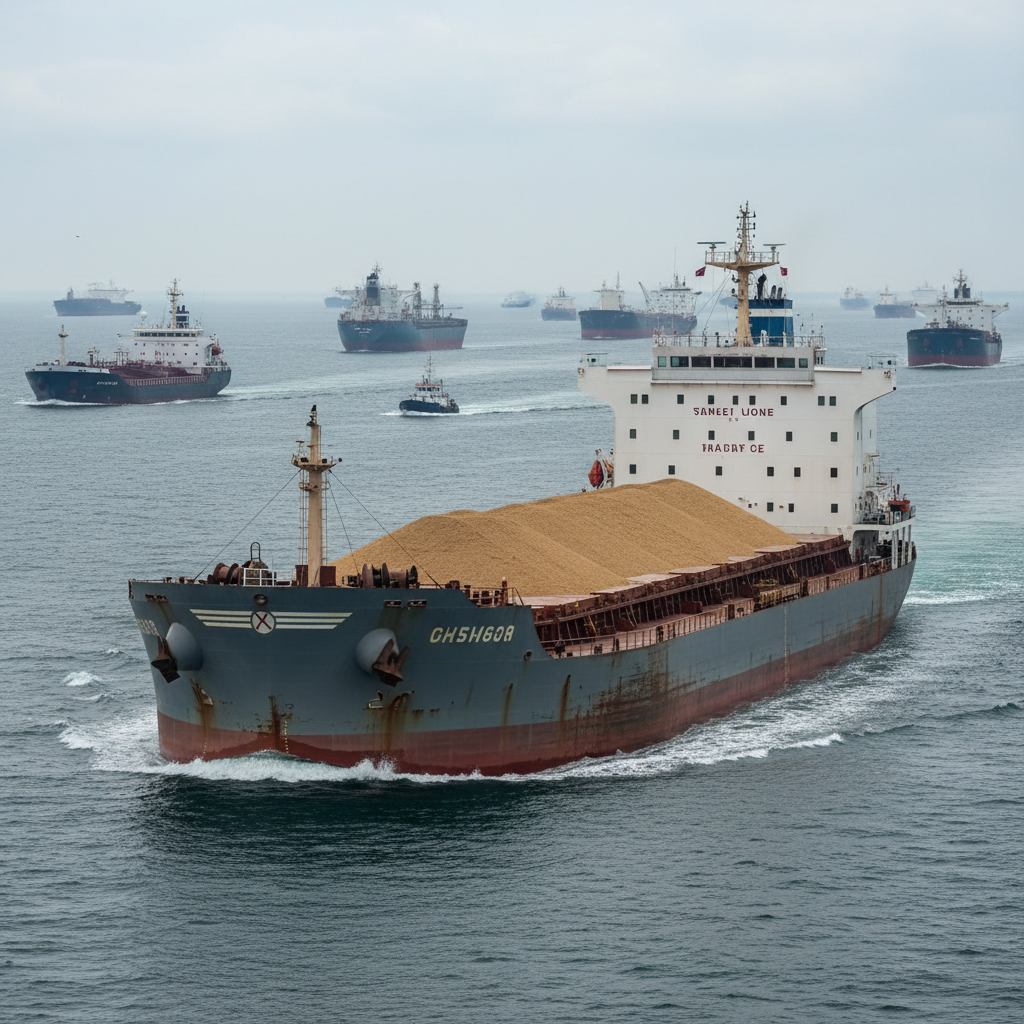
The global supply chain is an intricate web, highly sensitive to external shocks. In recent years, geopolitical events have emerged as a primary catalyst for disruption, fundamentally altering established cargo movement patterns across all modes of transport. From vital waterways to international airspace, and through the imposition of tariffs and sanctions, these events create a ripple effect that extends far beyond political borders, directly impacting trade flows, transport costs, and commodity prices. For organizations relying on predictable logistics, understanding and adapting to these shifts is paramount.
Impact on Maritime Routes and Waterways
Maritime shipping, the backbone of global trade, is particularly vulnerable to geopolitical instability affecting critical waterways. The ongoing situation in the Black Sea, for instance, has severely impacted key shipping lanes. As evidenced by the rising cost of European wheat, the interruption of Russian and Ukrainian Black Sea ship-borne exports has profound implications. Vessels that once traversed these routes now face outright closures, heightened security risks, or significantly increased insurance premiums, rendering traditional paths economically unviable or physically impossible. This forces cargo to be rerouted, often via much longer and more circuitous journeys. Such diversions lead to extended transit times, increased fuel consumption, and higher operational costs for shipping lines, which are inevitably passed down to consumers. Furthermore, the redirection of a significant volume of traffic can strain alternative ports and routes, leading to congestion, delays in port calls, and a cascading effect on global shipping schedules. The predictability of just-in-time inventory systems is undermined, forcing businesses to carry larger buffer stocks or risk stockouts, adding further cost and complexity to their supply chain management.
Airspace Restrictions and Their Ripple Effects
While the immediate focus of some geopolitical events might be on maritime channels, airspace restrictions represent another significant and often immediate consequence. When nations close their airspace or designate certain regions as no-fly zones, commercial air cargo and passenger flights carrying freight must find alternative paths. These reroutes can add thousands of miles to a journey, significantly increasing flight times and fuel burn. For time-sensitive and high-value cargo, this translates directly into higher air freight rates and longer lead times, impacting industries from electronics to pharmaceuticals. Beyond the direct cost, extended flight durations can also reduce the operational efficiency of air carriers, as aircraft utilization rates decline and crew scheduling becomes more complex. Moreover, if air cargo capacity is reduced or becomes prohibitively expensive, some goods may be forced onto sea freight, further exacerbating congestion and pressure on maritime routes that are already contending with their own geopolitical challenges. This intermodal shift highlights the interconnectedness of transport networks and how disruption in one can quickly spill over into another.
Tariffs, Sanctions, and Trade Flows
Geopolitical tensions frequently manifest as tariffs, sanctions, and export/import restrictions, fundamentally altering established trade flows. The interruption of Russian and Ukrainian Black Sea exports, for example, is a direct outcome of such measures or the threat thereof. These actions create immediate supply shortages in importing nations and force businesses to urgently seek alternative sourcing channels. For commodities like wheat, this can lead to significant price spikes, as seen in Europe, due to reduced supply availability from traditional sources and increased demand on alternative markets. Companies must rapidly re-evaluate their global sourcing strategies, potentially shifting production or procurement to new regions, which can involve vetting new suppliers, navigating unfamiliar regulatory landscapes, and establishing entirely new logistics chains. This process is not only costly and time-consuming but also introduces new risks related to quality control, compliance, and geopolitical stability in the new sourcing regions. The overall effect is a fragmentation of global trade, with supply chains becoming more regionalized or diversified to mitigate the risks associated with over-reliance on single or politically unstable sources.
Commodity Price Volatility and Supply Chain Resilience
The most tangible and immediate consequence for many businesses and consumers stemming from geopolitical disruptions is commodity price volatility. The rising price of European wheat is a clear illustration of how supply interruptions in a critical region can have a direct and significant impact on global markets. Such volatility extends beyond primary commodities, affecting everything from energy prices to raw materials for manufacturing. Businesses face increased input costs, eroding profit margins and potentially leading to higher prices for finished goods. This inflationary pressure can ripple through entire economies. To counter this, building supply chain resilience becomes paramount. This involves strategies such as diversifying supplier bases across multiple geographies, investing in inventory optimization to buffer against sudden shortages, and exploring alternative materials or production methods. However, these measures often come with their own set of costs and complexities, requiring careful strategic planning and significant capital investment. The goal is to create a more robust and adaptable supply chain capable of absorbing shocks and maintaining continuity of supply, even in the face of unpredictable global events.
The Role of Real-time Visibility in Mitigating Disruptions
In an environment characterized by unpredictable geopolitical disruptions, real-time visibility is no longer a luxury but a critical necessity for supply chain management. A shipment-visibility control tower, such as MGS, provides the essential intelligence needed to navigate these turbulent waters. By offering end-to-end tracking of cargo across all modes – maritime, air, road, and rail – it enables businesses to monitor the precise location and status of every shipment. When a Black Sea route is disrupted or airspace is closed, MGS can immediately flag affected shipments, provide updated ETAs based on rerouting, and highlight potential delays. This proactive insight allows supply chain managers to make informed decisions rapidly: rerouting cargo through alternative ports or airports, switching transport modes, or adjusting production schedules to accommodate delays. Furthermore, real-time data on port congestion, vessel movements, and carrier performance helps identify bottlenecks before they become critical problems. By consolidating disparate data sources into a single, actionable view, an MGS control tower empowers organizations to maintain operational continuity, mitigate financial losses from delays and surcharges, and communicate transparently with stakeholders, ultimately building a more resilient and responsive supply chain capable of weathering geopolitical storms.
Source: Maritime Professional — https://www.maritimeprofessional.com/news/european-wheat-rises-black-disruptions-422874