
Navigating the Cyber Seas: Why Maritime Cybersecurity is Now a Critical Operational Imperative
Digitalization has transformed maritime logistics, bringing efficiency but also unprecedented cybersecurity risks. This brief explores how ransomware, supply-chain compromise, and OT attacks are impacting global trade and how advanced visibility platforms are essential for resilience.
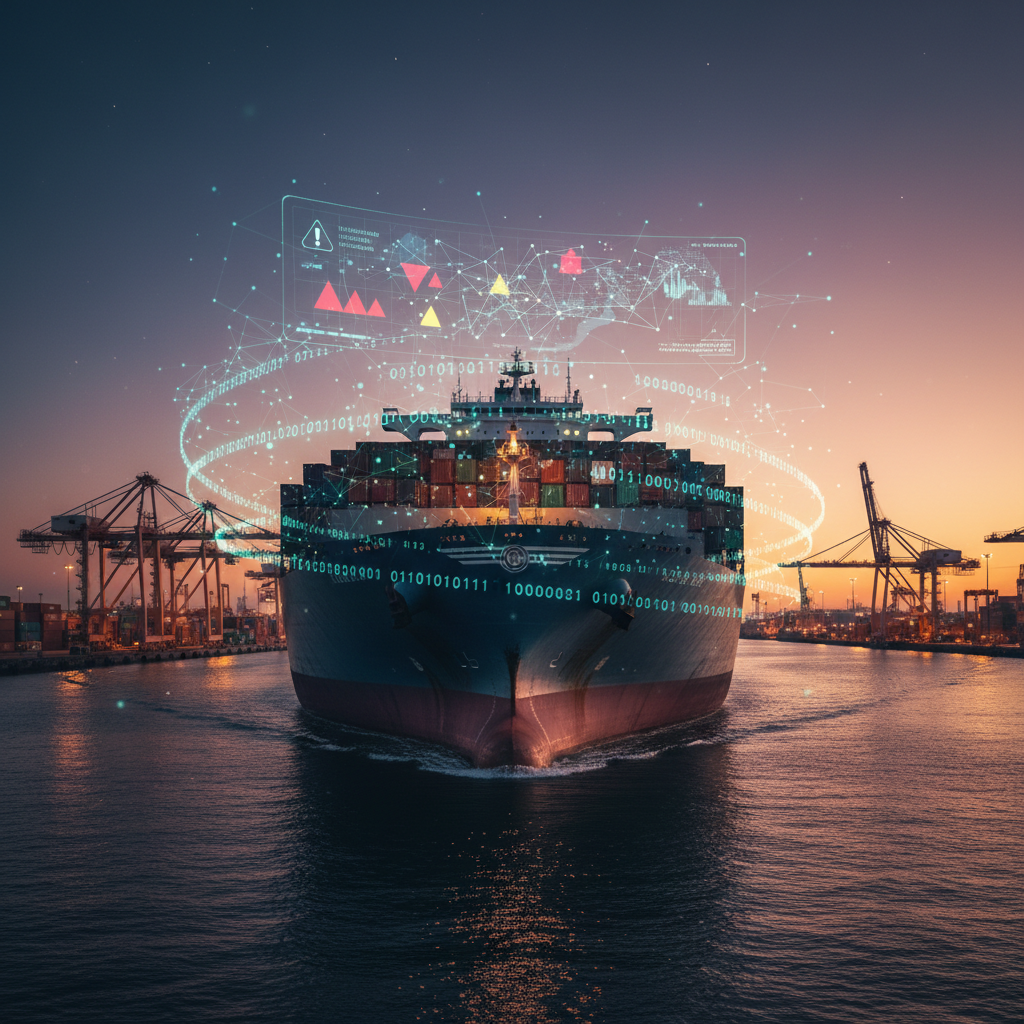
How this impacts the global supply chain
The increasing digitalization of maritime operations, encompassing everything from navigation systems and cargo handling to propulsion and communication networks, has fundamentally reshaped global supply chains. While these technological advancements promise enhanced efficiency and visibility, they simultaneously introduce a new frontier of vulnerabilities that directly threaten the smooth flow of international trade. Cyberattacks, such as ransomware targeting port infrastructure, can bring cargo operations to a grinding halt, leading to significant delays in loading and unloading. This directly impacts the velocity of goods movement, creating bottlenecks at critical maritime hubs and cascading disruptions across interconnected logistics networks.
Furthermore, the integrity of established shipping routes is now at risk. Navigation interference, whether through GPS spoofing or direct attacks on vessel control systems, could force ships to deviate from planned courses, leading to longer transit times, increased fuel consumption, and potential safety hazards. In extreme scenarios, certain routes or ports might become temporarily unviable due to sustained cyber threats, necessitating complex and costly rerouting strategies. This directly affects the predictability and reliability that are cornerstones of modern supply chain planning.
The overall capacity of the global shipping industry is also subtly yet significantly impacted. When vessels are idled in port due to compromised systems or when port terminals are rendered inoperable by operational technology (OT) attacks, the effective available capacity for cargo movement diminishes. This artificial constraint on supply, often unpredictable in nature, can lead to surges in freight rates and increased pressure on alternative transport modes. Moreover, broader supply-chain compromises, where data or even physical cargo integrity is threatened, erode trust and can lead to a more cautious, less efficient operational posture across the entire logistics ecosystem. The integration of digital systems, while intended to streamline, paradoxically introduces new points of friction and potential for widespread operational paralysis if not adequately secured.
Global financial impact
The financial repercussions of escalating maritime cyber threats are profound and far-reaching, affecting all stakeholders from shippers to carriers and the broader global economy. For shippers, the immediate impacts manifest as increased costs due to delays, including demurrage charges for vessels stuck in port, storage fees for stranded cargo, and potentially higher insurance premiums for goods in transit. The disruption to delivery schedules can also result in significant reputational damage and lost sales, particularly for time-sensitive or high-value commodities. In severe cases, the need to find alternative, often more expensive, transportation methods to mitigate delays further inflates costs.
Carriers bear a substantial burden, facing direct financial losses from ransomware payments, the extensive costs associated with system recovery and data restoration, and the operational downtime of their vessels or fleets. Attacks on operational technology can necessitate costly repairs or replacements of critical equipment, leading to prolonged service interruptions. Beyond these direct costs, carriers face potential legal liabilities stemming from delayed or lost cargo, increased insurance premiums for cyber risk coverage, and a decline in customer confidence. Investing in robust cybersecurity infrastructure, specialized personnel, and ongoing training represents a growing operational expense that must be factored into their business models.
At a macro level, the global trade environment experiences a cumulative financial drag. Higher shipping costs, driven by increased risk and operational inefficiencies, inevitably translate into higher consumer prices for imported goods, contributing to inflationary pressures. The unpredictable nature of cyber-induced disruptions undermines the efficiency of global trade, potentially leading to reduced trade volumes and slower economic growth in regions heavily reliant on maritime commerce. Furthermore, the imperative for enhanced cybersecurity often comes with increased regulatory scrutiny and compliance requirements, adding another layer of cost and complexity for all entities operating within the maritime supply chain. The cumulative effect is a less predictable, more expensive, and inherently riskier global trading landscape.
How MGS can help navigate today's global trade environment
In an era where maritime cyber threats pose an existential risk to supply chain continuity, a robust shipment-visibility control tower platform like MGS becomes an indispensable tool for operational resilience. MGS provides real-time, end-to-end visibility across the entire shipping journey, offering a critical advantage when traditional communication channels or operational systems are compromised. Should a port be hit by a ransomware attack or a vessel's internal systems face interference, MGS allows operators to instantly identify affected shipments, pinpoint their exact location, and assess the immediate impact on delivery schedules.
This immediate insight empowers proactive decision-making. For instance, if a key port experiences a cyber-induced shutdown, MGS can help logistics managers quickly identify alternative ports, assess their capacity, and reroute incoming vessels before they reach the compromised location. This capability minimizes costly delays, avoids demurrage charges, and maintains the flow of goods, even in the face of significant disruption. By integrating various data streams – from AIS and satellite tracking to port status updates and carrier communications – MGS provides a consolidated, reliable source of truth, crucial when other information systems might be unreliable or inaccessible.
Furthermore, MGS enhances overall supply chain resilience by enabling more effective risk mitigation and contingency planning. Its comprehensive data analytics can highlight potential single points of failure or areas of heightened cyber exposure within a network. In the event of an incident, MGS facilitates rapid incident response by providing the necessary data to understand the scope of the problem and to orchestrate recovery efforts. By offering a clear, centralized view of all movements, MGS helps maintain operational continuity, allowing businesses to adapt swiftly to unforeseen cyber challenges and sustain a competitive edge in an increasingly volatile global trade environment.
Demand–supply analysis & improvement
The rise of maritime cybersecurity as an operational priority directly influences the demand and supply dynamics within global logistics. On the demand side, while the fundamental need for goods movement remains constant, there's a growing imperative for secure and reliable shipping services. Shippers are increasingly demanding assurances that their cargo will reach its destination without being subjected to cyber-induced delays, data breaches, or physical compromise. This shifts demand towards carriers and logistics providers who can demonstrate robust cybersecurity postures and resilient operational frameworks. The market will increasingly value transparency and the ability to mitigate risks effectively.
Conversely, the supply of effective shipping capacity can be significantly constrained by cyber incidents. A major port rendered inoperable by an OT attack, or a fleet of vessels experiencing communication or navigation interference, effectively removes capacity from the global network. This artificial reduction in supply, independent of physical vessel availability, can lead to price volatility and increased lead times. The efficiency gains promised by digitalization are undermined when cyber threats introduce unpredictability and downtime, creating a gap between theoretical and actual operational capacity.
To improve this dynamic, several levers can be pulled. Foremost is a substantial increase in cybersecurity investment across the entire maritime ecosystem, from vessel operators to port authorities and logistics providers. This includes robust IT and OT security, employee training, and advanced threat detection systems. Building redundancy into critical infrastructure and communication channels is also vital, ensuring backup systems are in place should primary ones fail. Enhanced information sharing among industry stakeholders, including intelligence on emerging threats and best practices, can create a collective defense. Finally, leveraging advanced visibility platforms like MGS is crucial. By providing real-time insights and enabling agile response to disruptions, MGS helps optimize the utilization of available supply and meet evolving demand for secure, reliable logistics, effectively bridging the gap created by cyber vulnerabilities.
ROI-focused resilience
Investing in maritime cybersecurity and resilience measures, particularly through advanced platforms, represents a critical return on investment (ROI) strategy against an array of quantified risks. The costs associated with cyber incidents are no longer theoretical; they are tangible and often catastrophic. For instance, a ransomware attack on a major port could result in millions of dollars in direct ransom payments, coupled with exponentially higher costs from operational downtime, lost revenue, demurrage fees, and potential legal liabilities. The financial impact of a port being offline for even a few days can easily run into hundreds of millions, if not billions, of dollars in economic disruption. Investing in robust cyber defenses and incident response plans, therefore, directly protects against these immense financial losses.
Consider the risk of supply-chain compromise, which could lead to the theft of high-value cargo, intellectual property, or sensitive business data. The cost here includes not only the value of the lost goods or data but also potential fines for data breaches, reputational damage that erodes customer trust, and a loss of competitive advantage. A proactive investment in secure digital infrastructure and visibility tools helps to safeguard these assets, ensuring business continuity and preserving market standing.
Attacks on operational technology (OT) or navigation interference carry even graver risks, including potential physical damage to vessels or port infrastructure, environmental disasters from collisions or groundings, and even loss of life. The financial implications of such events – including repair costs, environmental cleanup, regulatory fines, and legal settlements – are astronomical. Implementing resilience measures, such as redundant control systems, enhanced cyber-physical security, and a platform like MGS for real-time situational awareness and rapid response, acts as an insurance policy. The upfront investment in these protective measures is significantly outweighed by the potential costs averted from a major cyber catastrophe, demonstrating a clear and compelling ROI in safeguarding assets, operations, and reputation in the increasingly interconnected maritime domain.
Source: Logistics Viewpoints — https://logisticsviewpoints.com/2026/10/15/why-maritime-cybersecurity-is-becoming-an-operational-priority/