
Maersk's Walvis Bay Adjustment: A Microcosm of Geopolitical Supply Chain Shifts
Maersk's decision to cease export coverage from Walvis Bay to Europe and North America underscores the profound impact of geopolitical dynamics on global cargo movement. This analysis, from an MGS supply-chain perspective, delves into the consequences for regional trade, carrier strategies, and the broader vulnerabilities within international logistics.
Introduction
The global supply chain landscape is in a constant state of flux, increasingly shaped by geopolitical dynamics that transcend traditional economic considerations. From shifting alliances to regional instabilities, these forces manifest as tangible disruptions, forcing carriers and shippers to recalibrate their strategies. A recent announcement from Maersk regarding its service adjustments from Walvis Bay serves as a potent illustration of how these macro-level pressures translate into concrete operational changes, impacting cargo movement and trade flows between West Africa, Europe, and North America.
The Specific Disruption
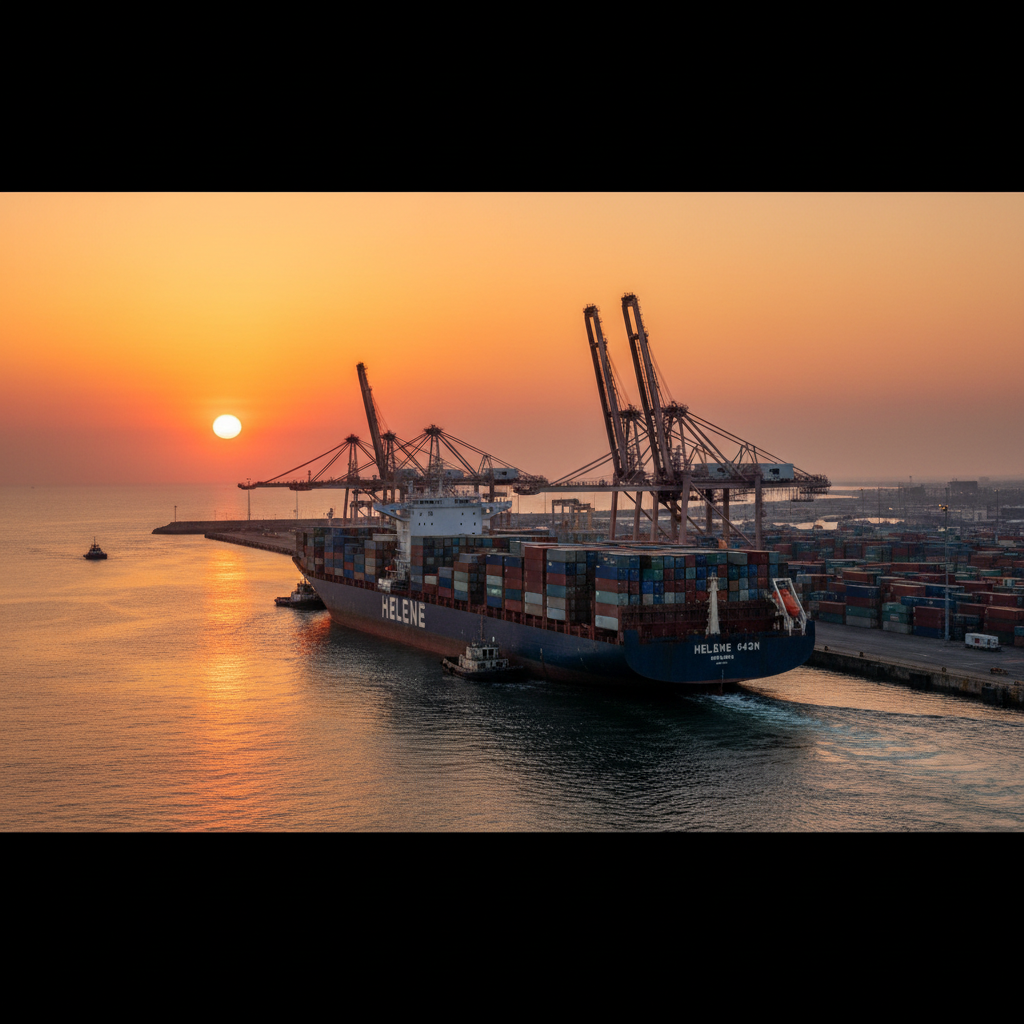
Effective Week 42, Maersk will cease accepting export cargo from Walvis Bay destined for Europe and North America. The final sailing covering these trade lanes will be the Helene, voyage 642N, operating the W13 service. This strategic adjustment means that businesses in Namibia and the surrounding region, previously relying on this direct connectivity, will need to find alternative solutions for their European and North American bound shipments. This isn't merely a minor schedule change; it represents a significant withdrawal of direct service for a key export gateway in Southern Africa to major global markets.
Impact on Regional Trade Flows
The cessation of direct export coverage from Walvis Bay to Europe and North America will inevitably create friction in regional trade flows. Exporters, particularly those dealing in high-value or time-sensitive goods, will face increased complexity and potentially higher costs. Cargo that once moved seamlessly through Walvis Bay will now likely require transshipment through other, potentially more distant, regional hubs or alternative transport modes. This could lead to longer transit times, increased handling, and a greater risk of delays or damage. For the broader West African network, this adjustment by a major carrier like Maersk indicates a re-evaluation of network efficiency and profitability in light of evolving market conditions and operational challenges, which might include port congestion elsewhere, security concerns, or shifts in demand patterns influenced by geopolitical factors.
Consequences for Shippers and Carriers
For shippers, the immediate consequence is a scramble for alternative logistics solutions. This could involve rerouting cargo, negotiating new new contracts with different carriers, or exploring multimodal transport options. The loss of direct service can lead to increased freight costs due to longer routes or reliance on smaller, less frequent feeder services. Furthermore, the predictability of supply chains is diminished, making inventory management and production planning more challenging. For other carriers operating in the region, this presents both a challenge and an opportunity. While it signals potential difficulties in maintaining profitable routes, it also opens the door for competitors to absorb the displaced cargo, albeit with potentially revised service offerings. The overall impact on carrier networks could be a consolidation of services, a focus on more resilient routes, or a greater emphasis on regional feeder networks to connect to larger trunk lines.
Broader Supply Chain Vulnerabilities
This specific instance at Walvis Bay is a microcosm of broader vulnerabilities within global supply chains. Geopolitical shifts, whether they manifest as trade disputes, regional conflicts, or even changes in carrier operational strategies driven by economic or security concerns, can rapidly alter established routes and capacities. The reliance on a limited number of major carriers or specific port gateways exposes businesses to significant risk when these nodes or links are disrupted. Such events underscore the imperative for supply chains to be designed with resilience and adaptability in mind, moving beyond just efficiency metrics. The 'just-in-time' model, while cost-effective in stable environments, proves fragile when faced with sudden, unpredictable geopolitical shocks.
The Role of Visibility and Agility
In an environment characterized by such volatility, real-time shipment visibility becomes not just an advantage, but a necessity. An MGS shipment-visibility control tower provides the crucial intelligence needed to navigate these disruptions. By offering end-to-end tracking, MGS allows shippers to immediately identify when a planned route or service is impacted, as seen with the Walvis Bay changes. This early warning enables proactive decision-making, such as rerouting cargo before it even leaves the origin, or quickly securing alternative capacity. Furthermore, by providing granular data on transit times, potential delays, and carrier performance across various routes, MGS empowers businesses to model different scenarios and build more resilient logistics networks. It transforms reactive crisis management into proactive risk mitigation, allowing for greater agility in adapting to sudden geopolitical shifts and carrier service adjustments.
Long-term Strategic Shifts
The cumulative effect of such service adjustments, driven by geopolitical and economic pressures, will likely lead to long-term strategic shifts in global logistics. Companies may diversify their sourcing and manufacturing locations to reduce dependence on single regions or trade lanes. Carriers, in turn, will continue to optimize their networks, potentially prioritizing routes with higher volumes, greater stability, or more robust infrastructure, even if it means sacrificing direct connectivity to smaller markets. This could lead to a more hub-and-spoke model for less critical regions, increasing the reliance on feeder services and regional partnerships. Ultimately, the emphasis will shift towards building truly agile and resilient supply chains capable of absorbing shocks and adapting quickly to an ever-changing global landscape, moving away from a purely cost-driven approach.
Economic Ripple Effects
While the immediate impact is on logistics and trade routes, the economic ripple effects of such service withdrawals can be significant, particularly for economies heavily reliant on specific export channels. For regions like Walvis Bay, the reduction in direct shipping options could affect the competitiveness of local industries, increase the cost of doing business, and potentially deter foreign investment. Exporters may find their products less attractive in international markets due to higher shipping costs and longer lead times. This can dampen economic growth, impact employment in related sectors, and necessitate government intervention to support alternative transport infrastructure or trade agreements. The cumulative effect across various regions facing similar disruptions can contribute to inflationary pressures and broader instability in global trade.
Source: Container News — https://container-news.com/maersk-ends-walvis-bay-export-coverage-to-europe-and-north-america/