
Maersk Orders 12 Megamax Containerships for $2.9 Billion
Maersk's $2.9 billion investment in 12 ultra-large 24,000 TEU dual-fuel containerships marks a strategic shift, poised to reshape global shipping capacity and freight market dynamics by 2030-2031.
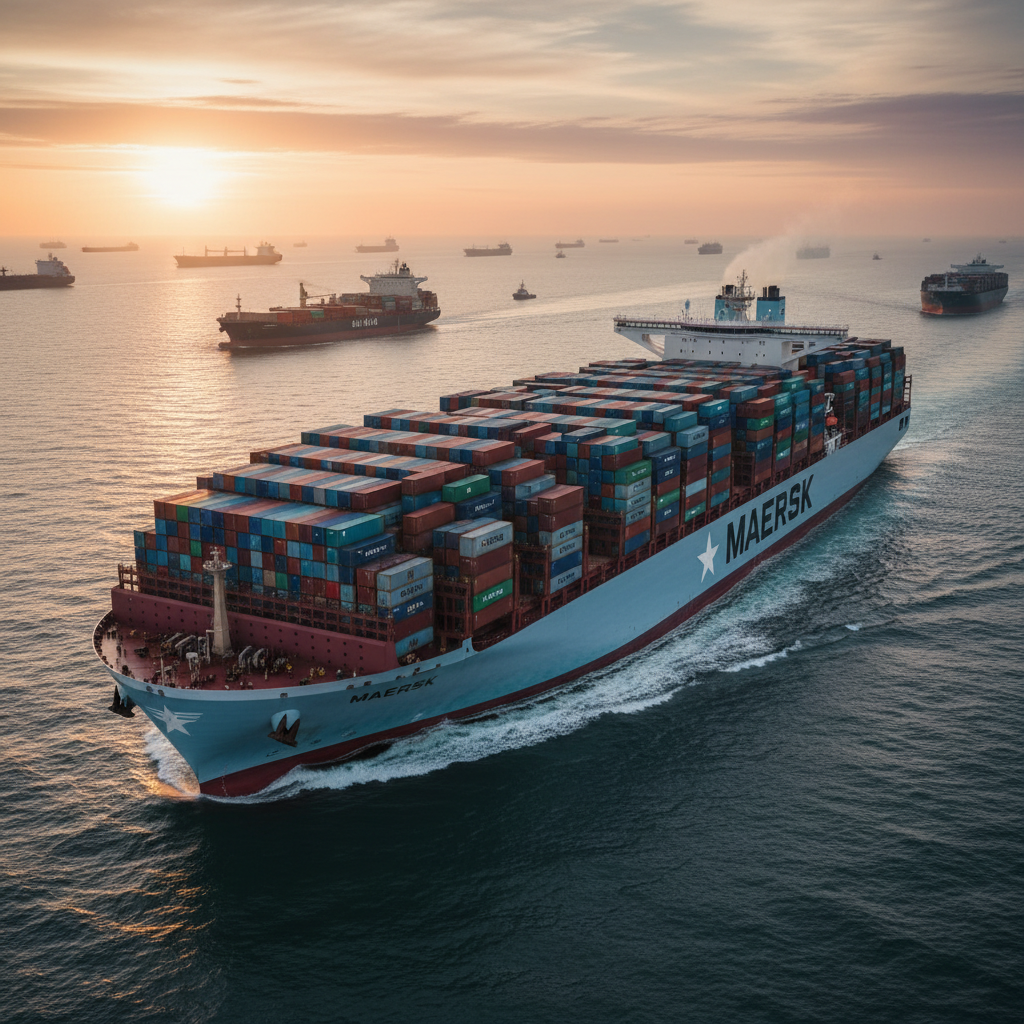
Maersk's Return to Ultra-Large Containership Dominance
AP Moller-Maersk's confirmation of an order for 12 ultra-large containerships, each with a capacity of 24,000 TEU, signals a significant strategic pivot for the Danish liner giant. This move, representing an estimated $2.9 billion investment, marks Maersk's entry into the megamax segment, a class of vessel it had previously approached with caution. The decision to integrate these colossal ships, set for delivery in 2030 and 2031, will make them the largest in Maersk's fleet, underscoring a renewed focus on economies of scale and direct port-to-port efficiency on key global trade arteries. This development will inevitably concentrate more cargo volume onto fewer, larger vessels, intensifying the hub-and-spoke model prevalent in global shipping. Ports capable of handling these dimensions and cargo volumes will become even more crucial nodes in the global supply chain, potentially driving further infrastructure investments and deepening the competitive divide between major port facilities and smaller regional gateways. Shippers will experience the effects through potentially streamlined main-haul routes but could face increased reliance on feeder services for last-mile delivery from these mega-hubs. The dual-fuel capability of these vessels also points to a long-term commitment to evolving fuel strategies, adding a layer of complexity and potential cost variability to future operations, while addressing growing environmental compliance pressures.
The Influx of Capacity and Future Market Equilibrium
The introduction of 12 vessels, each carrying 24,000 TEU, represents a substantial addition of 288,000 TEU to global shipping capacity by the early 2030s. This capacity influx demands careful consideration regarding the future demand-supply balance in the container shipping market. While the lead time until 2030-2031 allows for market adjustments, such a significant volume of new tonnage could exert downward pressure on freight rates if global trade growth does not keep pace. For shippers, this could translate into more competitive pricing for ocean freight, particularly on the high-volume East-West trades where these vessels are typically deployed. However, the sheer scale of these ships also implies a need for consistent, high-volume cargo flows to achieve optimal utilization. This could lead carriers to prioritize certain trade lanes or consolidate services, potentially impacting service frequency or direct port calls for some regions. The dual-fuel aspect introduces a variable into the supply equation; while intended to reduce emissions, the availability and cost of alternative fuels in 2030 will influence operational expenses and, by extension, the economic viability of running these vessels at full capacity. The strategic deployment of these megamax ships will be critical for Maersk to manage its capacity effectively and avoid contributing to oversupply in a potentially volatile market.
Financial Implications Across the Supply Chain
Maersk's estimated $2.9 billion investment in these 12 vessels highlights the substantial capital expenditure required to maintain a leading position in global container shipping. For the carrier, this investment is predicated on achieving significant economies of scale. Larger vessels generally offer lower per-TEU operating costs, assuming high utilization rates. This cost efficiency can be a powerful competitive advantage, allowing Maersk to offer more attractive rates or maintain profitability in a challenging market. However, the financial benefits are contingent on robust cargo demand and the ability to fill these ships consistently. For shippers, the financial impact is two-fold. On one hand, increased capacity and potential for lower per-TEU costs from carriers could lead to more favorable freight rates, especially for high-volume contracts. On the other hand, the concentration of cargo on fewer, larger vessels could lead to less direct service to smaller ports, necessitating more transshipment and potentially adding to overall logistics costs and transit times. Port operators and terminal investors also face financial implications, as they must invest heavily in deeper berths, larger cranes, and expanded yard capacity to accommodate these megamax vessels, often requiring multi-billion dollar upgrades. This cycle of carrier investment in larger ships driving port investment creates a significant financial ripple effect throughout the entire maritime supply chain, influencing everything from port tariffs to inland logistics networks.
Source: Splash247 — https://splash247.com/maersk-storms-into-megamax-league/