
Intermodal Service Consistency Now Outweighs Lowest Rate for Shippers
Intermodal freight's future hinges on its ability to deliver consistent and predictable service, moving beyond its traditional appeal as merely a low-cost option. Shippers are increasingly prioritizing reliability to manage complex global supply chains and control inventory costs. This shift necessitates improvements in transit variability, terminal performance, and drayage operations to ensure long-term viability and adoption.
Intermodal Value Proposition Shifts Beyond Price
Historically, intermodal freight transportation, combining the long-haul efficiency of rail with the flexibility of truck drayage, has been a compelling option for shippers primarily seeking cost savings. The promise of reduced fuel consumption and lower linehaul expenses often made it an attractive alternative to over-the-road trucking, particularly for non-time-sensitive cargo moving across significant distances. However, the dynamics of global supply chains have evolved, and with them, shipper priorities. The prevailing sentiment among supply-chain managers is increasingly shifting away from simply securing the lowest possible rate per mile towards a more nuanced evaluation centered on service reliability.
This re-evaluation directly impacts how global supply chains are designed and operated. Shippers are no longer content with just knowing their freight is cheaper; they demand predictability. This shift means that decisions regarding modal conversion – the long-term commitment to using intermodal for specific lanes or product categories – are now heavily influenced by the expectation of consistent service delivery. If intermodal cannot reliably meet transit windows, the initial cost advantage quickly dissipates under the weight of other expenses. For carriers, this implies an important pivot in their competitive strategy. Merely offering a rock-bottom price will no longer guarantee market share or foster durable customer relationships. Instead, investment in operational excellence and transparent performance metrics becomes important.
Financially, this shift has considerable implications for both shippers and intermodal service providers. Shippers, facing pressure to optimize inventory levels and meet strict delivery commitments, are increasingly willing to allocate a larger portion of their transportation budget to ensure freight arrives on schedule. The cost of delays – be it lost sales, production line stoppages, or penalties for late deliveries – often far outweighs the savings from a marginally lower freight rate. For intermodal operators, this translates into a need for capital expenditure in areas that enhance reliability, such as advanced tracking technologies, improved terminal infrastructure, and more robust scheduling systems. While these investments may initially increase operational costs, they are essential for securing long-term contracts and achieving higher asset utilization, ultimately leading to a healthier financial outlook through sustained customer loyalty and premium service offerings. The market is signaling a clear demand for value beyond just price, compelling the industry to adapt its service model.
Mitigating Transit Variability and Terminal Bottlenecks
The core challenge undermining intermodal service consistency lies in two interconnected operational areas: transit variability and terminal performance. Transit variability refers to the unpredictable fluctuations in freight movement times, where a shipment might arrive days earlier or later than initially projected. This inconsistency creates a ripple effect throughout the global supply chain, making precise inventory planning and just-in-time (JIT) strategies exceedingly difficult to execute. For shippers, this means either incurring higher inventory carrying costs by holding larger safety stocks to buffer against delays or facing the risk of stockouts and production interruptions. The financial impact is direct: increased warehousing expenses, potential for expedited shipping to compensate for missed deadlines, and the erosion of customer trust due to unreliable delivery dates.
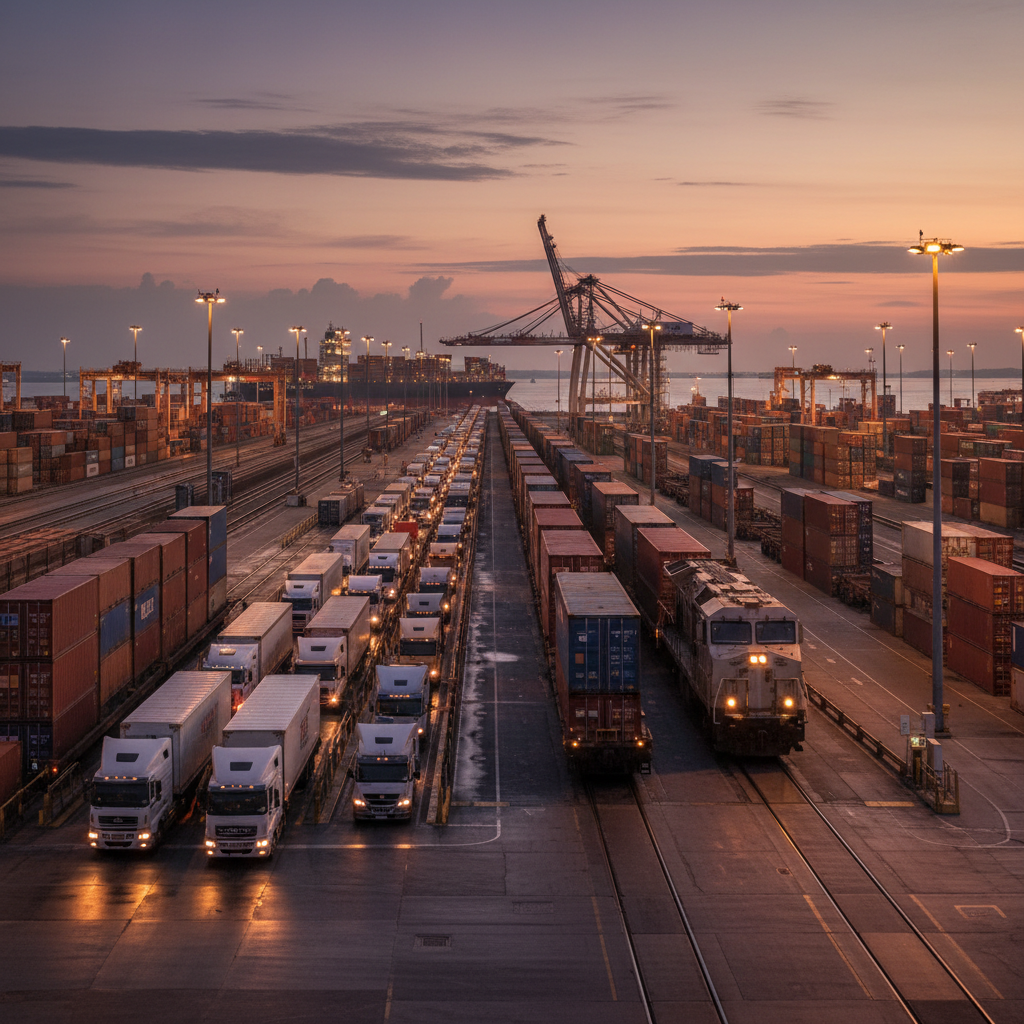
Terminal performance, particularly at intermodal rail yards, further exacerbates these issues. Congestion, inefficient gate processes, and delays in loading or unloading containers can add considerable, unpredictable time to a shipment's journey. These bottlenecks are often compounded by equipment availability issues, such as a shortage of chassis or suitable railcars, leading to further dwell time for freight. From a global supply chain perspective, poor terminal performance can disrupt the synchronized flow of goods across multiple modes and international borders. A delay at an inland intermodal hub can cascade, affecting onward ocean or truck connections, thereby impacting lead times for components or finished goods destined for distant markets.
Addressing these operational hurdles requires a concerted effort across the intermodal ecosystem. Improvement levers include strategic investments in rail network upgrades to enhance speed and reliability, alongside the deployment of advanced technology for real-time visibility into freight movements and terminal operations. Better communication and coordination among railroads, drayage carriers, and terminal operators are important for streamlining processes and reducing dwell times. Implementing predictive analytics can help anticipate and mitigate potential bottlenecks before they cause major delays. By focusing on these areas, intermodal providers can significantly reduce variability, thereby offering shippers the predictable service they now demand. This operational refinement is not just about efficiency; it's about building a reputation for reliability that can attract and retain long-term business, ultimately bolstering the financial viability of the intermodal sector.
Drayage and Inventory Costs Undermine Intermodal Savings
While the long-haul segment of intermodal freight often delivers cost efficiencies, the "first and last mile" – known as drayage – frequently introduces operational complexities and hidden costs that can erode the overall savings. Drayage involves moving containers between a shipper's facility and the intermodal rail terminal, a segment heavily reliant on trucking. Challenges in this important phase include driver shortages, insufficient chassis availability, and severe congestion at port and rail gates, especially during peak hours. These issues lead to extended wait times for trucks, missed appointment windows, and additional detention and demurrage fees for shippers. The unpredictability of drayage operations directly impacts the perceived service consistency of the entire intermodal journey, making it difficult for shippers to accurately forecast delivery times and manage their inbound and outbound logistics.
The cumulative effect of transit variability, terminal inefficiencies, and drayage challenges is a considerable impact on inventory management. Shippers are forced to carry higher levels of safety stock to buffer against uncertain lead times, directly translating into increased inventory carrying costs. These costs encompass warehousing fees, insurance, potential obsolescence, and the capital tied up in goods sitting idle. Such elevated inventory levels counteract the very economic advantages that intermodal is supposed to offer, transforming what appears to be a lower linehaul rate into a higher total landed cost for the cargo. For global supply chains, this can disrupt lean manufacturing principles and just-in-time delivery models, pushing companies to re-evaluate their network design and potentially decentralize inventory closer to demand centers, incurring further logistical expenses.
To counter these financial drains and improve service consistency, several improvement levers are available. Integrated planning across all modes involved in an intermodal move, coupled with enhanced communication platforms, can help synchronize schedules and reduce unexpected delays. Investing in dedicated drayage fleets or partnering with reliable drayage providers who prioritize intermodal movements can mitigate driver and chassis availability issues. Furthermore, leveraging technology for real-time tracking and appointment scheduling at terminals can significantly reduce truck turn times and improve gate efficiency. By addressing the vulnerabilities within the drayage segment and understanding its direct correlation to inventory costs, intermodal operators can present a more robust and financially attractive solution to shippers. The focus must shift from just offering a low rate to delivering a predictable, end-to-end service that provides genuine value by minimizing hidden costs and maximizing supply chain reliability.
Reliability Becomes Intermodal's True Value Driver
Intermodal transportation's future growth hinges on its ability to deliver consistent and predictable service, moving beyond its traditional appeal as just a low-cost option. Shippers are increasingly prioritizing reliability to manage complex global supply chains and control inventory costs. Addressing transit variability, improving terminal performance, and streamlining drayage operations are not just operational efficiencies; they are key investments that will determine the long-term viability and adoption of intermodal solutions. The industry must evolve to meet these demands, proving its value through dependable execution rather than solely competing on price.
Source: Logistics Viewpoints — https://logisticsviewpoints.com/2026/11/24/intermodal-s-next-test-is-service-consistency-not-the-lowest-rate/