
Localized Logistics: Columbia Sportswear and Maersk Reshape UK/Ireland Supply Chain
A new agreement sees Maersk manage Columbia Sportswear's UK and Ireland warehousing and distribution from a UK hub, replacing a French-based operation. This strategic shift highlights a growing trend towards localized supply chains for enhanced responsiveness and efficiency.
How this impacts the global supply chain
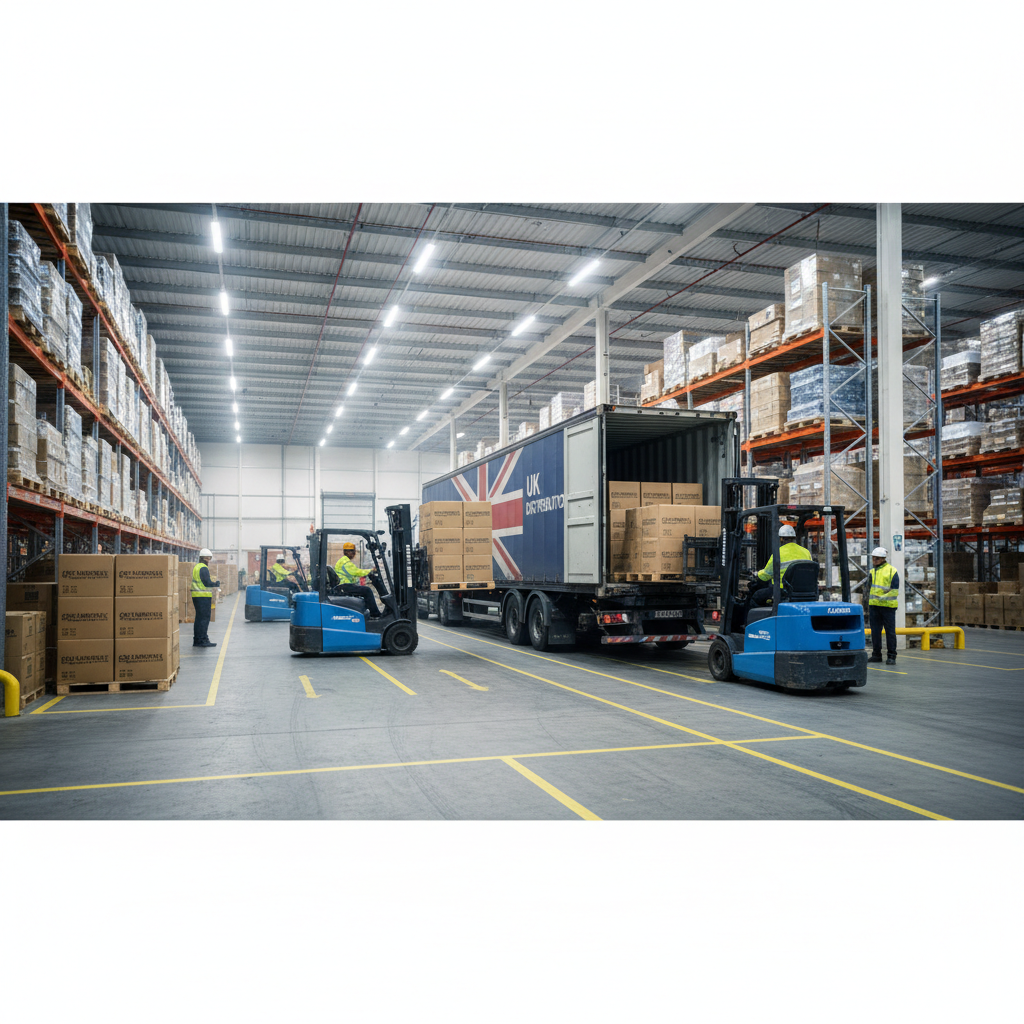
Columbia Sportswear's decision to partner with Maersk for its UK and Ireland warehousing and distribution, shifting operations from Cambrai, France, to a multi-customer facility in Tamworth, UK, represents a clear move towards supply chain localization. This development has several implications for global supply-chain flows, routes, capacity, and operations.
Flows and Routes: The most immediate impact is a re-routing of goods destined for the UK and Ireland. Instead of a cross-Channel journey from France for final distribution, products will now enter the UK and be stored and picked within the country. This reduces the number of international legs for last-mile delivery to UK and Irish consumers. While primary inbound logistics to the UK facility (e.g., from manufacturing sites) might remain international, the critical 'pick & pack' and distribution phase becomes entirely domestic within the UK. This could potentially reduce congestion on cross-Channel freight routes for these specific goods, shifting demand to domestic UK road networks.
Capacity: Maersk's existing multi-customer facility in Tamworth will see increased utilization. This demonstrates Maersk's strategy of leveraging its integrated logistics network and existing infrastructure to offer comprehensive solutions. For Columbia Sportswear, it means accessing established warehousing and distribution capacity without the need for new capital investment in dedicated facilities. This consolidation within Maersk's network optimizes existing assets. More broadly, it signals a trend where logistics providers are expanding their regional fulfillment capabilities to meet evolving client demands for localized services.
Operations: The operational shift is significant. Moving from a single European hub in France to a dedicated UK/Ireland operation in Tamworth allows for a more agile and responsive supply chain for these markets. This localization is intended to streamline order fulfillment, reduce lead times, and potentially simplify customs processes for UK deliveries post-Brexit, as goods are already within the customs territory. It enables faster reaction times to local market demands, promotions, or unexpected disruptions. This mirrors a broader industry trend where companies are decentralizing their distribution networks to enhance resilience and customer service, moving away from highly centralized European models that may no longer be optimal given current geopolitical and economic landscapes.
Global financial impact
The strategic shift by Columbia Sportswear, managed by Maersk, carries significant financial and cost implications for both the shipper and carrier, and reflects broader economic trends in trade.
For Shippers (Columbia Sportswear): The primary financial driver for such a move is often cost reduction and improved efficiency, which ultimately impacts profitability. By localizing warehousing and distribution in the UK, Columbia Sportswear can anticipate several financial benefits. Reduced international freight costs for final-mile delivery to the UK and Ireland are likely, as goods no longer need to cross the Channel for each individual order. This also mitigates potential customs complexities and associated costs that can arise from shipping from an EU country into the UK post-Brexit. Faster lead times and improved responsiveness can lead to higher customer satisfaction, potentially boosting sales and reducing lost revenue from stockouts. Furthermore, more efficient inventory management, with goods closer to the point of sale, can reduce holding costs and the risk of obsolescence. While there may be initial transition costs or renegotiated contract terms with Maersk, the long-term aim is clearly to achieve a more cost-effective and agile distribution model.
For Carriers (Maersk): This agreement strengthens Maersk's position as an integrated logistics provider. Financially, it represents increased revenue through a new contract with a global leader like Columbia Sportswear. By utilizing an existing multi-customer facility, Maersk optimizes its asset utilization, improving profitability per square foot and per operational hour. This reinforces their 'integrator' strategy, offering end-to-end solutions beyond just ocean freight. Securing such contracts helps Maersk consolidate its market share in the warehousing and distribution sector, providing a stable revenue stream and demonstrating its capability to manage complex supply chain operations for major brands. This also allows Maersk to cross-sell other services to Columbia Sportswear in the future, further enhancing financial returns.
For Trade at Large: While this specific agreement is between two companies, it exemplifies a broader trend of regionalization and localization in global trade. Financially, this trend can lead to a re-evaluation of logistics networks, potentially shifting investment towards regional distribution hubs rather than solely relying on large, centralized European facilities. For the UK and Ireland, it signifies increased logistics activity and investment within those markets. The overall financial impact on global trade flows is incremental, but the cumulative effect of many such decisions can lead to a more fragmented yet resilient global logistics landscape, with a greater emphasis on regional efficiency and direct market access.
How MGS can help navigate today's global trade environment
In an environment where supply chains are becoming more localized and complex, a shipment-visibility control tower like MGS becomes an indispensable tool for operators like Columbia Sportswear and Maersk, especially during and after such a transition.
During the transition from a French-based distribution model to a UK-based one, MGS provides crucial end-to-end visibility. Columbia Sportswear can track the movement of inventory from its previous location, through transit, and into Maersk's Tamworth facility. This real-time tracking is vital for managing the handover, ensuring inventory accuracy, and preventing disruptions during the switchover period.
Post-transition, MGS empowers Columbia Sportswear to monitor the performance of its new localized supply chain. It can provide granular insights into key metrics such as inbound lead times to the Tamworth facility, 'pick & pack' efficiency, and outbound delivery performance to UK and Irish customers. By consolidating data from various touchpoints – from port arrivals to warehouse operations and final-mile delivery – MGS offers a single, comprehensive view of the entire process.
This visibility allows for proactive issue resolution. If, for instance, there's a delay in an inbound shipment to Tamworth, or a bottleneck in the 'pick & pack' operation, MGS can flag these exceptions immediately. This enables Columbia Sportswear to communicate effectively with Maersk, assess the impact on customer orders, and implement contingency plans, thereby maintaining service levels and mitigating potential financial losses from delayed deliveries or missed sales opportunities. Furthermore, MGS can help validate the 'more localized and responsive' goal by providing data-driven evidence of improved lead times and delivery performance, allowing Columbia Sportswear to quantify the benefits of its strategic shift.
Demand–supply analysis & improvement
The shift by Columbia Sportswear to a localized UK/Ireland distribution hub directly addresses underlying demand-supply dynamics and offers concrete improvement levers for their business.
Demand-Supply Dynamics: The previous arrangement, serving the UK and Ireland from Cambrai, France, likely created a disconnect between supply chain responsiveness and market demand. In fast-moving consumer goods sectors like outdoor and activewear, consumer expectations for rapid delivery are high. A more distant distribution point inherently introduces longer lead times and less flexibility, making it harder to react quickly to localized demand fluctuations, seasonal peaks, or promotional activities specific to the UK and Irish markets. The move signals Columbia Sportswear's recognition that its supply strategy needed to evolve to better meet the specific demands of these markets for speed and agility.
Improvement Levers:
- Reduced Lead Times: By bringing inventory closer to the end consumer in the UK and Ireland, Columbia Sportswear can significantly shorten delivery times. This enhances customer satisfaction and can be a competitive differentiator in a market where speed is increasingly valued. Faster fulfillment also means quicker replenishment cycles, allowing for more dynamic inventory management.
- Enhanced Responsiveness: A localized 'pick & pack' operation allows for greater agility in responding to market changes. If there's a sudden surge in demand for a particular product in the UK, the Tamworth facility can react more quickly than a facility across the Channel. This reduces the risk of stockouts and lost sales opportunities.
- Optimized Inventory Placement: With a dedicated UK/Ireland hub, Columbia Sportswear can tailor its inventory strategy more precisely for these markets, potentially reducing overall inventory holding costs by minimizing safety stock needed to buffer against longer transit times from France. It also allows for more accurate forecasting based on specific regional demand patterns.
- Streamlined Operations: The focus on 'Pick & Pack' within a multi-customer facility suggests an optimized operational flow, leveraging Maersk's expertise and infrastructure to achieve greater efficiency in order fulfillment, directly impacting the speed and accuracy of getting products to customers.
ROI-focused resilience
The strategic decision to localize Columbia Sportswear's UK/Ireland distribution can be framed directly in terms of return on investment (ROI) for enhanced supply chain resilience against quantifiable risks.
Quantified Risk Protection:
- Brexit-Related Disruptions and Costs: Prior to this move, serving the UK from France exposed Columbia Sportswear to ongoing and potential future complexities related to Brexit, including customs delays, increased administrative burden, and potential tariffs or duties on individual shipments from the EU into the UK. The investment in a UK-based hub directly mitigates these risks. The ROI comes from avoiding lost sales dueue to delays, reducing customs brokerage fees, and preventing potential revenue erosion from unforeseen tariffs. While specific figures are not available, the cumulative cost of these disruptions can be substantial, making the localized hub a protective investment.
- Extended Lead Times and Customer Dissatisfaction: Relying on a distribution center in France for UK/Ireland markets inherently meant longer lead times compared to a domestic solution. This posed a risk of customer dissatisfaction, potentially leading to lost sales or reduced brand loyalty. The investment in a localized, responsive supply chain protects against this by enabling faster delivery. The ROI here is measured in improved customer retention, increased sales conversion rates from quicker fulfillment, and a stronger brand reputation, all of which contribute directly to the top line.
- Transport Cost Volatility and Inefficiency: Longer international transport routes from France to the UK/Ireland are subject to higher fuel costs, potential tolls, and greater exposure to freight rate fluctuations. By localizing distribution, Columbia Sportswear reduces the international legs of its supply chain, protecting against these cost volatilities and achieving more efficient domestic transport. The ROI is realized through lower operational expenditures for logistics and a more predictable cost structure.
- Inventory Management Risks: A more distant distribution center can necessitate higher safety stock levels to buffer against longer transit times and potential delays, leading to increased inventory holding costs and a higher risk of obsolescence. The localized hub allows for leaner, more agile inventory management, reducing capital tied up in inventory and minimizing markdown risks for seasonal or time-sensitive products. The ROI is seen in reduced working capital requirements and a lower rate of inventory write-offs.
Source: Parcel and Postal Technology International — https://www.parcelandpostaltechnologyinternational.com/news/logistics/maersk-to-manage-columbia-sportswears-uk-and-ireland-warehousing-and-distribution.html