
DP World's Johor Warehouse: A Strategic Leap for Southeast Asian Supply Chains
DP World's new 11,514m2 warehouse in Johor, Malaysia, signals a significant enhancement of logistics capabilities in Southeast Asia. Located within the Johor-Singapore Special Economic Zone, this facility is poised to optimize flows for time-sensitive supply chains, bolster regional connectivity, and reshape financial dynamics for global trade.
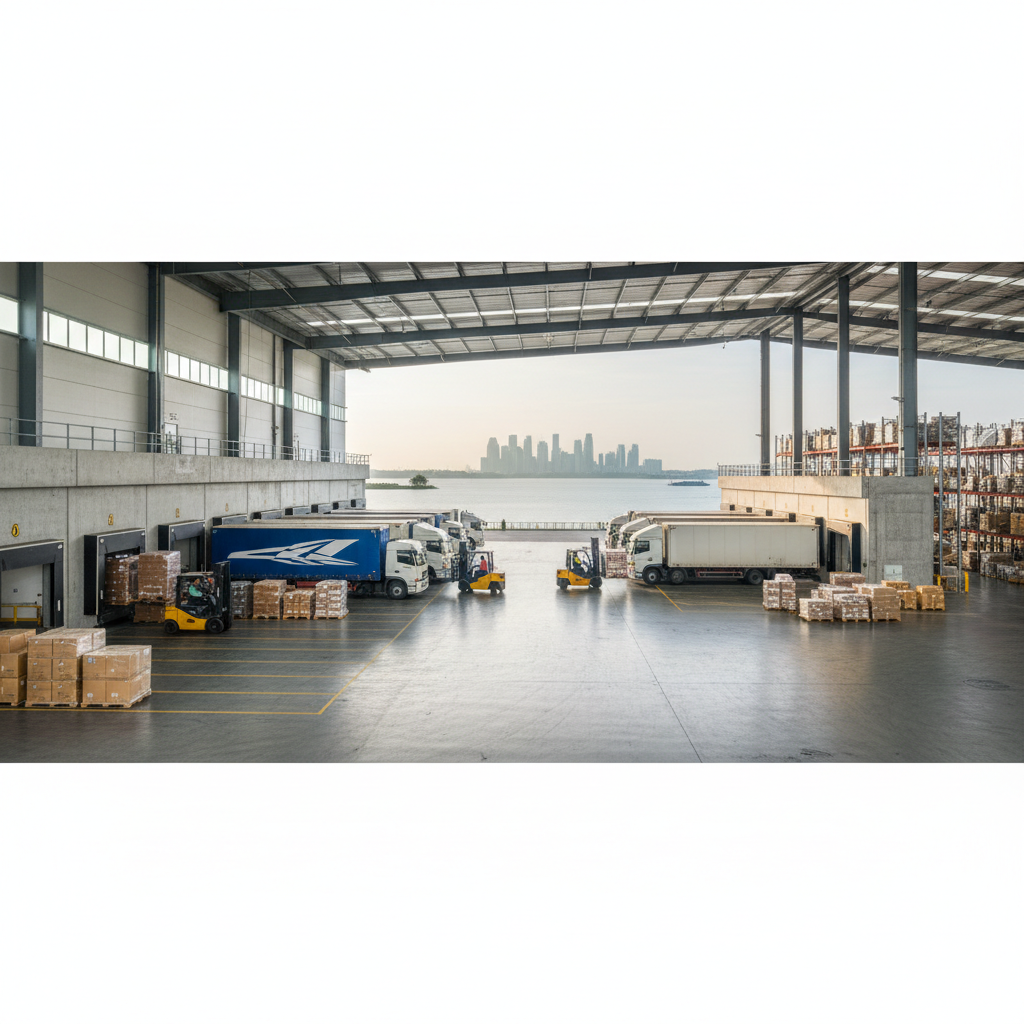
How this impacts the global supply chain
DP World's recent inauguration of its 11,514m2 warehouse in Johor, Malaysia, marks a pivotal development in the ongoing evolution of global supply chains, particularly within the dynamic Southeast Asian region. This facility, strategically positioned within the Johor-Singapore Special Economic Zone, is not merely an addition of physical space but a calculated move to enhance regional logistics infrastructure and operational efficiency.
From a global supply chain perspective, this new hub directly influences several critical areas. Firstly, it significantly impacts supply chain flows and routes. By strengthening connectivity between Malaysia and Singapore, the warehouse acts as a crucial node for consolidating, deconsolidating, and distributing goods across the region. This could lead to more optimized routing for international shipments destined for or originating from Southeast Asia, potentially reducing transit times and improving the predictability of deliveries. For companies leveraging the Johor-Singapore SEZ, it streamlines cross-border movements, offering a more efficient gateway than traditional routes that might involve more complex customs procedures.
Secondly, the facility directly increases logistics capacity in a high-growth region. The 11,514m2 of dedicated space for contract logistics operations provides much-needed warehousing and handling capabilities. This added capacity is particularly vital for time-sensitive supply chains, which demand rapid throughput and precise inventory management. The availability of such infrastructure can alleviate pressure on existing logistics networks, especially during peak seasons or periods of high demand, thereby improving overall network resilience.
Thirdly, the operational implications are substantial. The warehouse is designed to support contract logistics, suggesting a focus on tailored, high-value services. This can lead to improved operational efficiency for businesses, enabling faster order fulfillment, reduced lead times, and more agile responses to market fluctuations. For global manufacturers and retailers, having a sophisticated regional hub like this means better inventory positioning, reduced safety stock requirements, and ultimately, a more responsive supply chain. The investment also underscores Southeast Asia's growing importance as a manufacturing base and consumer market, attracting further investment and integrating the region more deeply into global trade networks by offering robust, modern logistics support.
Global financial impact
The financial and cost implications of DP World's new Johor warehouse extend across shippers, carriers, and the broader landscape of global trade. For shippers, particularly those engaged in time-sensitive supply chains, the financial benefits are potentially significant. The optimized routing and enhanced efficiency offered by the new hub can lead to a reduction in transportation costs. By facilitating quicker turnaround times and improved inventory management, shippers can also realize lower inventory holding costs, freeing up capital that would otherwise be tied up in warehousing. Furthermore, the improved reliability and reduced risk of delays for time-sensitive goods translate into avoided costs associated with production stoppages, penalties for late deliveries, or lost sales due due to stockouts. The ability to access markets faster and provide better service levels can also lead to increased revenue and stronger competitive positioning.
Carriers, both ocean and land-based, stand to benefit from increased freight volumes moving through this strategically located hub. As the warehouse attracts more trade and optimizes regional distribution, carriers can experience higher utilization of their assets. This could lead to more efficient network planning, better backhaul opportunities, and ultimately, improved profitability. Regional trucking and short-sea shipping operators, in particular, may see a surge in demand for their services as goods are distributed from or consolidated at the Johor facility.
For trade at large, the financial impact is multifaceted. The enhanced logistics infrastructure in Johor strengthens Southeast Asia's overall competitiveness as a global trade hub. By offering efficient and reliable logistics solutions, the region becomes more attractive for foreign direct investment, potentially drawing in more manufacturing and distribution operations. This increased trade activity contributes to regional economic growth and job creation. Moreover, by diversifying logistics options and improving connectivity, the warehouse contributes to greater supply chain resilience, which can mitigate the financial risks associated with disruptions. In an era where geopolitical events and natural disasters can severely impact trade flows, investments in robust logistics networks like this one help to stabilize global commerce and reduce the financial volatility faced by businesses worldwide.
How MGS can help navigate today's global trade environment
In an increasingly complex and interconnected global trade environment, the opening of a strategic facility like DP World's Johor warehouse underscores the critical need for advanced shipment visibility and control. A platform like MGS is uniquely positioned to help operators leverage such new infrastructure and navigate its intricacies, particularly for the time-sensitive supply chains this warehouse aims to serve.
Firstly, for time-sensitive operations, MGS provides the real-time, granular visibility that is non-negotiable. As goods move into, through, and out of the 11,514m2 Johor facility, MGS can track their precise location and status across multiple modes – from ocean vessels arriving at nearby ports, to trucks entering the Special Economic Zone, and finally, to the last-mile delivery from the warehouse. This end-to-end visibility is crucial for operators to monitor inventory levels, manage inbound and outbound flows, and ensure that critical deadlines are met. Any deviation from the planned schedule, whether due to customs delays at the SEZ border or operational issues within the warehouse, can be immediately flagged by MGS, allowing for proactive intervention.
Secondly, MGS facilitates the optimization of regional logistics flows. With a new central hub like Johor, companies need to seamlessly integrate it into their broader network. MGS's ability to aggregate data from various carriers, customs systems, and warehouse management systems provides a holistic view of the entire supply chain. This allows operators to identify bottlenecks, analyze transit times, and continuously refine their routing and distribution strategies to maximize the efficiency gains offered by the new facility. For instance, MGS can help determine optimal consolidation points or identify opportunities for cross-docking to further accelerate goods movement for time-sensitive products.
Thirdly, MGS plays a vital role in risk mitigation and proactive decision-making. By providing predictive analytics, MGS can anticipate potential disruptions related to the new warehouse's operations or its surrounding infrastructure. For example, if there's a forecasted surge in traffic at the Johor-Singapore border or an unexpected delay in a feeder vessel connecting to a major port, MGS can alert operators, enabling them to reroute shipments, adjust inventory plans, or communicate proactively with customers. This capability is invaluable in preventing minor issues from escalating into costly supply chain failures, especially for high-value or perishable goods.
Finally, MGS supports performance monitoring and continuous improvement. By tracking key performance indicators (KPIs) such as dwell times at the warehouse, lead times for regional distribution, and on-time delivery rates, MGS provides actionable insights into the effectiveness of the new Johor facility. This data-driven approach allows operators to benchmark performance, identify areas for process improvement, and ensure that the investment in the new warehouse translates into tangible operational and financial benefits, reinforcing its strategic value within the global supply chain network.
Demand–supply analysis & improvement
The opening of DP World's Johor warehouse provides clear insights into prevailing demand-supply dynamics within the Southeast Asian logistics landscape. The very act of expanding its network with a new 11,514m2 facility, and the stated intention to open another in Kuala Lumpur, strongly indicates a robust and growing demand for sophisticated logistics services in the region. This demand is particularly pronounced for contract logistics and, critically, for time-sensitive supply chains. The strategic location within the Johor-Singapore Special Economic Zone further highlights a demand for streamlined cross-border trade facilitation, suggesting that businesses are seeking solutions to reduce friction and accelerate the movement of goods between these key economic hubs.
On the supply side, DP World is directly addressing this demand by injecting significant new capacity into the market. The Johor warehouse, being the first of two planned facilities in Malaysia, represents a phased but substantial increase in modern warehousing and distribution capabilities. This additional supply is tailored to meet specific market needs, particularly for industries where speed, reliability, and precision are paramount.
Several concrete improvement levers emerge from this dynamic. Firstly, the focus on time-sensitive supply chains necessitates continuous optimization of warehouse processes and technology integration. This includes advanced inventory management systems, automation within the 11,514m2 facility, and seamless data exchange with transport providers. Secondly, the SEZ location offers an opportunity to streamline cross-border procedures. Improvements here would involve close collaboration with customs and regulatory bodies to ensure rapid clearance and minimize transit delays, maximizing the benefits of the zone's special status. Thirdly, the expansion signals the importance of network optimization. Businesses leveraging this new hub will need to continually refine their end-to-end logistics strategies, integrating this new capacity with existing transportation modes and distribution channels to achieve optimal efficiency and cost-effectiveness across their regional operations.
ROI-focused resilience
The strategic investment in DP World's Johor warehouse can be framed compellingly in terms of ROI-focused resilience, particularly given its emphasis on supporting time-sensitive supply chains and strengthening regional connectivity. The primary risk that this investment mitigates is the financial exposure arising from supply chain disruptions, which can be particularly acute for goods with short shelf lives, high value, or critical production linkages. Such disruptions can lead to significant quantifiable losses, including spoilage costs, production line downtime (potentially hundreds of thousands or millions per hour in some industries), penalty clauses for missed delivery windows, lost sales due to stockouts, and damage to brand reputation.
By establishing a new 11,514m2 facility in a key strategic location like the Johor-Singapore Special Economic Zone, DP World provides a crucial investment in diversification and redundancy. This strengthens the overall logistics network, making it less susceptible to single points of failure. The enhanced connectivity between Malaysia and Singapore, facilitated by this hub, means that even if one route or port experiences congestion or disruption, alternative pathways are more readily available and efficient. For time-sensitive goods, this resilience translates directly into avoided costs. For example, preventing a single major delay for a high-value shipment could save a company tens or hundreds of thousands of dollars in direct and indirect costs.
The ROI for this resilience investment is realized through the avoidance of these disruption-related costs and the maintenance of business continuity. While the source does not provide specific figures for avoided losses, the strategic placement and purpose of the warehouse inherently imply a high cost of failure for its target customers. The ability to consistently meet delivery schedules, even in the face of unforeseen challenges, protects revenue streams, safeguards customer relationships, and maintains market share. Furthermore, a resilient supply chain can command a premium, offering a competitive advantage that translates into long-term financial gains. The investment in robust infrastructure like the Johor warehouse is a proactive measure that pays dividends by ensuring operational stability and mitigating the significant financial downside of an increasingly volatile global trade environment.
Source: Parcel and Postal Technology International — https://www.parcelandpostaltechnologyinternational.com/news/logistics/dp-world-opens-new-warehouse-in-johor-malaysia.html