
Liberia-Flagged Tanker Dominica Prosperity Struck Off UAE, 22 Crew Evacuated
A recent projectile strike on the crude oil tanker Dominica Prosperity off the United Arab Emirates highlights the escalating and persistent threats to maritime commerce in the Middle East Gulf, forcing shippers to re-evaluate risk and operational strategies.
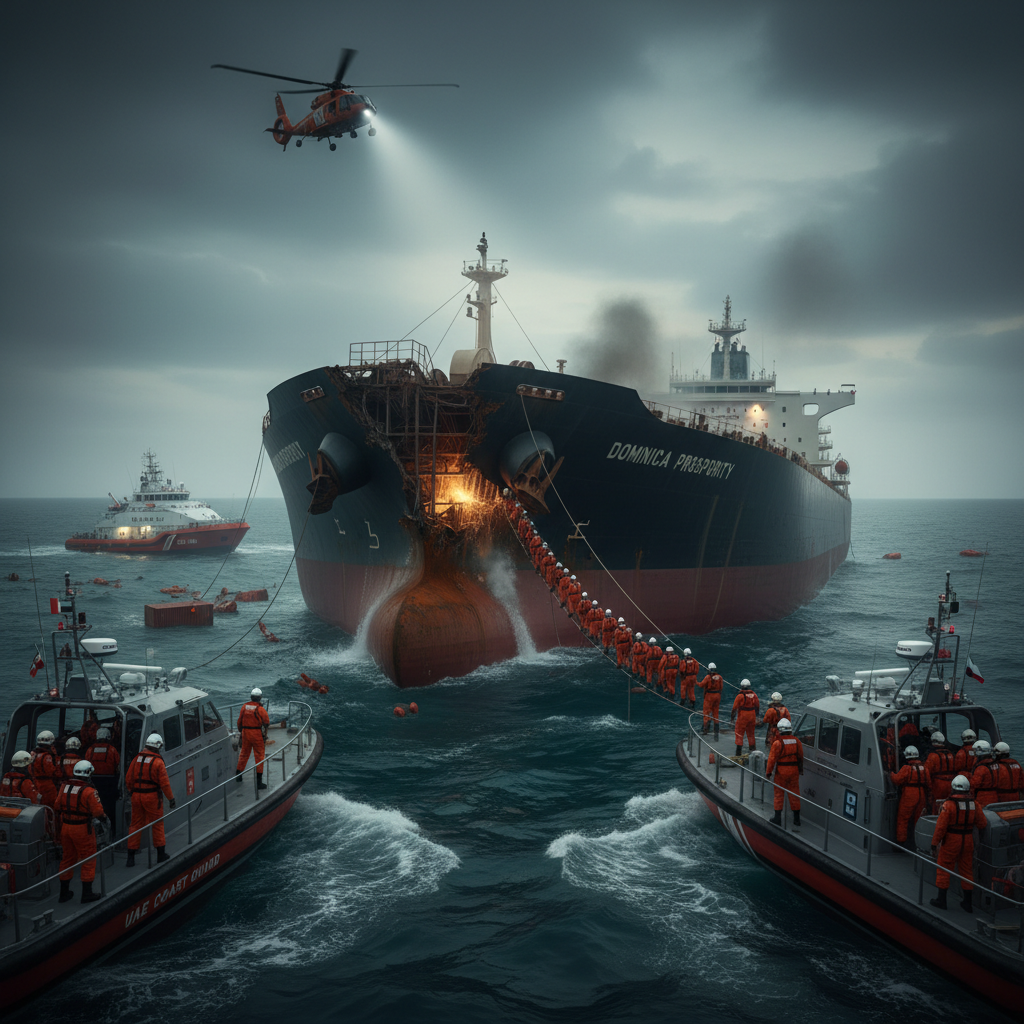
Dominica Prosperity Incident Highlights Escalating Maritime Risk
The recent projectile strike on the Liberia-flagged crude oil tanker Dominica Prosperity off the coast of the United Arab Emirates marks a significant escalation in maritime security challenges within the Middle East Gulf. The incident, which forced the evacuation of all 22 crew members after the engine room was hit, underscores the volatile operational environment for commercial shipping in a region critical to global trade. While the immediate focus is on the safety of personnel and the integrity of the vessel, the broader implications for supply chains, particularly those reliant on crude oil movements, are substantial and far-reaching. This event is not an isolated occurrence but rather a stark reminder of the persistent geopolitical tensions that directly translate into tangible risks for cargo movement.
The nature of the attack, targeting a crude oil tanker, immediately signals potential disruptions to energy supply lines. The Middle East Gulf, encompassing vital waterways like the Strait of Hormuz, is a primary conduit for a significant portion of the world's oil and gas exports. Any incident that compromises vessel safety or transit security in this area can trigger immediate concerns about supply continuity, insurance premiums, and ultimately, the cost of goods. Shippers and forwarders must now contend with an increasingly complex risk matrix that includes not only traditional maritime hazards but also deliberate acts of aggression against commercial vessels.
Strait of Hormuz and Gulf of Oman Face Heightened Volatility
The location of the Dominica Prosperity incident, off the United Arab Emirates, places it squarely within a zone of heightened geopolitical sensitivity. This area is adjacent to the Strait of Hormuz, a narrow chokepoint through which approximately one-fifth of the world's total oil consumption passes daily. While the immediate impact on transit through the Strait itself might not be a complete halt, the perception of increased risk can lead to significant operational adjustments. Shipping lanes through the Gulf of Oman and into the Arabian Gulf are now subject to intensified scrutiny and potential re-evaluation by carriers and insurers alike.
This heightened volatility directly affects the efficiency and cost-effectiveness of maritime transport. Carriers may opt for slower speeds, increased security measures, or even consider alternative, longer routes if the perceived risk outweighs the benefits of direct transit. Such diversions, while ensuring safety, inevitably lead to extended transit times, higher fuel consumption, and increased operational costs. For shippers, this translates into longer lead times, potential delays in inventory replenishment, and ultimately, higher freight rates. The primary mode affected is tanker shipping, specifically for crude oil and petroleum products, but the ripple effect can extend to other cargo types as general maritime insurance premiums for the region climb.
Crude Oil Flows and Global Energy Markets Under Pressure
The direct targeting of a crude oil tanker like the Dominica Prosperity sends a clear signal to global energy markets. Crude oil flows from major producing nations in the Middle East are the lifeblood of many economies, and any threat to their reliable delivery can cause significant market jitters. While the immediate supply impact of a single vessel incident might be contained, the cumulative effect of repeated attacks or sustained threats can lead to a systemic re-pricing of risk in the energy sector. This pressure manifests in several ways:
Firstly, insurance costs for vessels transiting the Gulf region are likely to see further increases. War risk premiums, already elevated due to ongoing regional tensions, will likely climb, directly impacting the operational expenses of carriers and, by extension, the freight rates passed on to shippers. Secondly, charter rates for tankers might also experience upward pressure as fewer vessels are willing to undertake voyages in high-risk areas without adequate compensation. Thirdly, major energy importers may begin to explore diversification strategies, seeking crude oil from less volatile regions, which could alter established trade lanes and supply chain configurations over the medium to long term. The facilities most affected are the major oil terminals and export hubs within the Gulf region, as their outbound cargo faces increased security challenges.
Shippers Must Re-evaluate Risk and Diversify Strategies
In this environment of escalating maritime risk, shippers must adopt proactive and adaptive strategies to safeguard their supply chains. The days of viewing the Middle East Gulf as a consistently predictable transit zone are over. A comprehensive re-evaluation of risk exposure is paramount. This includes:
- Enhanced Risk Assessment: Regularly update geopolitical risk assessments for all critical lanes, particularly those traversing the Middle East Gulf. Understand the specific threats to different vessel types and cargo. Engage with maritime security intelligence providers to stay abreast of real-time developments.
- Diversification of Routes and Modes: While direct alternatives for crude oil tanker routes are limited, explore options for other cargo types. For critical, time-sensitive goods, consider air freight for portions of the journey, despite higher costs. For less time-sensitive cargo, evaluate longer sea routes that bypass the most volatile areas, accepting increased transit times.
- Robust Contingency Planning: Develop detailed contingency plans for potential disruptions, including vessel diversions, port closures, or cargo delays. This should involve identifying alternative ports of call, pre-arranging emergency logistics services, and establishing clear communication protocols with carriers and customers.
- Insurance Review: Work closely with insurance brokers to understand the nuances of war risk premiums and coverage. Ensure policies adequately cover potential losses due to geopolitical incidents, including delays, cargo damage, or total loss. Budget for potentially higher insurance costs.
- Collaboration and Communication: Maintain open lines of communication with carriers, freight forwarders, and other supply chain partners. Share information on evolving risks and collaborate on solutions. Transparency is key to managing expectations and mitigating the impact of disruptions.
Gulf Shipping Volatility Now a Baseline Operational Reality
The attack on the Dominica Prosperity confirms that geopolitical instability in the Middle East Gulf is not an intermittent challenge but a persistent, integrated factor in maritime logistics planning.
- Monitoring of war risk insurance premium adjustments for Gulf transits in the coming weeks.
- Any official statements or advisories from maritime authorities regarding new security protocols or designated high-risk areas.
- Observed shifts in vessel routing or increased use of alternative energy sources by major importers.
- The frequency and nature of future incidents involving commercial vessels in the region, particularly crude oil tankers.
Source: gCaptain — https://gcaptain.com/tanker-ablaze-off-uae-as-more-attacks-rattle-gulf-shipping/