
Iran Claims Two Oil Tankers Ablaze in Strait of Hormuz
Reported incidents involving two oil tankers in the Strait of Hormuz underscore the escalating geopolitical risks impacting global maritime trade, particularly through critical chokepoints. This analysis examines the immediate operational disruptions, the broader economic consequences for energy and freight markets, and the imperative for supply chain resilience.
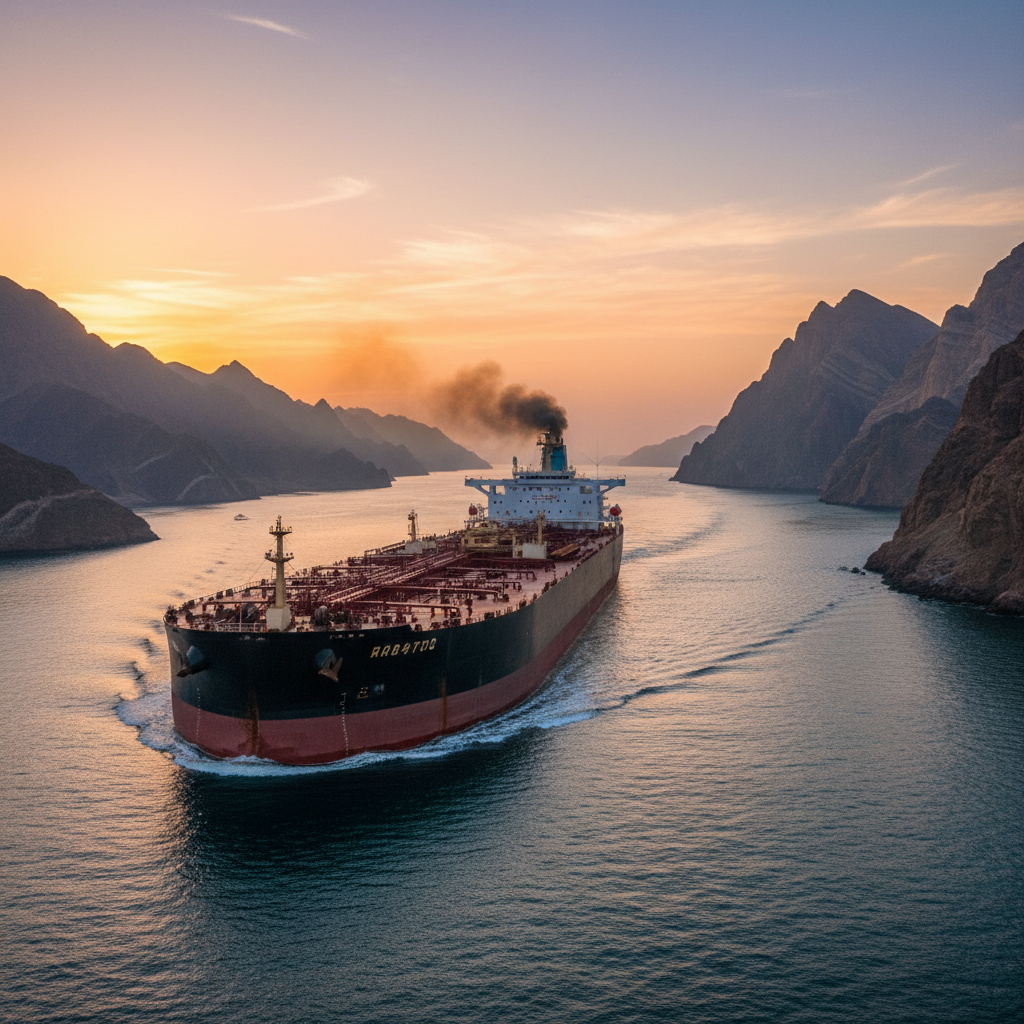
The Strait of Hormuz, a narrow waterway connecting the Persian Gulf to the open ocean, has once again become the focal point of geopolitical tensions following claims by Iran’s Islamic Revolutionary Guard Corps (IRGC) that two oil tankers caught fire after explosions. This incident, reportedly involving at least one supertanker, highlights the extreme fragility of global supply chains to events in strategically vital maritime passages. For shippers, forwarders, and supply-chain managers, the implications extend far beyond the immediate incident, signaling a need for heightened vigilance and adaptive strategies in an increasingly volatile world.
The Strait of Hormuz's Indispensable Yet Vulnerable Role
The Strait of Hormuz is arguably the world's most critical oil chokepoint, facilitating the passage of a significant portion of the world's seaborne crude oil and liquefied natural gas (LNG). Its geographical configuration, with a width of only about 21 nautical miles at its narrowest point, makes it inherently vulnerable to disruption. Any impediment to free navigation through this passage sends immediate tremors through global energy markets and, by extension, the broader economy. The reported incident involving two oil tankers underscores this vulnerability, illustrating how a localized event can have disproportionate global consequences. For supply chain professionals, this means understanding that the physical geography of trade routes dictates their susceptibility to external shocks. The reliance on such a constrained pathway for a substantial volume of global commodities inherently introduces a systemic risk that must be factored into all strategic planning. The sheer volume of traffic, coupled with the geopolitical sensitivities of the bordering nations, transforms any incident, however isolated, into a potential flashpoint for wider trade disruption.
Immediate Operational Disruptions and Heightened Risk Perception
Incidents like the reported burning of two oil tankers in the Strait of Hormuz instantly elevate the perceived risk for all vessels transiting the area. This perception directly translates into tangible operational disruptions for maritime transport. Shipowners and operators may face immediate decisions regarding rerouting, although alternatives for the Strait of Hormuz are extremely limited and often entail significantly longer transit times and higher fuel costs. More critically, the cost of insuring vessels and their cargo for passage through such high-risk zones typically escalates sharply. War risk premiums, already a significant component of operating costs in certain regions, can surge overnight, directly impacting freight rates and the overall economic viability of transporting goods through the Strait. Furthermore, the safety and security of maritime crews become paramount concerns, potentially leading to labor shortages or demands for hazard pay, adding another layer of operational complexity and cost. For shippers, this means contending with unexpected increases in transport expenses and potentially longer lead times, necessitating agile inventory management and contingency planning. The uncertainty introduced by such events can also lead to delays as vessels await clearer security assessments or convoy arrangements, further disrupting tightly scheduled supply chains.
Broader Economic Repercussions and Supply Chain Restructuring
The economic fallout from increased instability in a critical chokepoint like the Strait of Hormuz extends far beyond immediate shipping costs. Global energy prices are highly sensitive to disruptions or even perceived threats to supply from the Middle East. An incident involving oil tankers, particularly supertankers, can trigger speculative trading and drive up crude oil and natural gas prices, impacting manufacturing costs, consumer prices, and overall economic stability worldwide. For supply chain managers, this translates into higher input costs and potential inflationary pressures across various industries. In the long term, sustained geopolitical tensions and a heightened risk profile for key maritime routes compel businesses to re-evaluate their supply chain architectures. Companies may accelerate efforts towards diversification of sourcing, nearshoring, or developing alternative transport corridors, even if these options present higher initial costs or logistical challenges. The goal shifts from pure efficiency to resilience, prioritizing security of supply over minimal cost. This strategic pivot can involve significant capital investment in new infrastructure, technology, and partnerships, fundamentally altering established trade patterns and relationships. The imperative is to build robust, adaptable supply chains capable of absorbing and mitigating the impact of unforeseen geopolitical shocks, rather than being paralyzed by them.
Heightened Volatility Demands Strategic Resilience
The reported incident involving two oil tankers in the Strait of Hormuz serves as a stark reminder of the persistent and evolving nature of geopolitical risks in global trade. For supply chain stakeholders, the immediate consequence is an increase in operational costs and complexity, but the long-term imperative is a fundamental shift towards greater resilience and strategic foresight in route planning and sourcing.
- Chokepoint Vulnerability: Critical maritime passages like the Strait of Hormuz remain highly susceptible to geopolitical events, posing systemic risks to global energy and cargo flows.
- Risk Premium Escalation: Incidents in high-risk zones directly translate into increased insurance costs and freight rates, impacting the economic viability of traditional shipping routes.
- Supply Chain Re-evaluation: Businesses must proactively build resilience through diversification, alternative routing, and robust contingency planning to mitigate the impact of sustained geopolitical volatility.
Source: Container News — https://container-news.com/iran-claims-two-oil-tankers-are-burning-in-strait-of-hormuz/