
Geopolitical Realignment Exacerbates US Port and Inland Logistics Bottlenecks
Global geopolitical shifts are fundamentally reshaping cargo movement, creating persistent challenges across trade routes, airspace, and waterways, ultimately straining US port and inland logistics infrastructure.
The global supply chain landscape is undergoing a profound transformation, driven not merely by economic cycles but by a complex interplay of geopolitical events. These shifts are far from abstract; they manifest as tangible disruptions to cargo movement, impacting everything from vessel routes and airspace availability to the efficacy of inland transport networks. For shippers, forwarders, and supply-chain managers, understanding these operational consequences—distinct from the political motivations—is crucial for resilience in an increasingly volatile environment.
Global Trade Routes Under Geopolitical Pressure
Regional conflicts and strategic competition are forcing a fundamental re-evaluation of established trade routes, leading to increased transit times, higher operational costs, and unpredictable scheduling. The most prominent example is the ongoing disruption in critical maritime chokepoints, compelling vessels to undertake significantly longer voyages. Rerouting around entire continents, for instance, adds thousands of nautical miles and weeks to transit times, consuming more fuel and pushing up insurance premiums. This cascading effect reduces effective vessel capacity, as ships spend more time at sea rather than transporting goods. Consequently, the pressure on alternative gateway ports intensifies, leading to uneven cargo distribution and congestion at facilities not originally designed for such surges. Air cargo, while offering speed, faces its own set of challenges, with airspace closures and overflight bans necessitating longer flight paths. These extended routes not only increase fuel consumption and operational expenses but also reduce payload capacity on certain legs, as more fuel must be carried. The net result is a global transport network operating under constant strain, where the shortest distance between two points is frequently no longer the most viable or secure, forcing a costly and complex recalculation of logistics strategies.
Tariffs and Sanctions Reshape Supply Chain Geographies
Beyond direct route disruptions, geopolitical tensions are increasingly expressed through trade policy instruments such as tariffs and sanctions. These measures, while aimed at specific economic or political objectives, have profound and often unintended consequences for global supply chains. The imposition of tariffs on certain goods or countries compels businesses to re-evaluate their sourcing and manufacturing locations. This often accelerates trends like 'nearshoring' or 'friendshoring,' where production is moved closer to end markets or to politically aligned nations. While these strategies aim to de-risk supply chains from geopolitical volatility, they simultaneously create entirely new trade lanes and demand patterns. Factories relocate, new logistics hubs emerge, and established shipping corridors see shifts in volume. This geographical reshuffling can strain existing infrastructure in unexpected ways, as ports and inland networks in emerging manufacturing regions suddenly face increased volumes, while traditional hubs may experience declines or shifts in cargo composition. Furthermore, sanctions can severely restrict the movement of specific commodities or financial transactions, forcing companies to find alternative suppliers, buyers, or payment mechanisms, often at higher costs and with increased administrative complexity. The cumulative effect is a fragmented global trade system, where efficiency is often sacrificed for resilience and political alignment.
US Inland Logistics Strain Amid Shifting Global Flows
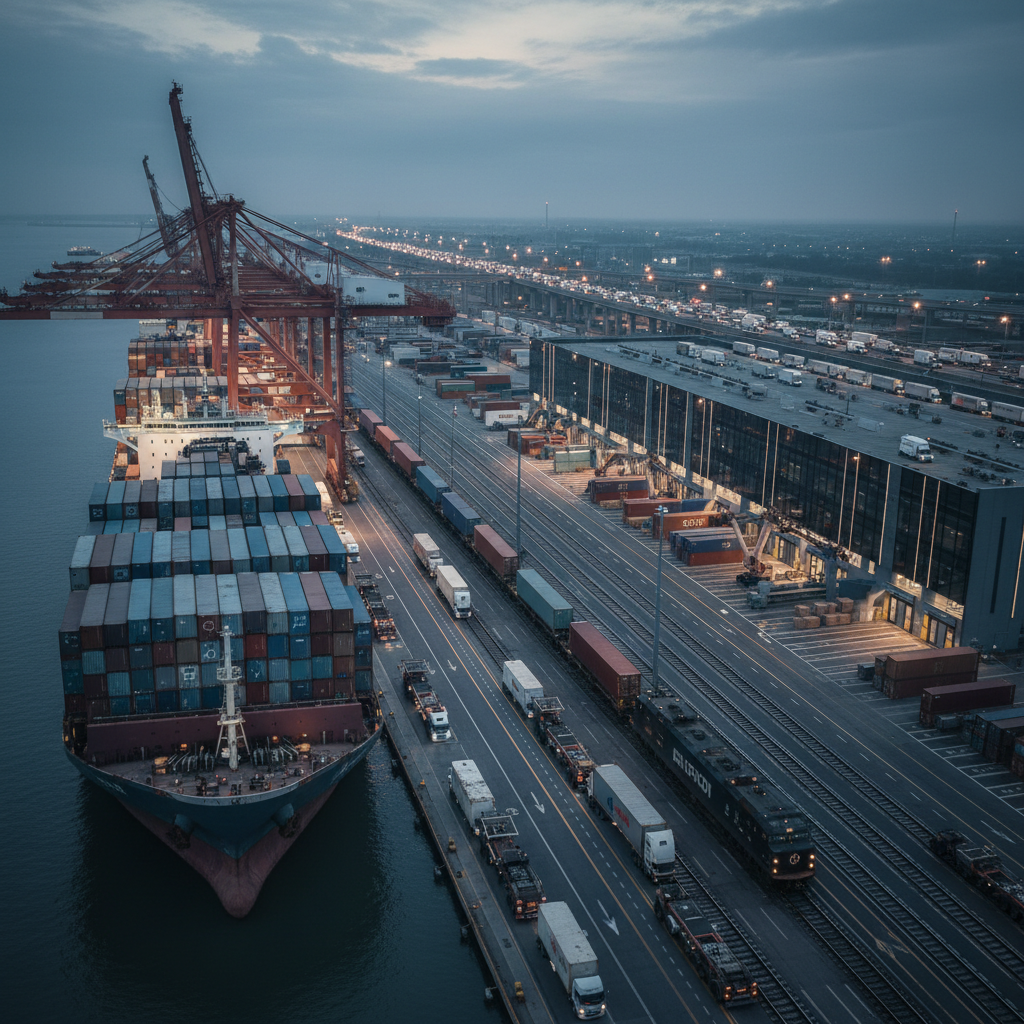
The ripple effects of these global geopolitical shifts are acutely felt within national logistics networks, particularly in the United States. As C.H. Robinson highlighted in November 2026, despite some moderation in import demand, US container ports continue to grapple with persistent inland transportation challenges. The underlying cause is often the uneven and unpredictable nature of cargo flows stemming from geopolitical reconfigurations. When global trade routes are redrawn, and manufacturing shifts occur, the volume and timing of vessel arrivals at US ports can become highly erratic. This creates bottlenecks not just at the port gates but extends deep into the hinterland. Rail connections, crucial for moving containers efficiently from coastal ports to inland distribution centers, become strained by unpredictable surges or shifts in demand to less-equipped railheads. Chassis availability, a perennial challenge, is exacerbated when containers dwell longer at terminals due to rail delays or when equipment is stuck in the wrong locations because of rerouted cargo. Terminal access itself becomes a chokepoint as port operations struggle to synchronize with fluctuating vessel schedules and inland transport capacity. These constraints on rail, chassis, and terminal access are not isolated issues; they are direct consequences of a global trade system attempting to adapt to geopolitical pressures, leading to systemic inefficiencies and persistent delays across the US logistics network.
Geopolitical Friction Embeds Logistics Inefficiencies
The ongoing geopolitical realignments are not merely temporary disruptions but are fundamentally embedding new layers of complexity and inefficiency into global cargo movement, with significant and persistent consequences for trade and transport. The operational landscape is being permanently altered, demanding a proactive and adaptive approach from all stakeholders.
- Route Diversification Imperative: Companies must build robust flexibility and redundancy into their routing strategies, moving beyond single-point dependencies to mitigate risks from regional conflicts and chokepoint vulnerabilities.
- Inland Infrastructure Strain: The disproportionate impact on inland logistics, particularly rail, chassis, and terminal access, necessitates urgent investment in infrastructure and technology to enhance capacity and improve synchronization between port and hinterland operations.
- Strategic Sourcing Re-evaluation: Geopolitical trade policies require a continuous re-evaluation of sourcing and manufacturing locations, prioritizing supply chain resilience and diversification over purely cost-driven decisions to navigate tariffs and sanctions effectively.
Source: Container News — https://container-news.com/c-h-robinson-warns-of-persistent-port-and-drayage-constraints/