
Insight Brief: Navigating Maritime Disruptions – Lessons from the Espirito Santo Express Fire and the Imperative of Visibility
Analyze the severe cargo damage on the Espirito Santo Express after a fire in the South Atlantic. This brief explores how maritime incidents disrupt global supply chains, the critical role of weather in exacerbating such volatility, and how real-time visibility platforms are essential for mitigating risks and building resilience.
Introduction: The Unpredictable Nature of Maritime Logistics
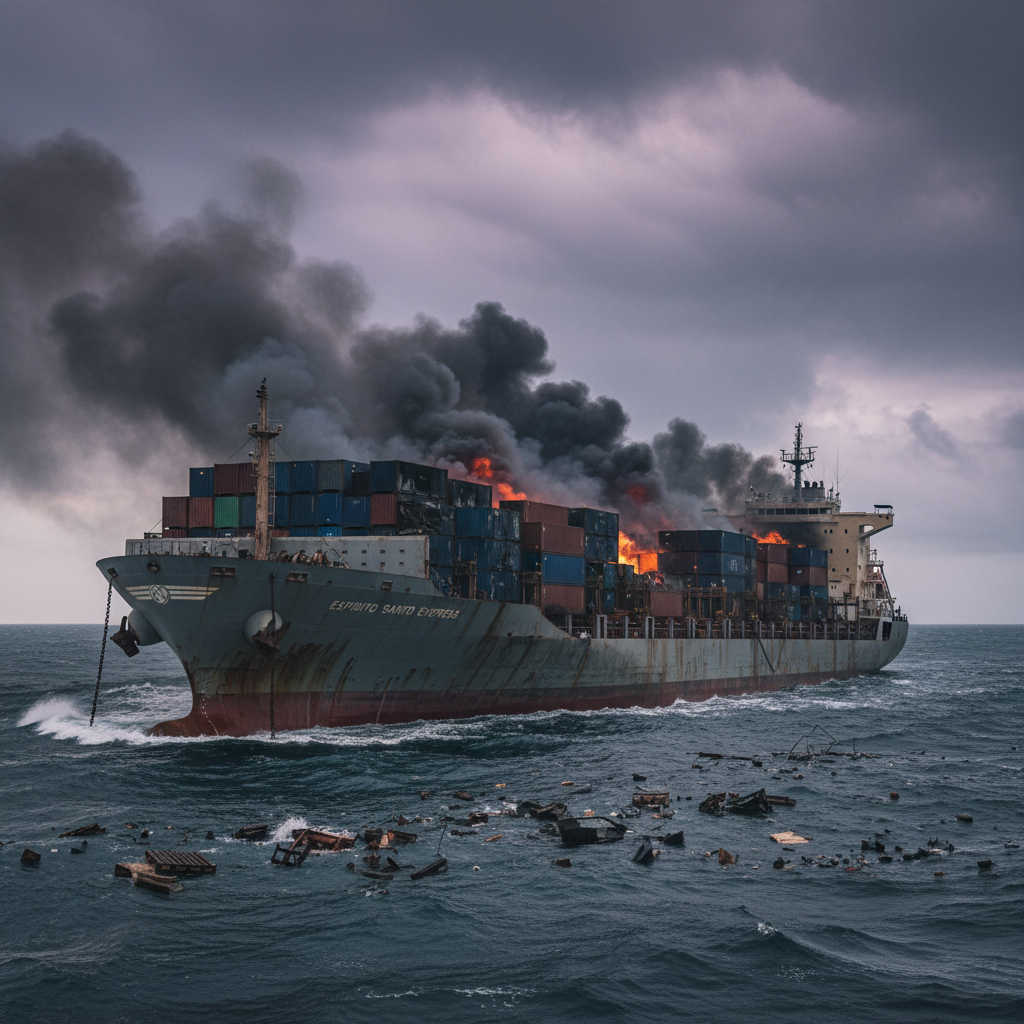
Global supply chains are intricate networks, constantly exposed to a myriad of risks, from geopolitical tensions to infrastructure failures. Among these, maritime transport, the backbone of international trade, remains particularly vulnerable to unforeseen disruptions. The sheer scale of operations, coupled with the vastness and unpredictability of the ocean environment, means that incidents can have far-reaching consequences. A recent and stark illustration of this inherent volatility is the severe fire aboard the containership Espirito Santo Express in the South Atlantic. This incident, impacting cargo carried by major carriers Hapag and ONE, underscores the critical need for robust risk management and real-time visibility in an increasingly complex logistics landscape. While the direct cause of this particular fire is not specified as weather-related, it serves as a potent reminder that maritime operations are perpetually exposed to environmental factors, and severe incidents can be compounded by or occur in challenging conditions, requiring similar levels of preparedness and response.
The Espirito Santo Express Incident: A Case Study in Disruption
The Espirito Santo Express, a containership operating on a vital global trade lane, experienced a significant fire in the South Atlantic. Reports indicate that the blaze began approximately two weeks prior to the public advisories from carriers Hapag and ONE, confirming severe damage to the cargo on board. This incident immediately triggered a cascade of operational challenges. For the cargo owners, the primary impact is the complete loss or severe damage to their goods, leading to substantial financial losses, potential contractual penalties for delayed deliveries, and disruptions to their own production schedules or retail operations. For the carriers, the incident entails significant salvage operations, potential environmental liabilities, and the complex process of assessing and compensating for damaged cargo. The vessel itself will require extensive repairs, removing it from service for an extended period and reducing available capacity on its intended route. Furthermore, the incident necessitates meticulous investigation to determine the cause and prevent future occurrences, adding another layer of complexity to an already challenging situation.
Affected Lanes, Facilities, and Modes
The Espirito Santo Express incident has a multifaceted impact across various components of the supply chain:
-
Lanes: The most immediate impact is on the specific trade lane the Espirito Santo Express was traversing. While the exact route (e.g., Asia-South America, Europe-South America) is not detailed in the available information, the vessel's presence in the South Atlantic indicates a major trans-oceanic artery. Other vessels on this lane may experience indirect effects, such as increased demand for remaining capacity, potential rerouting if the incident creates navigational hazards, or delays at subsequent ports due to altered schedules. Shippers with cargo on this vessel will face significant delays and likely require alternative arrangements for replacement goods, potentially shifting demand to other services on the same or parallel lanes.
-
Facilities: The primary facility affected is, of course, the vessel itself. Beyond this, destination ports will face challenges. Should the ship be diverted to a port of refuge, specialized facilities for handling damaged cargo, offloading operations, and potential environmental clean-up will be required. This can strain port resources, leading to congestion and delays for other vessels. Repair yards will also see increased demand for dry-docking and extensive structural work on the vessel. Additionally, the need for replacement cargo means increased activity at origin ports for new shipments and potentially at destination warehouses for expedited processing.
-
Modes: The incident primarily affects ocean freight. However, the severe damage and delays often trigger a modal shift for urgent replacement cargo. Shippers may opt for expedited air freight services to mitigate the impact of lost inventory, placing increased pressure on air cargo capacity and airport logistics. Once replacement cargo arrives, there may also be a heightened demand for expedited inland transportation (rail, truck) to make up for lost time, stressing intermodal networks and last-mile delivery capabilities.
It is crucial to consider how adverse weather conditions can exacerbate these impacts. Storms, high seas, or strong winds can complicate salvage efforts, increase the risk of further damage to the vessel or cargo, and necessitate longer rerouting, further stressing affected lanes and facilities. Even without being the direct cause, challenging weather can turn a serious incident into a catastrophic one.
The Broader Context: Weather's Role in Maritime Volatility
While the specific cause of the Espirito Santo Express fire is not attributed to weather in the provided information, it is imperative to understand that weather remains a dominant and increasingly unpredictable factor in maritime logistics. Global climate patterns are contributing to more frequent and intense extreme weather events, directly impacting cargo movement in numerous ways:
- Direct Operational Disruptions: Hurricanes, typhoons, and severe storms cause widespread port closures, necessitating vessel diversions, anchoring, or significant delays. Fog reduces visibility, leading to slower transit speeds and increased collision risks. Extreme temperatures can affect sensitive cargo, requiring specialized handling or leading to spoilage.
- Cargo Damage and Loss: Rough seas can cause containers to shift, collapse, or be lost overboard. Water ingress during storms can damage cargo. High winds can exacerbate fires or structural damage during incidents, turning minor issues into major disasters.
- Route and Schedule Deviations: Vessels frequently alter courses to avoid severe weather, adding days to transit times and increasing fuel consumption. These deviations disrupt finely tuned schedules, leading to ripple effects across subsequent port calls and inland connections.
- Infrastructure Strain: Persistent severe weather can damage port infrastructure, requiring repairs and further hindering operations. Ice conditions in colder regions can block waterways, necessitating icebreaker assistance and causing significant delays.
- Safety Risks: Adverse weather significantly increases the risk to vessel crews and the integrity of the ship itself, potentially leading to incidents like the Espirito Santo Express fire, even if not directly caused by weather. The South Atlantic, for instance, is known for its challenging weather patterns, which can complicate any maritime incident response.
These weather-induced disruptions contribute to a volatile environment where incidents, whether directly caused by weather or not, are always a possibility. The Espirito Santo Express fire, therefore, serves as a powerful reminder of the pervasive nature of risk in maritime transport, a risk often amplified by environmental conditions.
What Shippers Can Do: Strategies for Resilience
In the face of such unpredictable events, shippers must adopt proactive strategies to build resilience into their supply chains. This involves a multi-pronged approach:
- Diversification of Carriers and Routes: Relying on a single carrier or a limited set of routes increases vulnerability. Spreading cargo across multiple carriers and exploring alternative routes can mitigate the impact of a single incident.
- Robust Insurance Coverage: Adequate cargo insurance is non-negotiable. It provides a financial safety net against loss or damage, covering not just the value of goods but also potential business interruption costs.
- Contingency Planning: Develop pre-defined contingency plans for various disruption scenarios. This includes identifying alternative suppliers, modes of transport, and warehousing options. Regular stress-testing of these plans is crucial.
- Enhanced Communication and Collaboration: Foster strong relationships with carriers, freight forwarders, and logistics partners. Open lines of communication ensure timely information exchange during crises.
- Leveraging Advanced Technology: The Role of Shipment-Visibility Control Towers (MGS): This is where a sophisticated platform like MGS becomes indispensable. For an incident like the Espirito Santo Express fire, or any weather-related disruption, MGS provides critical capabilities:
- Real-time, Granular Visibility: MGS platforms offer precise, real-time tracking of vessels and individual containers. For shippers with cargo on the Espirito Santo Express, an MGS platform would have provided immediate notification of the incident and continuous updates on the vessel's status and location, long before official carrier advisories. This allows for rapid assessment of affected shipments.
- Proactive Alerting and Notifications: Automated alerts for delays, diversions, port closures, or incidents (like a fire or severe weather warnings) empower shippers to react swiftly. Instead of waiting for carrier updates, MGS users receive instant, actionable intelligence.
- Impact Analysis and Scenario Planning: MGS helps shippers quickly identify all affected purchase orders and SKUs, quantify potential delays and financial impacts, and model alternative scenarios for recovery. This data-driven approach facilitates informed decision-making for re-routing or expediting replacement cargo.
- Enhanced Collaboration: By providing a single source of truth, MGS improves collaboration between internal teams (procurement, sales, logistics) and external partners, ensuring everyone is working with the most current information.
- Predictive Analytics: Beyond reactive responses, MGS leverages historical data and machine learning to predict potential disruptions, including those caused by weather, allowing shippers to proactively adjust plans and mitigate risks before they materialize.
Conclusion: Building an Agile Supply Chain
The Espirito Santo Express fire serves as a potent reminder of the inherent risks in global maritime logistics, risks that are frequently compounded by challenging weather conditions. In an era of increasing supply chain volatility, characterized by both unforeseen incidents and escalating environmental challenges, an agile and resilient supply chain is no longer a luxury but a necessity. By embracing strategies like diversification, robust insurance, and especially, by leveraging the power of advanced shipment-visibility control tower platforms like MGS, shippers can transform their reactive responses into proactive strategies. This empowers them to navigate disruptions, minimize financial losses, maintain customer satisfaction, and ensure business continuity, even in the face of severe events like a containership fire in the South Atlantic or widespread weather-induced chaos.
Source: The Maritime Executive — https://maritime-executive.com/article/hapag-and-one-warn-cargo-on-espirito-santo-express-is-severely-fire-damaged