
HMM Platinum General Average Declaration Creates Significant Hurdles for Cargo Owners and Global Trade
The declaration of General Average for the 5,593 teu HMM Platinum following a fire, and its month-long anchorage off South Africa, signals substantial financial and operational challenges for shippers, carriers, and the broader supply chain.
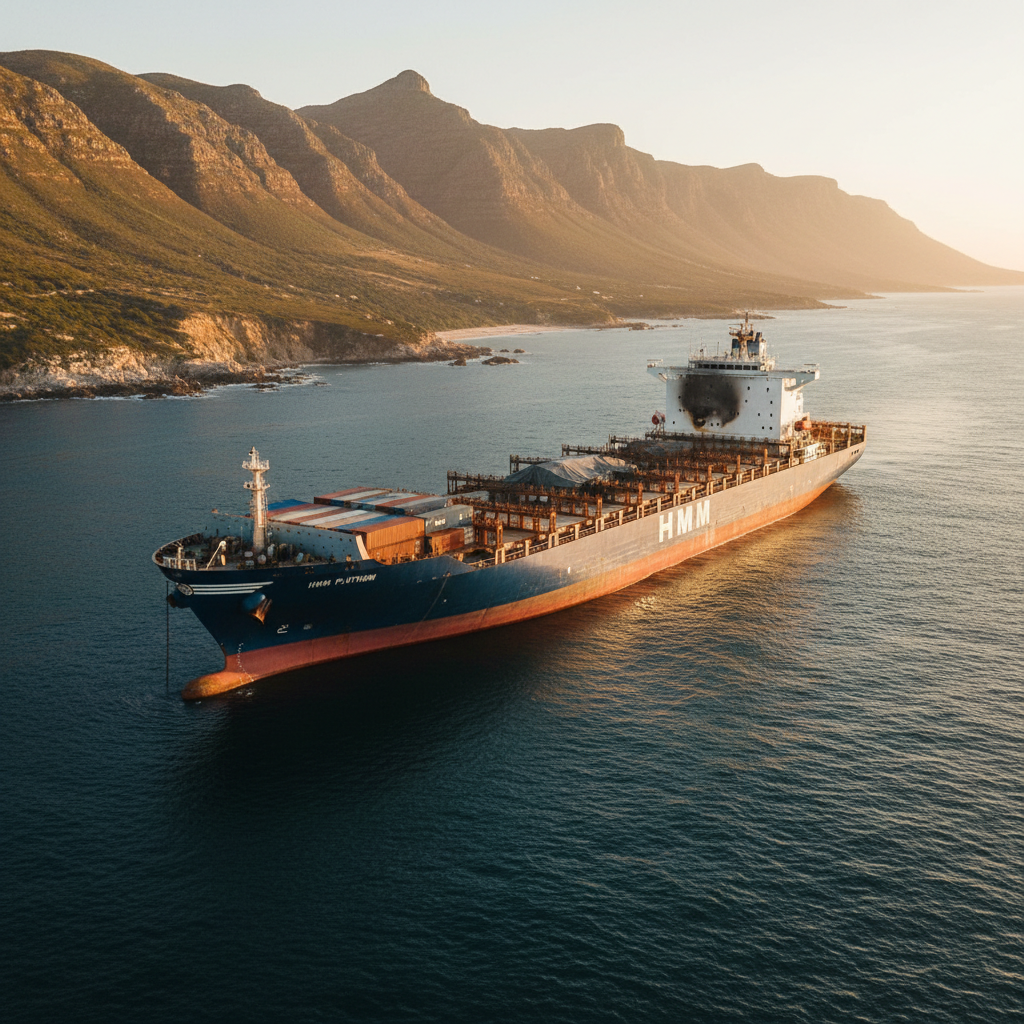
The recent declaration of General Average (GA) by HMM for its 5,593 teu containership, the HMM Platinum, following a fire incident, presents a stark reminder of the inherent risks in global maritime trade. With the vessel spending a month anchored off the South African coast awaiting a port of refuge, the situation has escalated into a complex web of financial obligations and logistical bottlenecks for all stakeholders. This incident underscores the fragility of supply chain predictability and the cascading effects a single vessel casualty can have on global commerce.
HMM Platinum's Prolonged Anchorage Exacerbates Cargo Delays and Costs
The HMM Platinum's extended stay off the South African coast, unable to find a suitable port for repairs and cargo assessment, is a critical operational bottleneck impacting the global supply chain. For cargo owners, this translates directly into significant delays, potentially disrupting production schedules, missing market windows, and incurring additional storage and demurrage charges once the vessel eventually reaches a port. The uncertainty surrounding the vessel's next destination and the timeline for cargo discharge creates a planning nightmare, forcing shippers to scramble for alternative arrangements or brace for prolonged disruption. This incident, while involving a single vessel of 5,593 teu, contributes to the overall strain on global shipping capacity, particularly on key East-West trade lanes that typically transit the South African coast. The effective removal of this capacity, even temporarily, can subtly tighten the market, potentially influencing freight rates and increasing pressure on other vessels and ports to absorb diverted or delayed cargo. The protracted search for a port of refuge itself highlights systemic issues within the maritime infrastructure, where suitable facilities for handling distressed vessels of this size, especially those with fire damage, are not always readily available, leading to further operational paralysis.
The Financial Burden of General Average on Shippers and Insurers
The declaration of General Average immediately shifts a significant financial burden onto cargo owners, regardless of whether their specific goods were directly damaged by the fire. Under GA principles, all parties with an interest in the voyage – the shipowner and all cargo owners – must contribute proportionally to the extraordinary expenses incurred to save the entire venture. This typically requires cargo owners to provide financial guarantees, often in the form of cash deposits or surety bonds, before their goods can be released. For many shippers, particularly smaller enterprises, this unexpected financial outlay can be substantial and severely impact their cash flow. The process of GA adjustment, handled by appointed firms like Korhi Average Adjusters & Surveyors and Richards Hogg Lindley, is notoriously complex and time-consuming, adding layers of administrative cost and legal fees. Beyond the direct GA contributions, shippers face indirect financial impacts: increased insurance premiums for future shipments as underwriters reassess risk, potential penalties for late delivery to their customers, and the opportunity cost of capital tied up in delayed inventory. For carriers like HMM, while GA helps distribute costs, they still face significant out-of-pocket expenses for salvage, repairs, and operational downtime, alongside potential reputational damage and the administrative overhead of managing the GA process. The incident also puts pressure on marine insurers, who will bear the brunt of claims for both hull and cargo, potentially leading to broader market adjustments in risk pricing.
Broader Implications for Supply Chain Resilience and Risk Management
This incident serves as a critical case study for supply chain managers on the importance of robust risk management and the need for greater transparency and agility. The prolonged uncertainty surrounding the HMM Platinum's fate underscores the limitations of traditional just-in-time inventory strategies when faced with unforeseen disruptions. Companies relying on single sourcing or lean inventories for goods aboard such vessels will experience magnified impacts. From a resilience perspective, the financial implications of GA highlight the necessity for comprehensive marine cargo insurance that explicitly covers GA contributions, and for shippers to understand the nuances of their policies. Furthermore, the incident prompts a re-evaluation of carrier selection criteria, moving beyond just freight rates to include a carrier's track record in managing incidents and their communication protocols during crises. The global supply chain's interconnectedness means that even a single vessel casualty can create ripple effects, from port congestion at potential refuge sites to a temporary tightening of specific trade lanes. This necessitates a proactive approach to scenario planning, contingency logistics, and the development of diversified sourcing and shipping strategies to mitigate the financial and operational fallout from such unpredictable events.
Conclusion & Strategic Insights
The HMM Platinum's General Average declaration and its protracted search for refuge underscore the severe financial and operational vulnerabilities inherent in global maritime logistics. This event demands immediate attention from shippers and carriers to fortify their risk mitigation strategies.
- Financial Preparedness: Shippers must ensure robust cargo insurance coverage and understand their obligations under General Average to avoid unexpected financial shocks and delays in cargo release.
- Operational Resilience: Supply chain managers should diversify shipping routes and carriers, and consider buffer inventory strategies to absorb the impact of unforeseen vessel casualties and prolonged operational disruptions.
- Transparency & Communication: Carriers need to enhance communication protocols during incidents, while forwarders play a crucial role in providing timely updates and guiding shippers through complex processes like General Average adjustment.
Source: The Loadstar — https://theloadstar.com/hmm-platinum-general-average-adds-to-cargo-woes-as-search-for-refuge-drags-on/