
Global Dockworker Strikes: Navigating the Trade and Transport Fallout
A coordinated global dockworker strike, protesting arms shipments across over 100 ports in 22 countries, threatens to disrupt more than 40% of cargo movement. This brief analyzes the profound implications for port operations, supply chain stability, and global trade, highlighting strategies for mitigation and the critical role of shipment visibility platforms.
Introduction
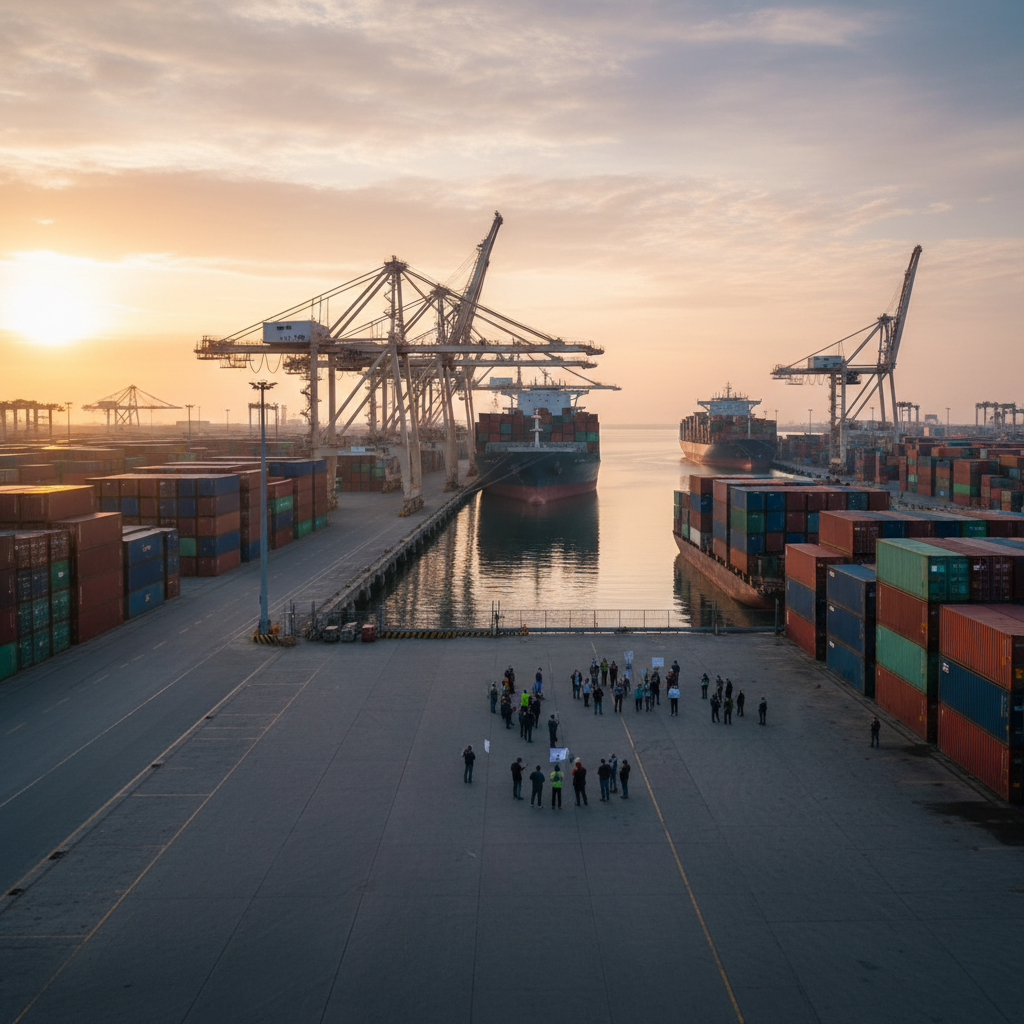
The global supply chain, already navigating a complex landscape of geopolitical tensions and economic shifts, faces a significant new challenge: widespread dockworker strikes. A planned coordinated action across more than 100 ports in 22 countries, aimed at protesting arms shipments, is poised to create substantial disruption. While the motivation behind these strikes is rooted in geopolitical concerns, the operational consequences for trade and transport are far-reaching and indiscriminate, potentially affecting over 40% of global cargo movement. This analysis delves into the practical implications for logistics, trade flows, and the strategies businesses can employ to mitigate the impact.
Impact on Port Operations and Throughput
The immediate and most visible consequence of a widespread dockworker strike is a severe degradation of port operational efficiency and throughput. With labor significantly reduced or entirely withdrawn from critical functions such as loading, unloading, and cargo handling, ports will experience immediate slowdowns, if not complete halts, in their ability to process vessels and freight. This will inevitably lead to a rapid accumulation of vessels at anchorages, creating significant congestion both at sea and within port terminals. Dwell times for containers will skyrocket, exacerbating existing space constraints and leading to backlogs that could take weeks or even months to clear once operations resume. The sheer scale of the planned action, encompassing over 100 ports across 22 countries, suggests that rerouting efforts will face considerable challenges, as alternative ports may quickly become overwhelmed. This widespread disruption will not only delay cargo but also introduce substantial operational inefficiencies, forcing carriers and port authorities to grapple with unprecedented logistical complexities.
Supply Chain Delays and Disruptions
Beyond the immediate port environment, the ripple effects of such extensive strikes will propagate throughout global supply chains, causing significant delays and disruptions. Extended lead times will become the norm, as goods destined for manufacturing plants, distribution centers, and retail shelves remain stranded at ports. This directly impacts inventory management, leading to potential stockouts for critical components in just-in-time production systems, and conversely, creating excess inventory in other parts of the chain due to unpredictable delivery schedules. Manufacturing operations reliant on a steady flow of imported materials could face production slowdowns or even temporary shutdowns. For perishable goods, these delays could result in significant waste and financial losses. Furthermore, the disruption will inevitably trigger a cascade of additional costs, including demurrage and detention fees for delayed containers, increased warehousing expenses, and the need for costly expedited shipping options once cargo is finally released. The cumulative effect is a significant erosion of supply chain predictability and resilience, impacting businesses across all sectors.
Shipper and Carrier Strategies for Mitigation
In the face of such widespread disruption, shippers and carriers must rapidly deploy both immediate and long-term mitigation strategies. In the short term, immediate actions include exploring vessel diversions to alternative ports not affected by the strikes, though the global nature of this action may limit viable options. For extremely time-sensitive or high-value cargo, a temporary shift to air freight, despite its significantly higher cost, might be considered. Proactive communication with customers and supply chain partners is paramount to manage expectations and provide updated delivery estimates. Carriers will need to adjust sailing schedules and potentially consolidate services to optimize vessel utilization. Long-term strategies, however, require a more fundamental re-evaluation of supply chain design. This includes diversifying sourcing and manufacturing locations to reduce reliance on single points of failure, building strategic inventory buffers (safety stock) to absorb unexpected delays, and investing in multi-modal transportation solutions that offer greater flexibility. Enhanced risk assessment frameworks and robust contingency planning will become indispensable tools for navigating future geopolitical and labor-related disruptions.
Economic Consequences for Global Trade
The economic consequences of prolonged and widespread port disruptions are substantial, impacting global trade volumes, costs, and ultimately, consumer prices. Increased shipping costs are an immediate outcome, driven by higher freight rates due to reduced capacity, surcharges for congestion, and the aforementioned demurrage and detention fees. These elevated logistics costs will inevitably be passed down the supply chain, contributing to inflationary pressures across various sectors. Companies may face reduced profitability dueor increased operational expenses. The uncertainty and delays could lead to a contraction in global trade volumes as businesses become more cautious about placing orders or exporting goods. Industries with tight margins, such as retail, or those dealing with time-sensitive commodities like fresh produce or high-tech components, will feel the economic strain most acutely. Ultimately, a slowdown in the efficient movement of goods can dampen overall economic growth, impacting national GDPs and potentially leading to broader economic instability.
Role of Visibility Platforms in Crisis Management
In a crisis of this magnitude, a robust shipment-visibility control tower platform like MGS becomes an indispensable tool for effective crisis management. Real-time tracking capabilities are critical, providing an accurate, up-to-the-minute view of every shipment's location and status, even when vessels are rerouted or cargo is delayed at congested ports. This granular visibility allows businesses to quickly identify affected shipments and assess the full scope of potential delays. Predictive analytics, powered by MGS, can then estimate new Estimated Times of Arrival (ETAs) based on current conditions, enabling proactive adjustments to downstream operations, such as warehouse staffing or production schedules. The platform facilitates rapid scenario planning, allowing supply chain managers to model the impact of different disruption scenarios – for instance, a specific port closure versus a broader regional strike – and evaluate the viability of alternative routes or modes of transport. Furthermore, an MGS control tower serves as a centralized communication hub, ensuring all stakeholders, from procurement to sales, have access to consistent, up-to-date information, fostering collaborative decision-making. This data-driven approach empowers businesses to make informed, agile decisions, minimizing financial losses and maintaining operational continuity amidst severe geopolitical and labor-related disruptions.
Global Reach of Disruptions
The planned dockworker strikes are not confined to a single region or a few isolated ports; rather, they represent a coordinated global action spanning 22 countries and impacting over 100 ports. This extensive geographical reach significantly amplifies the challenge for shippers and carriers. Unlike localized disruptions where cargo can often be diverted to nearby, unaffected ports, the widespread nature of this strike means that viable alternative gateways may be scarce or quickly become overwhelmed. The interconnectedness of global trade implies that even ports not directly involved in the strike could experience secondary effects, such as increased traffic from diverted vessels or a backlog of containers waiting for onward transport. This broad impact underscores the systemic vulnerability of global supply chains to coordinated labor actions, making comprehensive contingency planning and real-time visibility more critical than ever.
Source: Maritime Professional — https://www.maritimeprofessional.com/news/dockworkers-strike-against-arms-shipments-423955