
Geopolitical Undercurrents: Navigating Disruption in Global Cargo Movement
Geopolitical shifts are fundamentally reshaping global supply chains, impacting everything from maritime routes and airspace to tariffs and sanctions. This brief explores the consequences for trade and transport, highlighting the critical role of real-time visibility in an increasingly complex world.
Geopolitical volatility has transitioned from an occasional anomaly to a persistent feature of the global trade landscape. For supply chain professionals, this translates into an environment of heightened uncertainty, where established routes, operational norms, and cost structures are subject to sudden and significant alteration. As MGS supply-chain analysts, our focus is on understanding these disruptions' tangible effects on cargo movement and how our visibility platform can empower businesses to adapt. The consequences extend far beyond immediate delays, influencing long-term strategic planning, infrastructure investment, and the very architecture of global commerce.
The Shifting Sands of Maritime Routes
The most immediate and visible impact of geopolitical events often manifests in the rerouting of maritime traffic. Recent events in critical chokepoints, such as the Red Sea, have forced an extensive diversion of vessels around the Cape of Good Hope. This change in routing is not merely an inconvenience; it represents a fundamental shift in transit times, adding weeks to voyages between Asia and Europe. For shippers, this translates directly into increased lead times, higher fuel consumption, elevated insurance premiums, and a significant strain on vessel capacity. The ripple effect extends to port congestion at alternative hubs and a global imbalance in container availability.
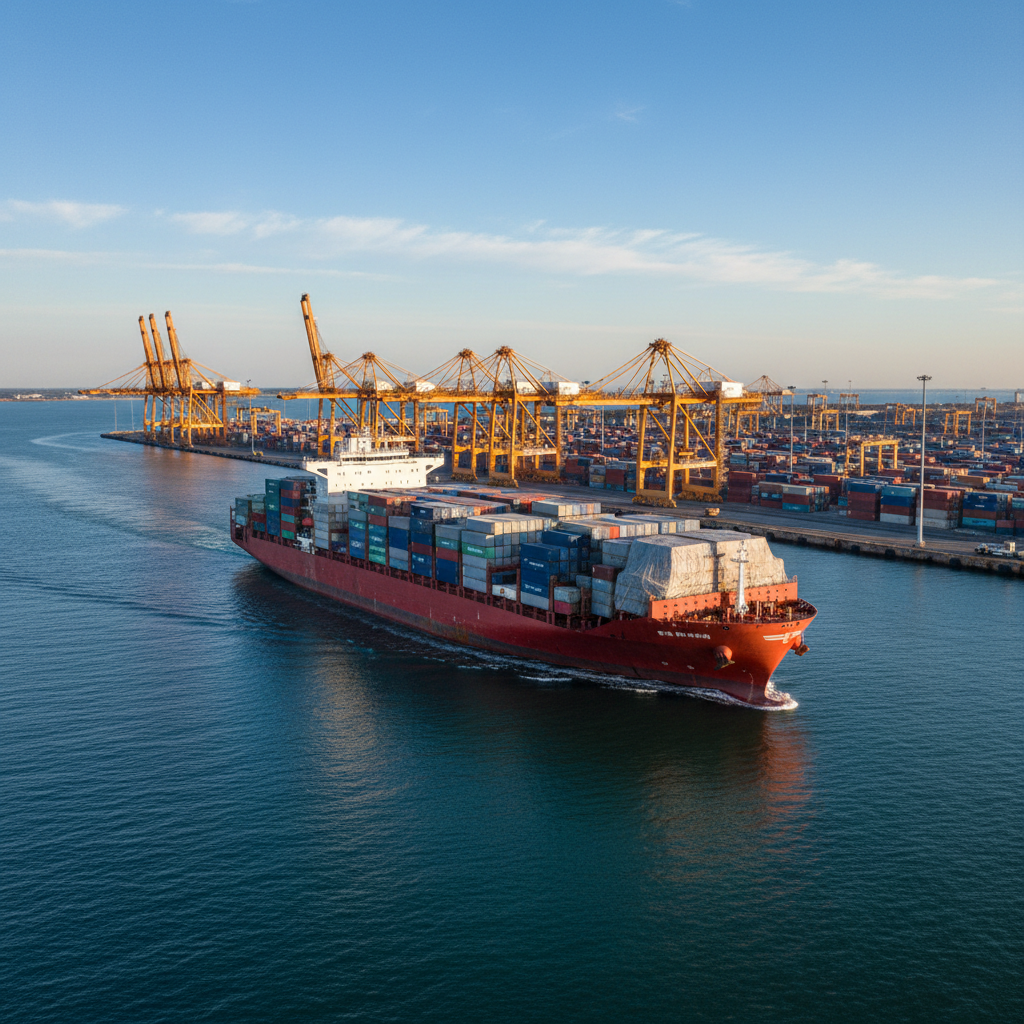
Such disruptions underscore the strategic importance of well-positioned maritime gateways. Investments in high-capacity terminals at locations like Tanger Med, as announced by Maersk-APM, become crucial. Positioned at the crossroads of major shipping lanes, such facilities offer potential transshipment alternatives or serve as vital entry points, enhancing network flexibility and resilience when primary routes are compromised. Our MGS platform provides real-time vessel tracking and predictive analytics, enabling clients to anticipate delays, assess alternative routing options, and communicate proactively with stakeholders, mitigating the financial and reputational fallout of these extended voyages.
Airspace Contractions and Air Cargo Dynamics
Geopolitical tensions frequently lead to the closure or restriction of specific airspaces, compelling air cargo carriers to adopt longer, less direct flight paths. Conflicts can render entire regions no-fly zones, forcing aircraft to navigate around vast territories. This not only increases flight duration and fuel burn but also adds to operational costs, which are inevitably passed on to shippers. For industries reliant on just-in-time delivery or transporting high-value, time-sensitive goods, these airspace contractions can severely impact supply chain integrity and customer commitments.
The extended flight times also reduce the efficiency of aircraft utilization, potentially leading to capacity crunches on key routes. Furthermore, the increased operational complexity demands more sophisticated flight planning and risk assessment. Our MGS control tower offers vital insights into air cargo movements, providing real-time updates on flight status, deviations, and estimated arrival times. This allows businesses to quickly identify affected shipments, re-evaluate logistics plans, and explore alternative air or multimodal transport solutions to maintain delivery schedules despite aerial restrictions.
Critical Waterways Under Pressure
Beyond specific conflict zones, broader geopolitical instability places immense pressure on other critical maritime chokepoints globally. Straits like Hormuz, Malacca, and Bab-el-Mandeb are vital arteries for global trade, and any threat to their security or navigability can have immediate and far-reaching consequences. Disruptions in these narrow passages can lead to significant delays, increased security costs, and a heightened risk of cargo damage or loss. The concentration of global trade through these limited points makes them particularly vulnerable to geopolitical maneuvers or regional conflicts.
The potential for disruption at these chokepoints necessitates robust contingency planning and a deep understanding of geopolitical risk. Businesses must consider diversified sourcing strategies and alternative transport corridors to reduce reliance on single points of failure. An MGS platform provides comprehensive visibility across all modes of transport, allowing supply chain managers to monitor the status of shipments passing through these critical waterways, assess potential risks in real-time, and activate pre-planned diversion strategies to safeguard cargo flow.
The Evolving Landscape of Tariffs and Trade Barriers
Geopolitical competition often manifests in the form of protectionist policies, retaliatory tariffs, and non-tariff barriers. These measures fundamentally alter the economics of international trade, making certain sourcing channels or export markets less viable. The imposition of tariffs directly increases the landed cost of goods, forcing companies to absorb higher expenses, pass them on to consumers, or fundamentally re-evaluate their supply chain architecture. This can accelerate trends like nearshoring, friend-shoring, or regionalization of supply chains, as businesses seek to mitigate tariff risks and reduce exposure to geopolitical trade disputes.
Navigating this complex and frequently changing tariff landscape requires dynamic analysis and agile decision-making. Companies must continuously assess the total cost of ownership for products sourced from different regions, factoring in not only production and transport costs but also duties and taxes. Our MGS platform, when integrated with trade compliance data, can provide a holistic view of landed costs, enabling clients to model the financial impact of various sourcing scenarios and identify the most cost-effective and resilient supply chain configurations in the face of evolving trade policies.
Navigating the Complexities of Sanctions Compliance
Sanctions regimes are another powerful geopolitical tool with significant implications for global trade. Imposed by nations or international bodies, sanctions restrict trade, financial transactions, or travel with specific countries, entities, or individuals. For supply chains, this creates a complex web of compliance requirements, necessitating rigorous due diligence to avoid inadvertently violating restrictions. The consequences of non-compliance can be severe, including hefty fines, reputational damage, and loss of operating licenses.
Sanctions impact not only direct trade with targeted entities but also secondary sanctions that can affect businesses dealing with those who trade with sanctioned parties. This demands meticulous screening of suppliers, customers, and financial intermediaries across the entire supply chain. An MGS visibility platform plays a crucial role here by enhancing transparency. By providing a granular view of all parties involved in a shipment's journey, from origin to destination, our platform helps identify potential compliance risks, ensuring that cargo movement adheres to all applicable international regulations and avoids prohibited transactions.
Proactive Infrastructure Investment for Resilience
In response to the multifaceted disruptions outlined, strategic infrastructure development emerges as a critical component of long-term supply chain resilience. The investment by Maersk-APM in the Tanger Med 3 terminal exemplifies this forward-looking approach. Such projects are not merely about increasing capacity; they are about enhancing strategic optionality, diversifying gateways, and building robust nodes within the global logistics network that can absorb shocks and facilitate agile responses to geopolitical shifts.
By developing state-of-the-art facilities at strategically vital locations, logistics providers and port operators are creating the physical backbone for more adaptable supply chains. These investments support the ability to reroute cargo efficiently, manage larger volumes through alternative channels, and leverage new trade corridors as they emerge or become necessary. For businesses, understanding where these new capabilities are being developed and how they can be integrated into their logistics strategies is key to future-proofing their operations. Our MGS platform, by offering a comprehensive view of global logistics infrastructure and real-time network performance, helps clients leverage these strategic investments effectively, ensuring their supply chains remain robust and responsive to an an ever-changing world.
Conclusion:
The current geopolitical climate demands an unprecedented level of agility, foresight, and real-time insight from global supply chains. From rerouted ships and restricted airspaces to complex tariffs and stringent sanctions, the consequences for trade and transport are profound and pervasive. In this environment, a sophisticated shipment-visibility control tower like MGS is not just an operational tool; it is a strategic imperative. By providing unparalleled transparency and actionable data across all modes and geographies, our platform empowers businesses to navigate disruption, mitigate risk, and maintain the flow of goods essential for global commerce, turning challenges into opportunities for resilience and competitive advantage.
Source: Container News — https://container-news.com/maersk-apm-signs-concession-for-new-tanger-med-3-terminal/