
Geopolitical Volatility: Navigating the Shifting Tides of Global Cargo Movement
Recent maritime security incidents, including a deadly hijacking in the Gulf of Aden, are forcing global trade to reroute, driving up costs and emphasizing the critical need for real-time supply chain visibility to mitigate widespread disruption.
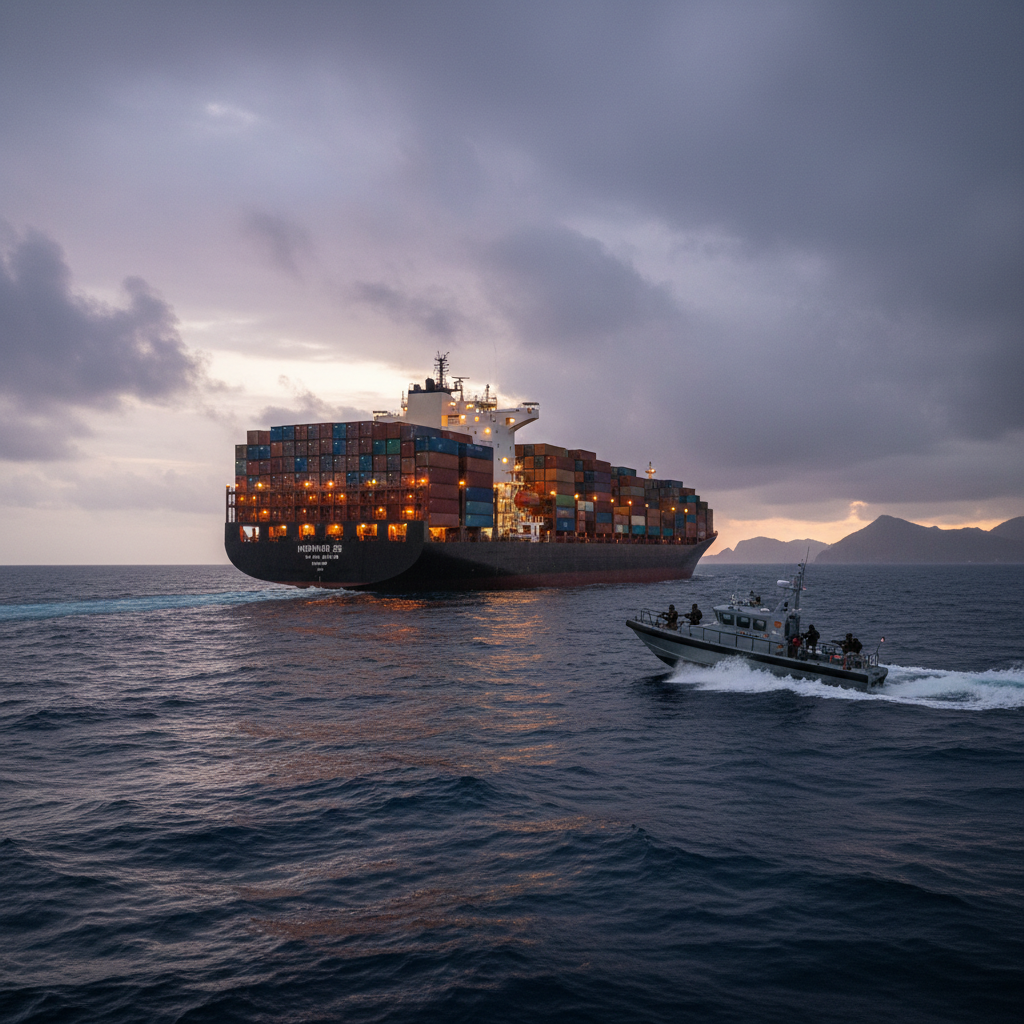
As an MGS supply-chain analyst, our focus remains squarely on the operational realities and economic consequences of global events. The recent tragic incident involving the hijacking of a vessel in the Gulf of Aden, resulting in the loss of Five seafarers during a rescue operation, underscores the profound and immediate impact of geopolitical instability on the arteries of global trade. Such events are not isolated; they are symptomatic of a broader trend where geopolitical tensions directly translate into tangible disruptions across cargo movement—affecting routes, airspace, waterways, and ultimately the cost and reliability of global supply chains.
Heightened Maritime Security Risks and Waterway Disruptions
The incident in the Gulf of Aden serves as a stark reminder of the persistent and escalating maritime security risks in critical shipping lanes. The loss of Five seafarers highlights the human cost of these disruptions, which extend far beyond commercial losses. Key waterways, such as the Gulf of Aden and its proximity to the Bab-el-Mandeb Strait, are vital chokepoints for global trade, connecting the Suez Canal to the Indian Ocean. When these areas become high-risk zones due to piracy, conflict, or other geopolitical factors, the immediate consequence is a direct threat to the safety of vessels and their crews. Ship operators are compelled to implement heightened security protocols, including deploying armed guards, increasing vessel speed through dangerous areas, and enhancing surveillance. These measures, while necessary, add complexity and cost to operations. More critically, the very navigability of these waterways is compromised, creating an environment of uncertainty that can halt or significantly slow down cargo flow, leading to cascading delays throughout the supply chain.
Reshaping Global Shipping Routes
The direct threat to vessels and personnel in strategic waterways inevitably forces a re-evaluation of established global shipping routes. When a critical chokepoint like the Gulf of Aden becomes too dangerous or unreliable, carriers must consider alternative, often significantly longer, routes. For instance, bypassing the Suez Canal and routing around the Cape of Good Hope adds thousands of nautical miles to a journey between Asia and Europe. This re-routing has several immediate and profound consequences: increased transit times, higher fuel consumption, and a corresponding surge in operational costs. Longer journeys mean fewer voyages per vessel annually, reducing overall shipping capacity. This capacity crunch, coupled with rising fuel and insurance costs, translates directly into higher freight rates for shippers. The predictability of delivery schedules is severely compromised, making inventory management and production planning far more challenging for businesses reliant on just-in-time supply chains. The ripple effect extends to port congestion at alternative hubs and increased pressure on land-side logistics as goods arrive on altered schedules.
Broader Geopolitical Impact on Airspace, Tariffs, and Sanctions
While the recent incident specifically highlights maritime vulnerabilities, it is crucial to recognize that geopolitical events exert similar disruptive pressures across all modes of transport. Airspace closures, for example, can force cargo airlines to undertake lengthy detours, mirroring the route extensions seen in maritime shipping. This leads to increased flight times, higher fuel burn, and reduced air cargo capacity on affected routes. Furthermore, geopolitical tensions frequently manifest as new tariffs or trade sanctions. These measures, while not directly impacting physical movement in the same way as a hijacked vessel, fundamentally alter trade flows by making certain goods more expensive or entirely prohibited in specific markets. Businesses must then scramble to find alternative sourcing or sales channels, often at higher costs or with longer lead times. The cumulative effect of these disruptions—whether maritime, air, or trade policy-driven—is a complex, multi-modal challenge that demands unprecedented agility and insight from global supply chains.
Escalating Costs and Trade Implications
The financial repercussions of these geopolitical disruptions are substantial and far-reaching. Increased maritime security risks, exemplified by the incident in the Gulf of Aden, directly lead to soaring insurance premiums for vessels transiting high-risk areas. War risk insurance surcharges become a standard component of freight costs, passed directly to shippers. The necessity of re-routing vessels around dangerous zones, as discussed, significantly increases fuel consumption and operational expenses. These escalating costs are ultimately absorbed by consumers through higher product prices, contributing to inflationary pressures. Beyond direct costs, the unpredictability introduced by disrupted routes and schedules leads to increased inventory holding costs as companies build buffer stocks to guard against delays. This shift from lean, just-in-time models to more resilient, but capital-intensive, just-in-case strategies impacts working capital. The overall effect is a less efficient, more expensive global trade environment, potentially leading to reduced trade volumes and economic growth.
The Imperative of Real-time Shipment Visibility
In this increasingly volatile landscape, the ability to maintain real-time visibility over cargo movement is no longer a luxury but an absolute necessity. An MGS shipment-visibility control tower provides the critical intelligence needed to navigate these complex disruptions. By integrating data from various sources—vessel tracking systems, port updates, weather reports, and geopolitical risk assessments—an MGS platform offers a comprehensive, real-time view of every shipment's location and status. In the event of a maritime security incident or a re-routing decision, an MGS control tower can immediately identify affected shipments, assess the impact on estimated times of arrival (ETAs), and flag potential delays. This proactive insight enables supply chain managers to quickly evaluate alternative routes, communicate effectively with carriers and customers, and adjust downstream logistics, such as warehouse staffing or final-mile delivery schedules. Furthermore, by providing predictive analytics on potential disruptions, an MGS platform empowers businesses to make informed decisions about inventory levels, sourcing strategies, and contingency planning, thereby building greater resilience into their supply chains and mitigating the financial and reputational damage caused by unforeseen geopolitical events.
Source: Ship & Bunker — https://shipandbunker.com/news/emea/499513-five-seafarers-killed-during-rescue-of-hijacked-ship-in-gulf-of-aden-imo-says