
Geopolitical Turbulence: Reshaping Global Cargo Movement and Supply Chain Dynamics
Geopolitical events are fundamentally altering global cargo movement, impacting routes, airspace, waterways, and trade policies. This brief analyzes the cascading consequences for trade and transport, emphasizing the need for adaptable supply chain strategies and the role of visibility platforms.
Impact on Routes and Transit Times
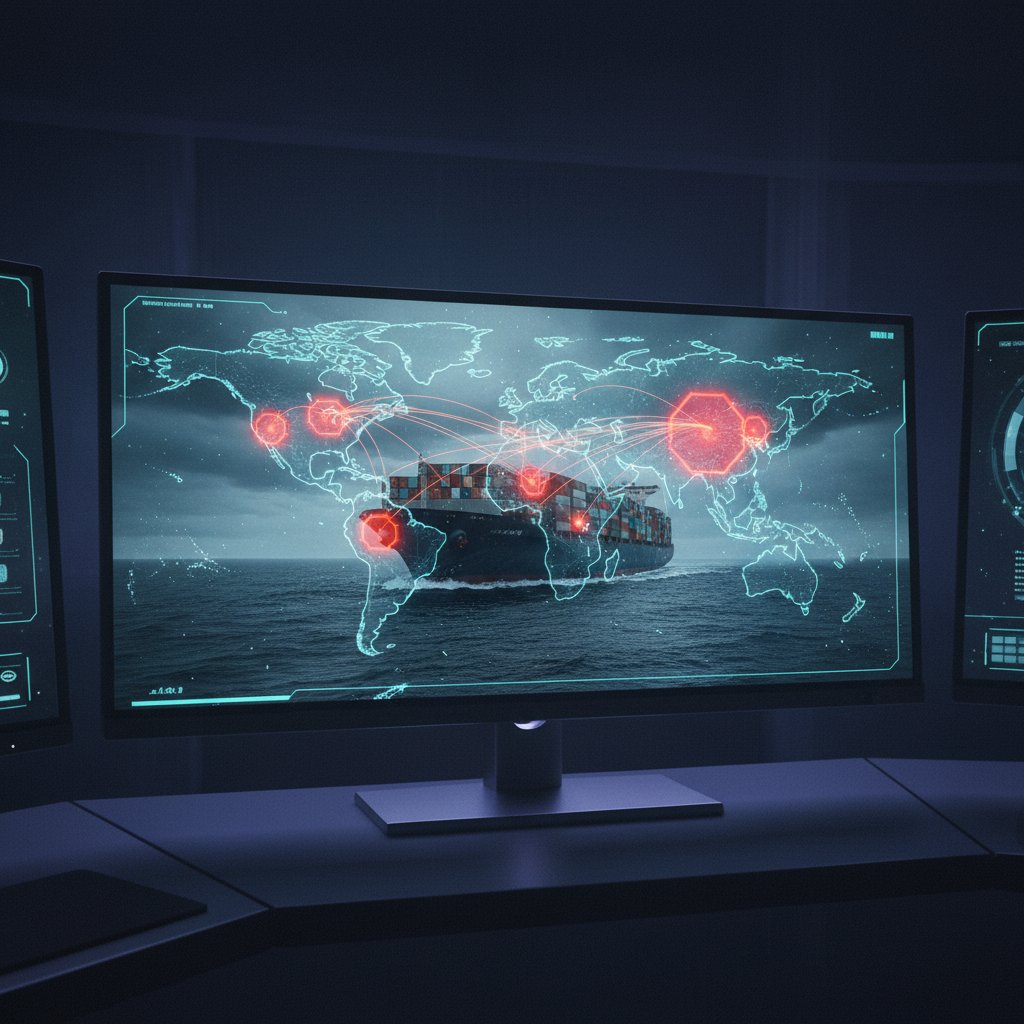
Geopolitical tensions are increasingly forcing significant alterations to established global trade routes, leading to a cascade of operational and financial consequences for the transport sector. When traditional routes become unviable due to conflict, heightened security risks, or political mandates, cargo must be rerouted. This often means longer distances, which directly translates into increased fuel consumption for vessels and aircraft, higher operational costs for carriers, and crucially, extended transit times for goods. For instance, diversions around critical maritime chokepoints can add weeks to a journey, impacting inventory cycles, increasing working capital requirements for businesses, and potentially leading to stockouts or missed market opportunities. The strain on available shipping capacity intensifies as vessels are tied up for longer periods, driving up freight rates across the board. Furthermore, the unpredictability introduced by such disruptions makes planning and forecasting significantly more challenging. For a shipment-visibility control tower like MGS, real-time tracking of these rerouted shipments becomes paramount. Our platform can dynamically adjust estimated times of arrival (ETAs), identify the precise location of delays, and provide critical data to stakeholders, enabling proactive communication and mitigating the impact of these extended transit times on downstream operations.
Airspace Restrictions and Overflight Bans
The skies are not immune to geopolitical friction. Airspace closures and overflight bans, often implemented swiftly in response to political events or conflicts, have profound implications for air cargo. Airlines are compelled to re-plan flight paths, often skirting vast prohibited areas. These detours invariably lead to longer flight durations, requiring more fuel and increasing operational expenses. The added flight time can also necessitate additional crew changes or technical stops, further complicating logistics. For high-value, time-sensitive cargo, where air freight is the preferred mode precisely for its speed, these delays can be particularly damaging, eroding the very advantage air transport offers. The reduced efficiency and increased cost of air cargo can also lead to a modal shift, pushing some freight onto already strained ocean shipping networks, creating ripple effects across the entire transport ecosystem. An MGS control tower provides critical capabilities here, allowing users to monitor real-time flight path deviations, assess the impact on air freight capacity and lead times, and identify alternative air cargo options or modal shifts where feasible, ensuring supply chain continuity even when skies are restricted.
Waterway Chokepoints and Maritime Security
Strategic waterways, vital arteries of global trade, are particularly vulnerable to geopolitical instability. Conflicts or heightened tensions in regions like the Red Sea, the Strait of Hormuz, or the South China Sea can escalate maritime security risks, leading to increased threats of piracy, attacks on commercial vessels, or the imposition of naval blockades. The immediate consequence is a surge in war risk insurance premiums, significantly increasing the cost of maritime transport. More critically, shipping lines may opt to reroute vessels entirely, bypassing these chokepoints to ensure the safety of crew and cargo. Such diversions, as seen with recent events, add thousands of nautical miles and weeks to voyages, disrupting schedules, delaying deliveries, and exacerbating global supply chain congestion. The cumulative effect is higher shipping costs, longer lead times, and a greater potential for cargo damage or loss in high-risk zones. An MGS control tower offers indispensable real-time vessel tracking and risk alerts for specific maritime zones, allowing logistics managers to anticipate potential disruptions, evaluate alternative routes, and communicate proactively with customers regarding revised delivery schedules, thereby safeguarding cargo and maintaining operational visibility amidst maritime insecurity.
Tariffs, Sanctions, and Trade Barriers
Geopolitical events frequently manifest as direct economic policy tools, notably through the imposition of tariffs, sanctions, and other trade barriers. Tariffs, like those potentially authorized by the Russia Sanctions Act of 2026, directly increase the cost of imported goods, making them less competitive and potentially shifting sourcing strategies or reducing consumer demand. Sanctions, on the other hand, can be far more restrictive, completely prohibiting trade with specific countries, entities, or individuals, or banning the export/import of certain goods. These measures necessitate a complete re-evaluation and often a re-engineering of supply chains, as companies must identify new suppliers, markets, or logistics partners that comply with the new regulatory landscape. The consequences include increased landed costs, reduced market access for certain products, and a significant increase in the complexity of customs and compliance procedures. Businesses face the challenge of navigating intricate regulatory frameworks, ensuring their entire supply chain, from raw materials to final delivery, adheres to the latest restrictions to avoid severe penalties. An MGS control tower is critical for navigating this complexity, providing tools to track the compliance status of shipments, identify sanctioned entities within the supply chain, calculate the impact of new tariffs on landed costs, and manage the extensive documentation required for new trade regimes, ensuring adherence and minimizing financial exposure.
Supply Chain Resilience and Diversification
The cumulative impact of geopolitical disruptions across routes, airspace, waterways, and trade policies has underscored the urgent need for enhanced supply chain resilience and diversification. The era of optimizing for cost efficiency alone, often relying on single-source suppliers or just-in-time inventory models, is giving way to strategies that prioritize robustness and adaptability. Companies are increasingly exploring options like nearshoring (relocating production closer to end markets), friendshoring (sourcing from geopolitically aligned nations), or simply establishing multi-source strategies for critical components and finished goods. While these approaches may entail higher initial investments or slightly elevated operational costs compared to purely cost-driven models, they significantly reduce vulnerability to single points of failure and provide greater agility in responding to unforeseen geopolitical shocks. The goal is to build supply chains that can absorb disruptions, pivot quickly, and maintain continuity of supply even when traditional pathways are blocked. An MGS control tower plays a pivotal role in this strategic shift by providing the granular data and analytical insights necessary for comprehensive risk assessment, identifying potential vulnerabilities, and evaluating the performance and cost-effectiveness of diversified supply chain networks, ultimately enabling businesses to build more robust and future-proof operations.
Source: Atlantic Council — https://www.atlanticcouncil.org/insight-impact/in-the-news/nikoladze-quoted-in-the-christian-science-monitor-on-the-effectiveness-of-tariffs-authorized-by-the-russia-sanctions-act-of-2026/