
Geopolitical Tides: How National Ambitions Reshape Global Cargo Flows
Geopolitical shifts are compelling nations to secure critical supply lines, dramatically altering traditional cargo routes and trade dynamics. This brief examines the operational and economic consequences of such strategies, particularly for energy exports, and highlights the role of advanced shipment visibility platforms in mitigating disruption.
The Shifting Sands of Global Trade: Geopolitical Drivers
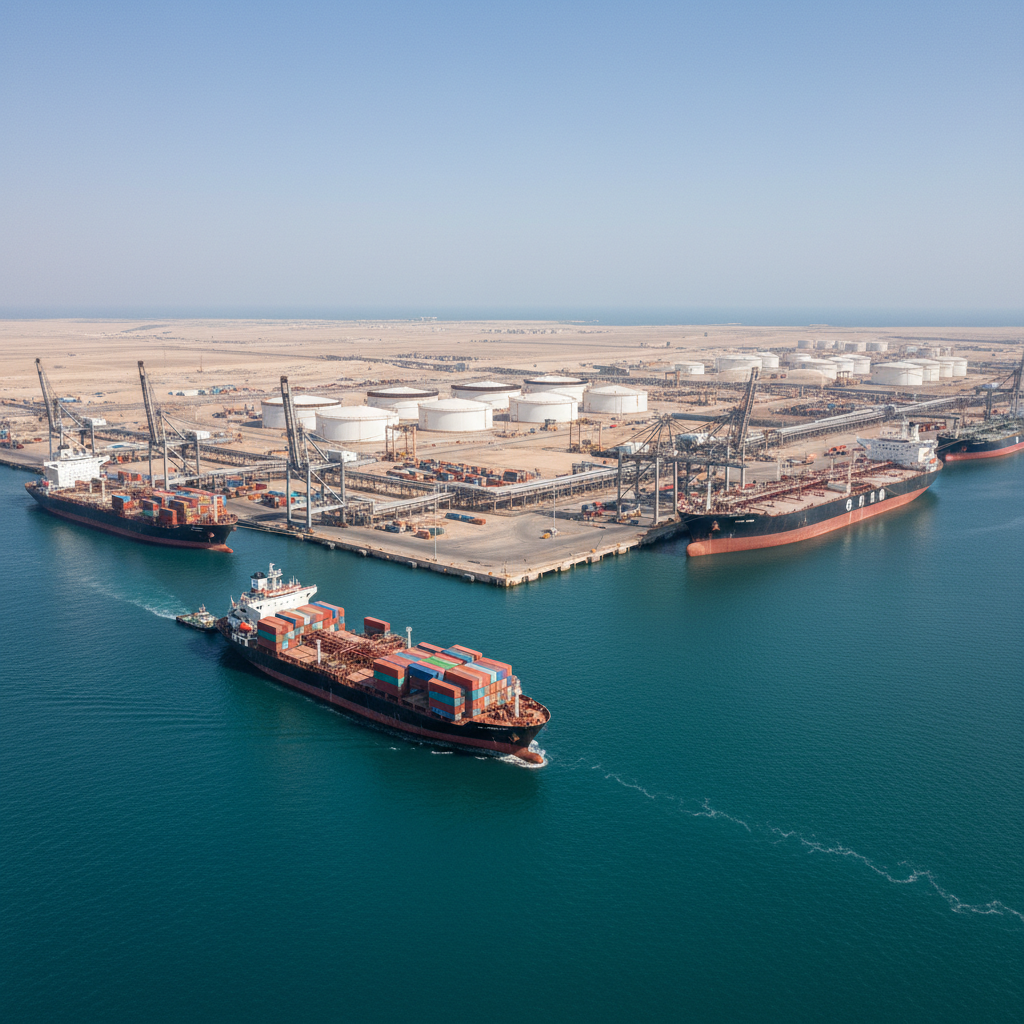
Global trade and transport networks are increasingly susceptible to geopolitical pressures, prompting nations to re-evaluate and reconfigure their supply chain strategies. The pursuit of greater control over critical commodity flows, often driven by national security and economic resilience objectives, is a defining characteristic of the current landscape. A notable example of this trend is Abu Dhabi's strategic initiative to extend its influence over the entire journey of its energy exports. This move, which leverages existing infrastructure like the Hormuz bypass and positions Fujairah as a pivotal hub, reflects a broader global inclination towards securing supply lines against potential disruptions. For supply-chain analysts, understanding these shifts is paramount, as they directly impact the predictability, cost, and reliability of cargo movement across all modes of transport.
This proactive approach by nations to establish greater command over their export pathways signals a departure from purely market-driven logistics. Instead, strategic imperatives — such as safeguarding against chokepoint vulnerabilities, political instability, or even sanctions — are now heavily influencing infrastructure development and trade route decisions. The implications for global commerce are profound, leading to a complex interplay of new opportunities and heightened risks that demand sophisticated oversight and adaptive planning from all stakeholders in the logistics ecosystem.
Redrawing Maritime Maps: Chokepoint Avoidance and Route Diversification
The strategic importance of maritime chokepoints, such as the Strait of Hormuz, cannot be overstated. These narrow passages are critical arteries for global trade, yet they are inherently vulnerable to geopolitical tensions, natural disasters, or accidental blockages. Abu Dhabi's efforts to expand its Hormuz bypass into a comprehensive strategy for controlling the 'whole journey of a barrel' directly addresses this vulnerability. By developing alternative routes and infrastructure, nations aim to mitigate the risks associated with reliance on these constricted waterways.
The consequences for global cargo movement are multi-faceted. Firstly, it encourages the diversification of shipping routes. While bypassing a chokepoint might offer enhanced security, it could also introduce longer transit times or necessitate investment in new, potentially more costly, infrastructure. This can lead to a re-evaluation of optimal routes for various commodities, influencing vessel deployment, fuel consumption, and overall logistics costs. Secondly, it elevates the strategic importance of alternative ports and logistics hubs. Fujairah, for instance, gains prominence as a critical node in this new, more secure network, attracting further investment in port facilities, storage, and associated services. This shift can redistribute cargo traffic, impacting the competitive landscape of regional and global ports.
For businesses, these changes mean a constant need to monitor route viability and efficiency. A shipment visibility control tower (MGS) becomes invaluable here, offering real-time tracking across potentially new or altered routes. It provides the capability to assess the operational impact of route diversions, such as changes in estimated arrival times, potential delays, and the precise location of cargo, enabling proactive adjustments to downstream logistics and inventory management.
Securing the Supply Chain: From Vulnerability to Vertical Control
Abu Dhabi's ambition to control the 'whole journey of a barrel' exemplifies a broader trend towards supply chain vertical integration and enhanced national control over critical commodity flows. This strategy is fundamentally about bolstering supply chain resilience and security. By extending oversight from production to delivery, a nation can reduce its exposure to external risks, ensuring a more stable and predictable supply for its customers and greater strategic autonomy.
This quest for control has several implications for global supply chains. It can lead to increased investment in national logistics infrastructure, including pipelines, storage facilities, and port capabilities, designed to operate independently of potentially volatile external factors. While this enhances the security of specific supply chains, it might also introduce new complexities. For instance, the integration of multiple transport modes (e.g., pipeline to tanker) requires seamless coordination and robust data exchange to maintain efficiency. Furthermore, such strategies can influence global commodity markets by providing a more stable source of supply, potentially reducing price volatility for specific goods, but also concentrating control in fewer hands.
From a risk management perspective, this shift allows for a more granular understanding of potential vulnerabilities within a nation's own controlled network, enabling targeted mitigation efforts. However, it also means that disruptions within this integrated system could have significant, concentrated impacts. An MGS control tower plays a crucial role in managing such complex, integrated supply chains by providing end-to-end visibility across all stages and modes, from the point of origin to the final destination. This comprehensive view allows for immediate identification of bottlenecks or disruptions within the controlled journey, facilitating rapid response and minimizing cascading effects.
Economic Ripple Effects: Costs, Reliability, and Market Dynamics
The geopolitical re-engineering of cargo routes and supply chain control mechanisms inevitably generates significant economic ripple effects across global trade. One primary consequence is the potential alteration of transport costs. While bypassing a chokepoint might reduce insurance premiums associated with high-risk areas, the alternative routes could be longer, requiring more fuel and longer transit times, thereby increasing operational expenses. Investment in new infrastructure, such as pipelines or expanded port facilities like those in Fujairah, also represents substantial capital outlay that can be reflected in freight rates or commodity pricing.
Reliability, however, stands to improve for the specific trade flows that adopt these more secure, controlled pathways. For instance, the consistent flow of energy exports, unhindered by chokepoint uncertainties, offers greater predictability for buyers and allows for more precise inventory planning. Conversely, this increased reliability for some flows might inadvertently highlight the vulnerabilities of traditional routes for others, prompting a broader re-evaluation of sourcing and logistics strategies by international businesses.
Market dynamics are also subject to change. The emergence of new, secure trade corridors can influence trade agreements, investment patterns, and even the competitive positioning of various commodity suppliers. Importers may prioritize suppliers who can guarantee delivery through resilient, geopolitically insulated channels, even if it comes at a slightly higher cost. This could lead to a fragmentation of global trade networks, with distinct 'secure' and 'less secure' pathways emerging for different goods. An MGS platform can provide critical data to analyze these cost-benefit trade-offs, offering insights into the true economic implications of route changes and helping businesses optimize their logistics networks for both cost-efficiency and resilience.
Navigating Complexity: The Indispensable Role of Shipment Visibility
The increasing complexity introduced by geopolitical shifts — from altered routes and strategic chokepoint bypasses to vertically integrated national supply chains — underscores the indispensable need for advanced shipment visibility. For an MGS control tower platform, these developments represent both a challenge and a critical opportunity to demonstrate value.
In an environment where traditional routes can be disrupted without warning, and new, strategically driven pathways emerge, real-time, granular visibility is no longer a luxury but a fundamental requirement. An MGS platform provides the capability to:
- Monitor Dynamic Routes: Track cargo across evolving maritime and land routes, including pipelines and new port-to-port connections, offering immediate alerts on deviations or delays.
- Enhance Risk Management: Proactively identify potential chokepoint issues, geopolitical flashpoints, or infrastructure bottlenecks that could impact cargo flow, allowing for pre-emptive rerouting or contingency planning.
- Optimize Operational Efficiency: Provide data-driven insights into transit times, carrier performance, and cost implications across different routes, enabling businesses to make informed decisions about their logistics networks.
- Ensure End-to-End Transparency: For strategies aiming to control the 'whole journey' of a commodity, an MGS platform offers unparalleled transparency, integrating data from various modes of transport and stakeholders to provide a single, unified view of cargo status, from origin to final destination.
By offering comprehensive, real-time data and predictive analytics, an MGS control tower empowers supply chain professionals to navigate the complexities of a geopolitically charged trade landscape. It transforms uncertainty into actionable intelligence, enabling businesses to maintain operational continuity, manage costs effectively, and build resilient supply chains capable of adapting to the ever-changing global environment.
Source: Container News — https://container-news.com/explainerthe-uae-is-buying-control-of-the-journey/