
Geopolitical Storms: Navigating Supply Chain Disruptions in the Bab el-Mandeb Strait
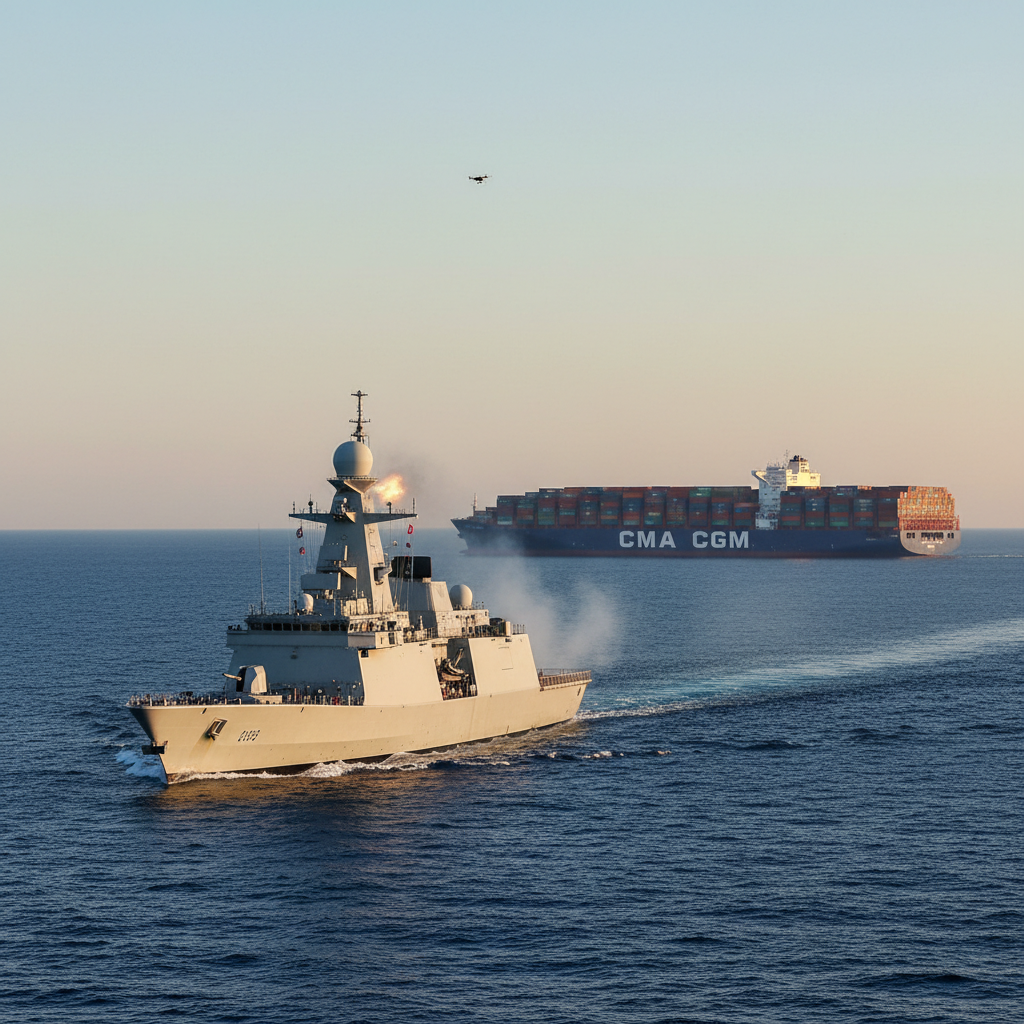
An incident involving a French frigate and a drone near a CMA CGM vessel highlights escalating security risks in vital maritime chokepoints. This brief analyzes the implications for global shipping lanes, facilities, and modes, offering strategies for shippers to enhance resilience in an increasingly volatile environment.
Executive Summary
Recent events in the Bab el-Mandeb Strait underscore the escalating geopolitical risks impacting global supply chains. The reported engagement by a French frigate, the Languedoc, to neutralize a drone deemed a threat near a CMA CGM commercial vessel, serves as a stark reminder of the fragility of critical maritime chokepoints. This incident, occurring on October 17, 2026, highlights how security challenges, rather than natural phenomena like weather, can severely disrupt cargo movement. For supply chain professionals, understanding these evolving threats and their potential ripple effects across lanes, facilities, and modes of transport is crucial for maintaining operational continuity and building resilient strategies.
The Bab el-Mandeb Strait: A Critical Chokepoint Under Threat
The Bab el-Mandeb Strait, a narrow passage connecting the Red Sea to the Gulf of Aden and the Indian Ocean, is one of the world's most strategically vital maritime arteries. Annually, a significant portion of global trade, including oil and containerized cargo, transits through this chokepoint en route to and from the Suez Canal. Its geographical significance makes it inherently vulnerable to geopolitical instability. The recent incident, involving military action to protect commercial shipping, signals a heightened threat level. Such events not only pose direct danger to vessels and crew but also inject considerable uncertainty into shipping schedules and insurance premiums. The very act of a naval vessel engaging a drone near a major carrier like CMA CGM indicates a serious and immediate perceived threat, forcing a re-evaluation of security protocols and risk assessments for all stakeholders operating in the region.
Impact on Maritime Lanes and Connected Facilities
Security incidents in the Bab el-Mandeb Strait have immediate and far-reaching consequences for maritime lanes. The primary impact is the potential for increased transit times and costs. Should the threat level rise further, carriers may opt to re-route vessels around the Cape of Good Hope, adding thousands of nautical miles and weeks to voyages between Asia and Europe. This diversion would significantly increase fuel consumption, operational expenses, and lead to substantial delays for cargo. Connected facilities, particularly major transshipment hubs and destination ports in Europe, the Mediterranean, and even parts of Asia, would experience cascading effects. Arrival schedules would be thrown into disarray, leading to port congestion, increased dwell times for cargo, and pressure on port infrastructure and labor. The efficiency of the entire East-West trade corridor is intrinsically linked to the unimpeded flow through this strait, making any disruption here a global concern.
Implications for Various Transport Modes
While the direct impact of such incidents is felt most acutely by the maritime sector, the ripple effects can extend to other transport modes. Extended sea transit times due to re-routing can lead to a surge in demand for air cargo, particularly for time-sensitive or high-value goods. Shippers facing critical deadlines might shift from ocean freight to air, driving up air cargo rates and potentially straining air freight capacity. This modal shift, however, is not a sustainable long-term solution for bulk cargo. For goods that rely on intermodal connections once they reach port, delays at sea translate directly into delays for onward rail and road transport. Warehousing and distribution networks also face challenges, as unpredictable arrival times disrupt inventory management, leading to either stockouts or excess inventory and associated holding costs. The interconnectedness of global logistics means that a disruption in one mode or region inevitably creates pressure points elsewhere in the supply chain.
Shipper Strategies in an Evolving Threat Landscape
In response to escalating geopolitical risks in critical chokepoints, shippers must adopt proactive and adaptive strategies. Diversification of routes and carrier partnerships is paramount, reducing reliance on single pathways or providers. Implementing robust risk assessment frameworks that account for geopolitical volatility, not just traditional operational risks, is essential. This includes continuously monitoring global events and their potential impact on specific trade lanes. Furthermore, building greater flexibility into inventory management, perhaps through strategic safety stock levels or regional warehousing, can help buffer against unexpected delays. Collaboration and transparent communication with logistics partners, including freight forwarders and carriers, become even more critical to anticipate and mitigate disruptions. The ability to pivot quickly and make informed decisions based on real-time intelligence is a competitive advantage in such an environment.
The MGS Advantage: Enhancing Visibility and Resilience
In this complex and volatile landscape, a sophisticated shipment-visibility control tower platform like MGS becomes an indispensable tool for shippers. MGS provides real-time, end-to-end tracking of cargo across all modes, offering unparalleled transparency into the location and status of shipments. This visibility is crucial for identifying potential delays or disruptions as they emerge, whether from security incidents, port congestion, or other unforeseen events. With MGS, shippers can receive immediate alerts regarding incidents in critical areas like the Bab el-Mandeb Strait, allowing them to assess the impact on their specific cargo. Predictive analytics offered by MGS can help forecast potential delays and suggest alternative routing options, enabling proactive decision-making. By consolidating data from various sources and providing a centralized view, MGS empowers supply chain analysts to evaluate risks, communicate effectively with stakeholders, and implement contingency plans swiftly, ultimately enhancing the resilience and agility of their entire supply chain operations.
Source: Marine Insight — https://www.marineinsight.com/french-navy-shoots-down-drone-near-cma-cgm-ship-in-bab-el-mandeb-strait/?utm_source=rss&utm_medium=rss&utm_campaign=french-navy-shoots-down-drone-near-cma-cgm-ship-in-bab-el-mandeb-strait