
Geopolitical Storms: Navigating Disruption in the Strait of Hormuz
An oil tanker incident in the Strait of Hormuz underscores how geopolitical events, much like severe weather, can critically disrupt global supply chains. Learn how MGS helps manage such volatility.
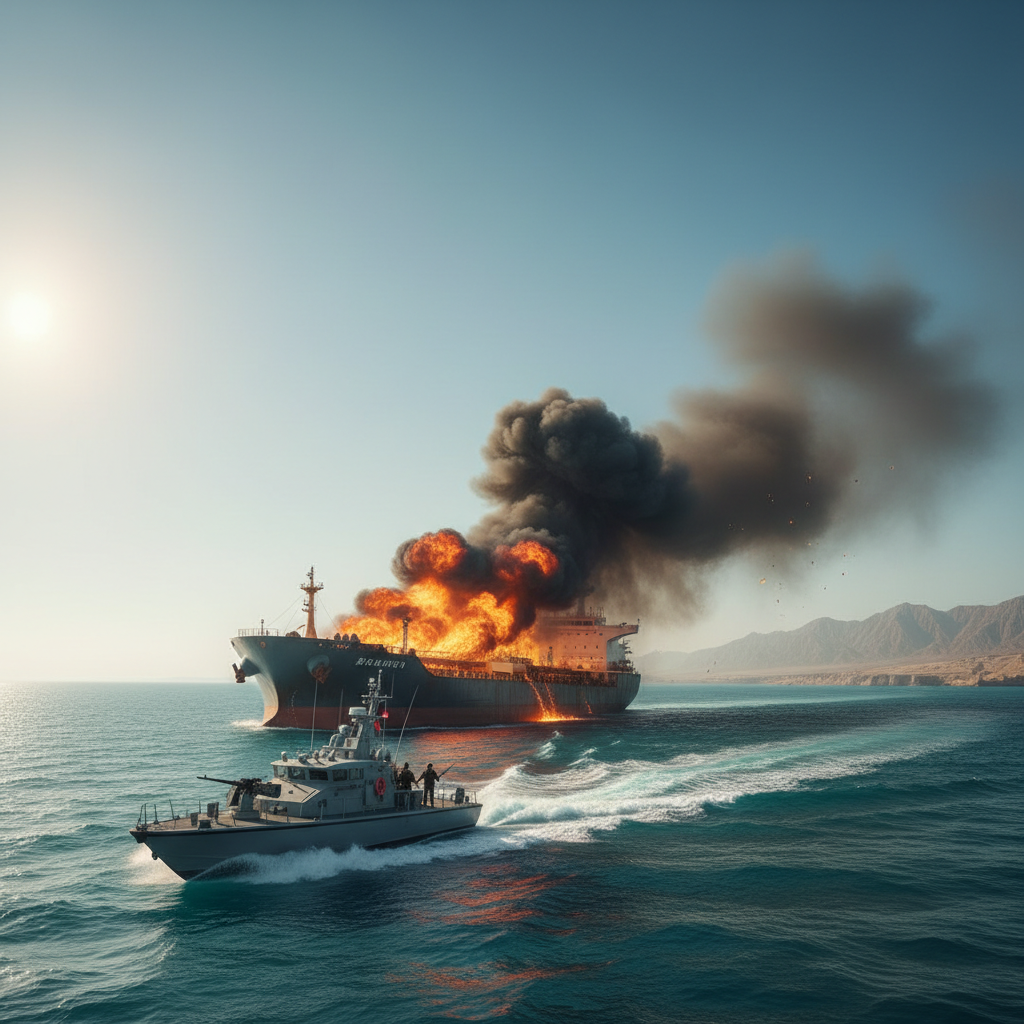
In the dynamic landscape of global supply chains, disruptions are an ever-present challenge. While much focus is rightly placed on the impact of adverse weather conditions – from hurricanes to blizzards – other unforeseen events can equally, if not more, severely impact cargo movement. The recent incident in the Strait of Hormuz, where an oil tanker caught fire after hitting a mine, serves as a stark reminder of how geopolitical tensions can rapidly transform critical shipping lanes into high-risk zones, demanding immediate attention from supply chain professionals.
This incident, occurring after Iran reportedly seized control of the strait following a war against the United States and Israel that began in late February, highlights the fragility of global trade routes to non-climatic factors. For supply chain analysts at MGS, understanding the multifaceted nature of such disruptions is paramount to providing actionable insights for our clients.
Affected Lanes
The Strait of Hormuz is unequivocally the most critically affected lane. This narrow waterway, connecting the Persian Gulf to the open ocean, is one of the world's most vital shipping chokepoints, particularly for oil and gas shipments. The incident involving an oil tanker striking a mine, and subsequent fire, directly threatens the safe passage of vessels through this strategic corridor. Furthermore, the broader context of Iran's asserted control over the strait since late February, following a conflict with the United States and Israel, indicates a systemic and prolonged risk, not merely an isolated event.
The immediate impact includes potential closures, significant delays, and rerouting of vessels. Such disruptions force ships to take longer, more expensive alternative routes, such as around the Cape of Good Hope, adding thousands of nautical miles and weeks to transit times. This not only inflates fuel costs and operational expenses but also strains vessel capacity and impacts delivery schedules globally. The ripple effect extends beyond oil, affecting all cargo types that rely on this passage for regional and international trade. The perceived instability elevates insurance premiums for vessels traversing the area, further increasing the cost of goods.
Affected Facilities
While the source material does not specify particular port facilities, the disruption of a vital shipping route like the Strait of Hormuz inherently impacts numerous facilities upstream and downstream. On the upstream side, oil export terminals and ports within the Persian Gulf, such as those in Saudi Arabia, UAE, Qatar, and Kuwait, face immediate challenges. Reduced vessel traffic or increased security checks can lead to congestion, delays in loading, and even temporary shutdowns of operations. The ability to export crude oil and refined products becomes severely hampered, affecting global energy markets.
Downstream, receiving ports worldwide, particularly in Asia, Europe, and North America, that rely on Middle Eastern oil and other goods, will experience significant delays and potential shortages. This can lead to increased dwell times for vessels awaiting berths, port congestion as rerouted ships arrive, and a strain on port infrastructure. Furthermore, storage facilities at these receiving ports may face challenges in managing inventory levels if expected shipments are delayed or diverted, potentially leading to stockouts or, conversely, overstocking if alternative supplies are secured quickly.
Affected Modes
The primary mode affected by the incident in the Strait of Hormuz is maritime shipping, specifically oil tankers. The incident explicitly mentions an "oil tanker on fire," highlighting the immediate danger to vessels transporting crude oil and petroleum products. Given the strait's role as a major artery for global energy supply, the disruption to oil tanker movements has far-reaching economic and geopolitical consequences. The risk of further incidents, whether from mines or other hostile actions, makes the passage perilous for all commercial shipping.
Beyond oil tankers, other types of cargo vessels, including container ships, bulk carriers, and LNG carriers, also utilize the Strait of Hormuz. These vessels face similar risks of attack, delays, or rerouting, impacting the movement of a wide array of goods from consumer products to raw materials. The increased threat perception can lead to a scarcity of available vessels willing to traverse the strait, driving up freight rates across the board and potentially causing a modal shift where feasible, though for bulk commodities like oil, viable alternatives for long-haul transport are limited.
Shipper Actions
In the face of such complex and rapidly evolving geopolitical disruptions, shippers must adopt a proactive and data-driven approach. A robust shipment-visibility control tower like MGS becomes indispensable in these scenarios, providing the critical intelligence needed to navigate uncertainty.
-
Enhanced Real-time Visibility: Shippers need immediate, granular visibility into their cargo's location and status. An MGS control tower offers real-time tracking of vessels, immediate alerts on incidents (like the Hormuz fire), and predictive analytics to assess the impact of closures or rerouting on Estimated Times of Arrival (ETAs) and inventory levels. This allows for rapid identification of affected shipments and proactive communication with stakeholders.
-
Dynamic Risk Assessment and Scenario Planning: Leveraging the data from an MGS platform, shippers can conduct dynamic risk assessments. This involves evaluating the likelihood and impact of various scenarios, such as prolonged strait closures or further escalations. Scenario planning, supported by MGS's analytical capabilities, allows companies to model the costs and lead time implications of alternative routes (e.g., around Africa) and prepare contingency plans for different levels of disruption.
-
Route and Sourcing Diversification: While not always immediately feasible for existing shipments, the incident underscores the long-term need for supply chain diversification. Shippers should explore alternative shipping lanes and consider diversifying their sourcing strategies to reduce over-reliance on single chokepoints or regions prone to geopolitical instability. MGS can help analyze the efficiency and cost-effectiveness of these alternative routes and suppliers.
-
Optimized Inventory Management: Strategic inventory management becomes crucial. Shippers may need to adjust safety stock levels for critical goods to buffer against potential delays, balancing the cost of holding inventory against the risk of stockouts. MGS can provide insights into inventory positions across the network, helping to optimize stock levels and identify potential vulnerabilities.
-
Proactive Communication and Collaboration: Timely and accurate communication with carriers, insurers, customs officials, and customers is vital. An MGS control tower facilitates this by providing a single source of truth for shipment data, enabling shippers to provide precise updates on delays, rerouting, and revised delivery schedules, thereby managing expectations and mitigating potential disputes.
By integrating advanced visibility and analytical tools, MGS empowers shippers to transform raw incident data into actionable intelligence. This capability allows for agile decision-making, minimizing the financial and operational impact of geopolitical disruptions, much like it does for severe weather events, ensuring greater resilience in an increasingly volatile global trade environment.
Source: Hellenic Shipping News — https://www.hellenicshippingnews.com/oil-tanker-on-fire-after-hitting-mine-in-hormuz-irans-guards/