
Geopolitical Shifts and Supply Chain Resilience: Navigating Critical Chokepoints with Visibility
Recent developments concerning critical waterways like the Strait of Hormuz underscore the profound and immediate impact of geopolitical events on global cargo movement. This brief explores the cascading effects on routes, airspace, tariffs, and overall trade, emphasizing the indispensable role of real-time visibility in maintaining supply chain continuity.
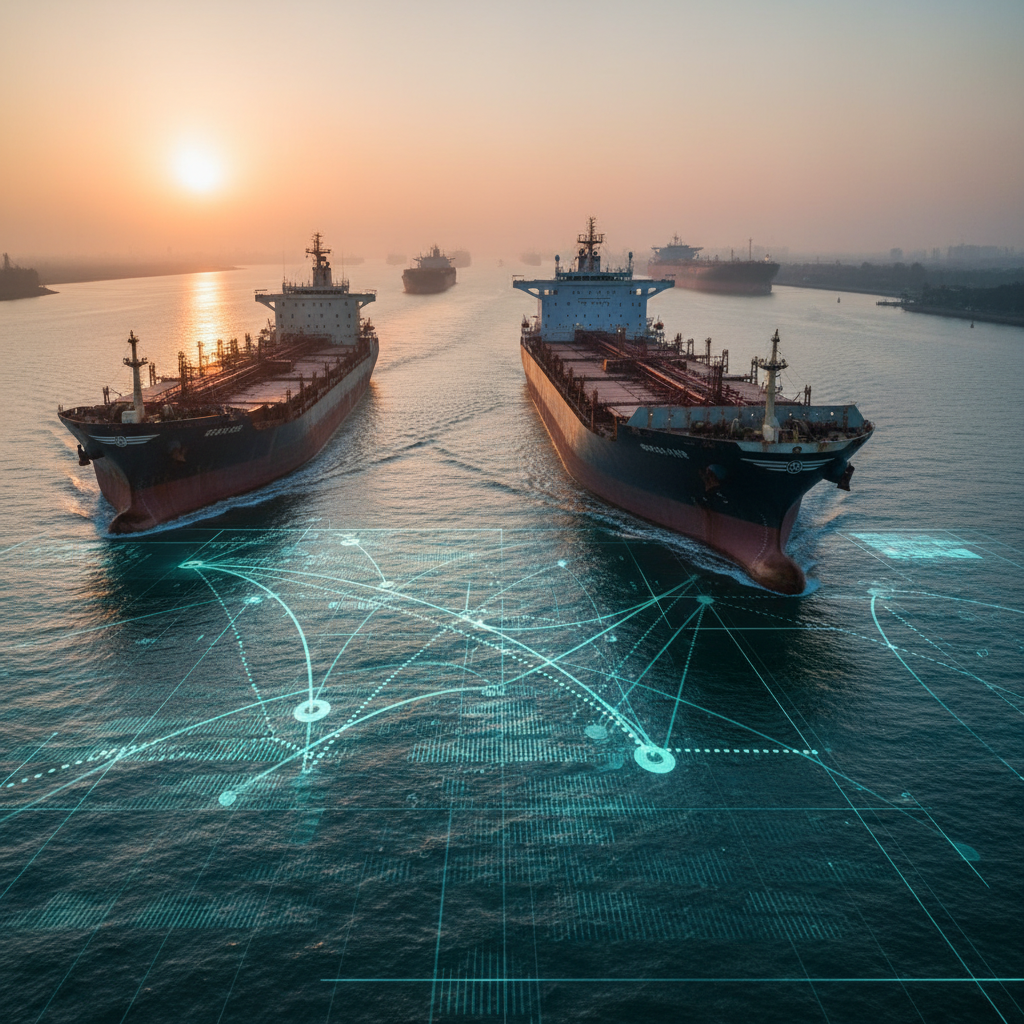
Global supply chains operate within an increasingly volatile geopolitical landscape, where regional tensions can swiftly translate into worldwide logistical challenges. The recent news regarding a potential truce that could reopen the Strait of Hormuz within a week serves as a stark reminder of how rapidly critical trade arteries can be impacted, and subsequently, how quickly conditions can shift. For supply chain professionals, these events are not abstract political developments but immediate operational hurdles that demand agile responses and robust mitigation strategies. Understanding the direct consequences on cargo movement – from altered routes and restricted airspace to the imposition of tariffs and sanctions – is paramount for maintaining continuity and resilience.
The Volatile Landscape of Waterways and Routes
The Strait of Hormuz is one of the world's most critical maritime chokepoints, through which a significant portion of global oil and liquefied natural gas (LNG) transits. The prospect of its 'reopening within a week,' as suggested by recent developments, implies a prior state of restriction, heightened risk, or even effective closure that would have sent immediate shockwaves through global shipping. When such a vital waterway is compromised, the direct consequences for cargo movement are severe and multifaceted. Carriers face immense pressure to reroute vessels, often necessitating significantly longer journeys. For instance, diverting around the Cape of Good Hope adds thousands of nautical miles and weeks to transit times for shipments between Asia and Europe, or the Middle East and the West. This extended transit directly inflates fuel consumption, leading to higher operational costs for carriers and, inevitably, increased freight rates for shippers. Furthermore, insurance premiums for vessels operating in or near conflict zones skyrocket, adding another layer of expense. The ripple effect includes a reduction in effective shipping capacity, as vessels are tied up for longer durations, creating bottlenecks and delays across the entire network. Even the threat of disruption in a chokepoint like the Strait of Hormuz can cause carriers to pre-emptively reroute or impose surcharges, introducing unpredictability and additional costs into supply chain planning. The potential reopening offers a reprieve, but it also highlights the inherent fragility of relying on a few key maritime passages.
Airspace as a Geopolitical Battleground
While the focus on the Strait of Hormuz highlights maritime disruptions, geopolitical tensions frequently extend to the skies, transforming airspace into another critical domain for supply chain disruption. When conflicts flare or diplomatic relations sour, nations often impose airspace restrictions or outright closures over affected regions. This forces air cargo carriers to undertake lengthy detours, bypassing entire countries or zones. The consequences mirror those seen in maritime rerouting: increased flight distances, significantly higher fuel consumption, and extended transit times for air freight. For time-sensitive and high-value goods, where air cargo is chosen precisely for its speed, these delays can be particularly damaging, impacting just-in-time inventory systems and critical production schedules. Moreover, longer flight paths can necessitate additional refueling stops or require aircraft to carry less payload to accommodate the extra fuel, further reducing effective capacity and increasing per-unit shipping costs. The suddenness of airspace closures demands immediate adjustments from airlines and freight forwarders, often with little warning, creating a cascade of scheduling challenges and potential service interruptions for shippers.
The Economic Levers: Tariffs and Sanctions
Geopolitical events are often accompanied by economic measures designed to exert pressure, such as the imposition of tariffs and sanctions. These tools, while not directly altering physical routes or airspace, profoundly reshape the economic landscape of global trade, with significant implications for cargo movement. Tariffs, essentially taxes on imported goods, directly increase the landed cost of products, making certain sourcing regions less attractive and potentially shifting demand to alternative, tariff-free suppliers. This can lead to a reorientation of trade flows, with cargo moving along entirely new routes to bypass affected countries or regions. Sanctions, on the other hand, are more restrictive, prohibiting trade with specific entities, individuals, or entire nations. For supply chains, this means a complete cessation of cargo movement to or from sanctioned areas, forcing companies to divest from those markets, find new suppliers, or seek alternative distribution channels. The complexity of compliance with evolving sanctions regimes adds significant administrative burden and risk. Goods found to be in violation can be seized, leading to substantial financial losses and reputational damage. Both tariffs and sanctions introduce uncertainty into long-term planning, compelling businesses to constantly reassess their sourcing strategies, manufacturing locations, and market access, ultimately influencing where and how cargo moves globally.
Cumulative Impact on Global Trade and Transport
The combined effect of disruptions to waterways, airspace, and the imposition of tariffs and sanctions creates a complex web of challenges for global trade and transport. The overarching consequences include a significant increase in operational costs across the board, driven by higher fuel prices, elevated insurance premiums, rerouting surcharges, and tariff duties. Lead times become extended and unpredictable, making it difficult for businesses to meet delivery schedules and maintain optimal inventory levels. This unreliability forces companies to build in larger safety stocks, tying up capital and increasing warehousing costs. Furthermore, the global shipping and air freight capacity can become constrained, as vessels and aircraft are deployed on longer routes or face operational restrictions, leading to bottlenecks and potential delays at ports and airports worldwide. Ultimately, these disruptions erode the efficiency and cost-effectiveness that globalized supply chains strive for, pushing businesses to re-evaluate their entire network design. The pressure mounts for greater supply chain resilience, diversification of sourcing and manufacturing locations, and the development of robust contingency plans to mitigate the financial and operational fallout from geopolitical volatility.
The Imperative of Real-Time Shipment Visibility
In this environment of heightened geopolitical risk and rapid operational shifts, a robust shipment-visibility control tower platform like MGS becomes not just an advantage, but an absolute necessity. When a critical waterway like the Strait of Hormuz faces restrictions, or when airspace is suddenly closed, an MGS platform provides immediate, real-time insights into all affected shipments. It enables supply chain analysts to identify which vessels or flights are en route, their current location, and their estimated time of arrival, allowing for proactive decision-making. For example, if the Strait of Hormuz were to be restricted, an MGS system would instantly flag all ocean freight destined for or transiting the region, allowing analysts to assess the impact and model alternative routes, such as rerouting around Africa. This capability extends to air cargo, where real-time tracking can highlight flights impacted by airspace closures and facilitate swift rerouting. Beyond tracking, a control tower platform aids in managing the complexities introduced by tariffs and sanctions by providing a consolidated view of compliance requirements and potential risks associated with specific trade lanes or partners. By offering a single source of truth for all cargo movements, MGS empowers businesses to communicate proactively with customers, adjust inventory strategies, and mitigate financial losses by making informed, data-driven decisions in the face of unpredictable geopolitical events. It transforms reactive crisis management into proactive resilience planning, ensuring business continuity even when global trade routes are in flux.
Source: Ship & Bunker — https://shipandbunker.com/news/world/690807-oil-falls-on-renewed-hope-for-a-usiran-truce-despite-nuclear-ambitions-staying-put